Japanese helicopter Nakanihon Air has received Level 7 approval for Loft's Airbus H125 flight training device.
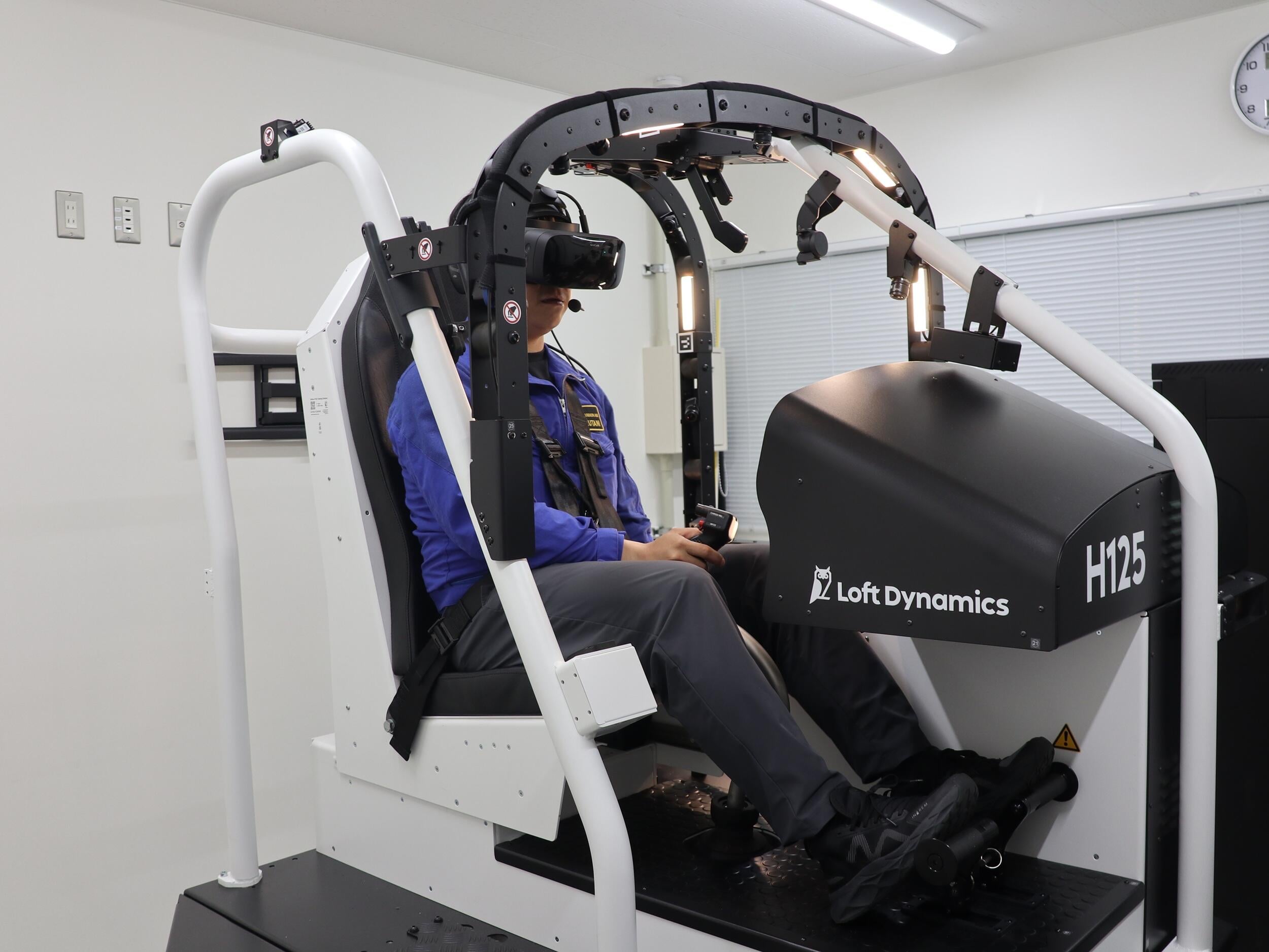
The Japan Civil Aviation Bureau has become the third regulator to qualify Loft Dynamics’ virtual-reality helicopter simulator as a Level 7 flight training device. The Airbus H125 TXi simulator is operated by Nakanihon Air, one of Japan’s largest helicopter operators.
Level 7 is the highest qualification level for helicopter flight training devices (FTD) and the Japan Civil Aviation Board (JCAB) joins the European Union Aviation Safety Agency and FAA in approving the system. Loft’s device combines a virtual-reality (VR) cockpit and full-motion platform.
Nakanihon Air flies emergency medical transport, disaster response and infrastructure inspection missions. The simulator, located at Nagoya Airport, is the first Level 7 VR helicopter FTD in Japan, and the first in Asia-Pacific, Switzerland-headquartered Loft said May 27.
Under the current JCAB framework, a Level 7-qualified FTD can support both initial and recurrent helicopter training within an operator’s approved syllabus, the company said, although the credits available are more limited than those associated with full-flight simulators.
For initial training, available credits typically include cockpit familiarization, procedural training, systems operation, instrument tasks, abnormal and emergency procedures, and scenario-based decision-making, Loft said.
For recurrent training, the device can support proficiency development, instrument recency tasks, emergency procedures training, degraded visual environment scenarios, and inadvertent entry into instrument meteorological conditions and recovery.
Level 7 approval allows more training repetitions and scenario exposure to move from the aircraft to the VR simulator, Loft said. That can allow pilots to build procedural proficiency, emergency response discipline, and scenario familiarity before entering the helicopter.
The aircraft remains essential for final validation and operational readiness, the company said, and any reduction in aircraft training time remains syllabus-specific and subject to aviation authority approval.
“JCAB now has a qualified framework for immersive VR helicopter training, creating a structured pathway to gather operational training data and evaluate where immersive simulation can support additional training use cases over time,” Loft said, noting access to high-fidelity helicopter simulator training has been limited in Japan, one of the largest helicopter markets in Asia.

Related Content