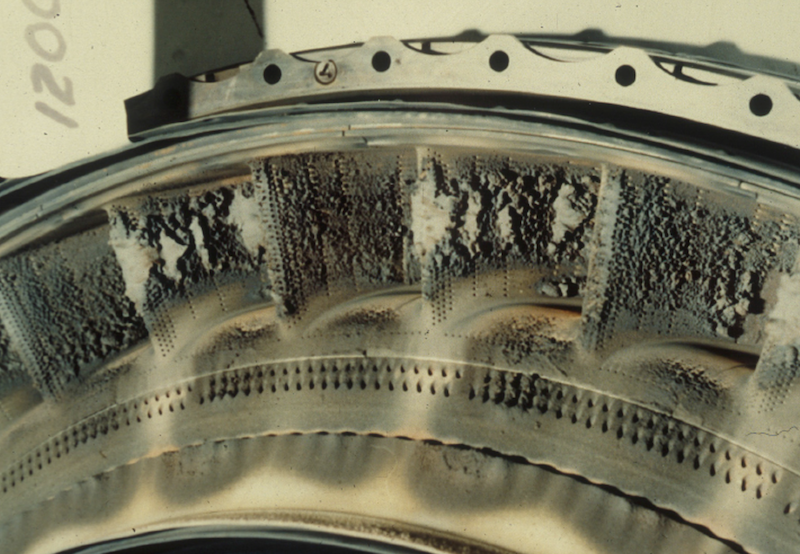
Damage to the hot section of the KLM Boeing 747 that encountered volcanic ash from Alaska’s Mount Redoubt on Dec. 14, 1989.
Credit: U.S. Geological Survey
An aircraft engine is like a big vacuum cleaner that sucks everything in front inside. The impact of airborne particulates on aircraft engines is a huge challenge for today’s aviation industry. When hail, ice, heavy rain, dust and sand, volcanic ash, lightning, or corrosive gases enter a turbine...

Subscription Required
This content requires a subscription to one of the Aviation Week Intelligence Network (AWIN) bundles.
Schedule a demo today to find out how you can access this content and similar content related to your area of the global aviation industry.
Already an AWIN subscriber? Login
Did you know? Aviation Week has won top honors multiple times in the Jesse H. Neal National Business Journalism Awards, the business-to-business media equivalent of the Pulitzer Prizes.
Related Content