This article is published in Aviation Week & Space Technology and is free to read until Jun 30, 2026. If you want to read more articles from this publication, please click the link to subscribe.

FlyEpic Leverages E1000 For Fractional Program

Toby Woods

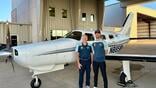
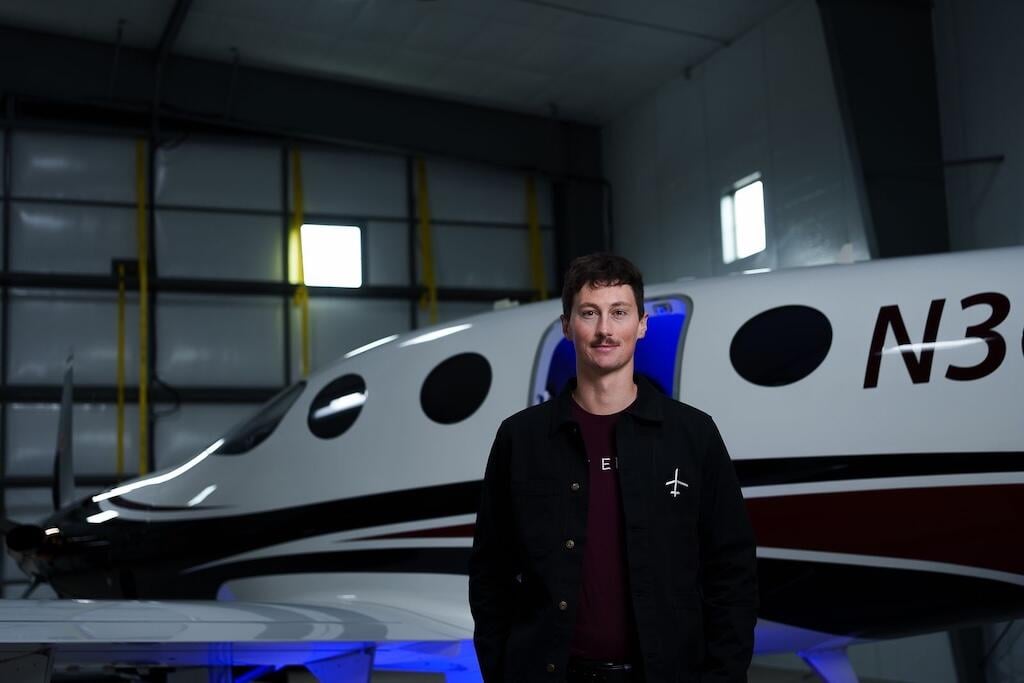
FlyEpic CEO Toby Woods previously flew the Short C-23 Sherpa for the U.S. Forest Service.

Credit: FlyEpic

New fractional company FlyEpic is basing its business on a powerful single-engine turboprop it considers optimal for flights of 500 mi. or less to popular, short-field destinations in the western U.S.

FlyEpic started offering fractional shares of the Epic E1000GX turboprop in January. The company is targeting southern California and the San Francisco Bay area as initial launch markets, with a primary service area extending 1,200 mi. to 10 western states.

Powered by a 1,200-shp Pratt & Whitney Canada PT6A-67A engine, the carbon fiber construction E1000GX has a pressurized cabin, seats six occupants and cruises at 317 ktas. Its takeoff distance to clear a 50-ft. obstacle at gross weight is 2,254 ft.; its landing distance is 2,399 ft., according to manufacturer Epic Aircraft LLC.

“The aircraft is really good under 500 mi. in range and that’s mostly because we just don’t have a bathroom on board,” says FlyEpic CEO Toby Woods. “The Epic will go 1,200 mi. and has an incredible full-fuel useful payload of 1,150 lb. We can land it at almost any airport—our takeoff and landing distance is under 2,500 ft., so there are about 1,700 airports in our initial primary service area in the western U.S. with their longest runways being less than 4,000 ft.”

Bend, Oregon-based Epic Aircraft obtained FAA certification of its original E1000 in 2019. The manufacturer announced in September 2025 that it had delivered its 100th aircraft.

Tanya Eves, majority owner and head of business development at Epic Aircraft, founded FlyEpic, which is a separate company. Woods, a former U.S. Forest Service pilot who started his own business as a Part 135 carrier, is its founding chief executive.

Flights marketed by FlyEpic are operated by Direct2, an FAA-certificated Part 135 air carrier. All flights are conducted under Direct2’s certificate authority and operational control. The company was completing the process of obtaining Part 91K authorization to launch the fractional ownership program. Under Part 91k rules, operational control belongs to the individual who requests the flight.

FlyEpic is conducting flights with two pilots and up to four passengers. Initial pilot training is provided through Epic Aircraft.

“That’s our concept of operations, and we think it’s a good system and provides a good quality of life for the pilots,” Woods says of FlyEpics’ crew complement. “We have jumped through the hoops of getting this second-in-command pilot development program approved by the FAA. That job in the right seat should be a pathway for folks to get to the left seat and then advance further in their careers.”

A Floating Fleet

The Epic E1000 turboprop. Credit: FlyEpic

Also based in Bend, FlyEpic primarily operates in the Pacific and Mountain time zones. Its fleet of three E1000GXs is free-floating within the region. Plans call for growing the fleet to 30 aircraft in five years and spreading geographically as the market allows.

“We want to be diligent about growing smartly and listening to our customers and understanding what we do well and not try to go out and replace every other option that’s in the marketplace,” Woods says. “Some of our initial customers, they have FlexJet shared or Praetor, right? We’re another arrow in the quiver. We expect people to use commercial aviation as well.”

FlyEpic offers a 25-hr. jet card for $112,500 ($4,500 per flight hour) as an introductory step toward ownership. Fractional ownership starts at $285,400 for a 1/16th share, providing for 50 hr. annual flight hours, with a $10,000 monthly management fee. A one-eighth share is $570,800, providing for 100 annual flight hours, with a $15,000 monthly fee.

The company advertises a one-quarter share at $1.14 million, providing for 200 annual flights hours, but says it recognizes that quarter shares represent only about 1% of the total installed base of fractional owners.

Other companies with fractional turboprop programs in the western U.S. include PlaneSense and SkyShare, both offering the single-engine Pilatus PC-12, and West Coast Aviation Services, offering the twin-engine Beechcraft King Air 350.

Woods believes FlyEpic offers a unique value proposition with the Epic E1000.

“The Epic is an incredible product for this type of mission and it’s something that frankly is not out there in the private aviation market today,” he says. “The PC-12 is a known commodity, but the Epic is a different product—it’s 25% faster.”

Woods adds: “We can land anywhere and connect the ski town—Mammoth, Tahoe, Jackson Hole, Telluride—to the big city; to get to the board meeting in San Francisco, then if you want to hop away to Palm Springs for the weekend. We think this is the modern, hybrid, West Coast lifestyle that is native to our brand.”

Bill Carey

Bill covers business aviation and advanced air mobility for Aviation Week. A former newspaper reporter, he has also covered the airline industry, military aviation, commercial space and uncrewed aircraft systems. He is the author of 'Enter The Drones, The FAA and UAVs in America,' published in 2016.