This article is published in Business Aviation & AAM Report part of Aviation Week Intelligence Network (AWIN), and is complimentary through Nov 07, 2026. For information on becoming an AWIN Member to access more content like this, click here.
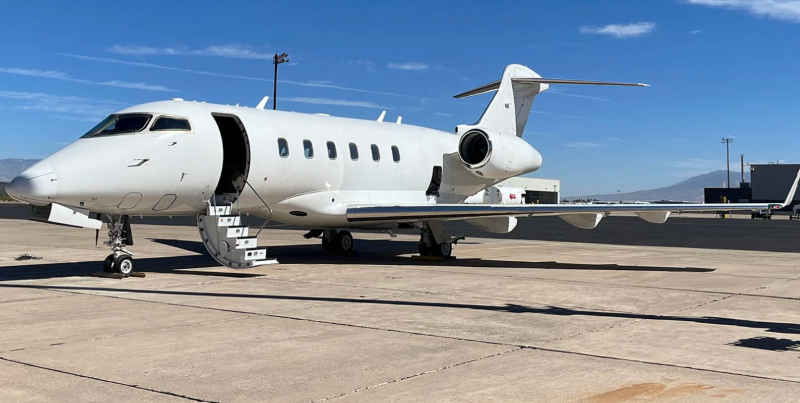
Sentient Jet CEO Alan Walsh said his company is seeing strong demand for super-midsize business jets, particularly the Bombardier Challenger 300.
Business aviation professionals in the Middle East surveyed by Airbus Corporate Jets said they expect private aircraft utilization to rise across all jet categories through 2030, with participants reporting that demand remains strong in the face of rising costs and shifting customer preferences.
In a survey of 35 aircraft financiers and brokers across the Middle East, 83% of respondents expected increased large business jet activity through 2030, including 37% who expect a dramatic increase. Eighty percent said they anticipate higher light jet activity, and 78% foresee gains for midsize aircraft.
All respondents reported higher demand from corporate customers over the past two years, with most estimates ranging from 5%-15%. Additionally, 94% said geopolitical developments had increased government interest in buying or leasing business aircraft. Airbus said roughly 40% of the region’s fleet is nearing a 15-year replacement cycle.
While the survey results are focused on the Middle East, executives at U.S.-based private aviation companies also report strong demand, particularly among corporate travelers seeking more reliable service and efficient ways to move between cities.
At Sentient Jet, sales of super-midsize jet cards grew 25% in the first half of the year, while average jet card purchases increased 12%, CEO Alan Walsh told Aviation Week. He added that super-midsize jets are benefiting from customers traveling farther and often with multiple passengers, with particular interest in Challenger 300 aircraft.
“Specifically in super-mids, what we are seeing is a lot of business flying, and when we have a conversation with those business flyers, it’s the consistency and the availability they care about. They just need to go where they need to go, when they want to go there.”
FlyUSA CEO Barry Shevlin similarly sees more travelers using private aviation when scheduled airline service is inconvenient or unreliable. Customers with numerous nonstop commercial options may book airline seats but turn to charter for trips requiring connections.
“We have a lot of customers who are what we refer to as straddle customers, where they straddle flying private and flying business class,” Shevlin said. “Maybe that client will fly business class for those trips, and then fly private when he’s going someplace where it would require connections or something different.”
Shevlin said that data center development and the wealth creation associated with artificial intelligence have been growing sources of private travel demand. But he also said that higher fuel and airport charges are complicating the demand outlook. He estimated that charter customers are paying about 20% more for an average trip than a year earlier, while fixed-base operator special event fees and aircraft maintenance expenses have also sharply risen.
The push to make private travel accessible for shorter regional trips is creating opportunities for another segment. Flyte, which uses Cirrus Vision Jets for on-demand missions generally under 500 mi., is targeting travelers who might otherwise face lengthy drives or indirect airline connections. Flyte aims to grow to roughly 15 aircraft across six markets within two years, according to CEO Marc Sellouk.
“Our problem is not demand. Our problem is supply,” he said. “We want to grow very smartly, and we don’t need to go out and buy 100 jets. We want to grow at our pace.”

Related Content