This article is published in Business Aviation & AAM Report part of Aviation Week Intelligence Network (AWIN), and is complimentary through Aug 12, 2026. For information on becoming an AWIN Member to access more content like this, click here.
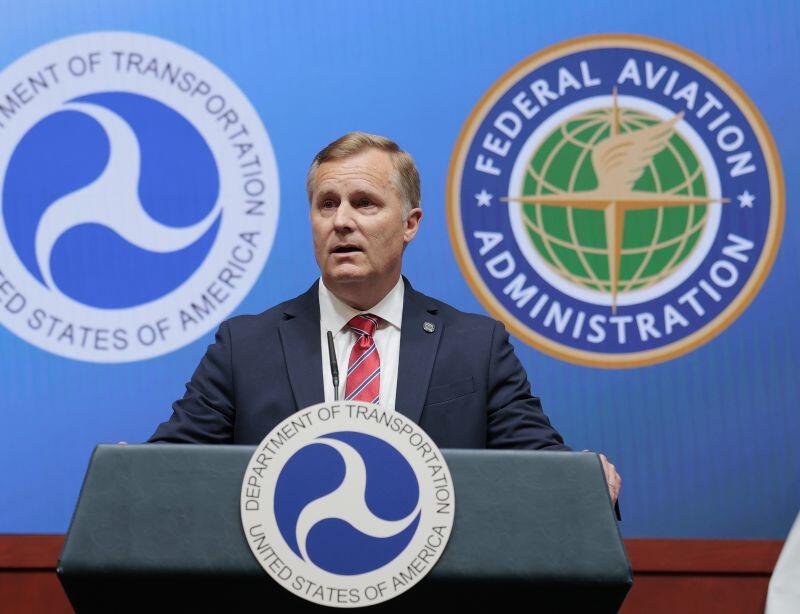
FAA Deputy Administrator Chris Rocheleau
FAA Deputy Administrator Chris Rocheleau is stepping down from his post after an eventful year and a half with the agency, initially as acting administrator.
Rocheleau will return to his previous role as National Business Aviation Association (NBAA) COO, the job he held before his appointment by President Donald Trump as acting FAA administrator in January 2025. FAA Chief Counsel Liam McKenna, who previously served as acting FAA deputy administrator, will replace him, Politico reported.
Days after Rocheleau’s appointment as acting FAA administrator, 67 people were killed in the midair collision of an American Eagle CRJ700 regional airliner and a U.S. Army UH-60 Black Hawk helicopter over the Potomac River near Ronald Reagan Washington National Airport. Rocheleau led the agency in the immediate aftermath of the accident, which shocked the nation.
“Chris jumped into action on the night of the tragic midair collision—just 48 hours into the job—and showed remarkable strength,” U.S. Transportation Secretary Sean Duffy said in a post on X.
Rocheleau launched a nationwide review to prevent similar collision risks in complex airspace and worked with Duffy to accelerate the hiring of air traffic controller trainees as part of a broader effort to address persistent controller staffing shortages. He continued to serve as deputy FAA administrator following the July 2025 confirmation of former Republic Airways CEO Bryan Bedford as FAA administrator.
As deputy administrator, Rocheleau participated in the development of the Trump administration’s Brand New Air Traffic Control System, an ambitious plan to overhaul the U.S. air traffic control system infrastructure. He was a “driving force” behind development of the Modernization of Special Airworthiness Certification (MOSAIC) rule, which amended requirements for the manufacture, certification, and operation of light sport aircraft, and the electric vertical-takeoff-and-landing (eVTOL) integration pilot program (eIPP), according to the NBAA.
In a July 30 letter to FAA staff obtained by Reuters, Rocheleau said he is “especially proud of what we accomplished together, including our use of AI and data driven tools to enhance aviation safety, the launch of the Modern Skies Coalition to build support for a next-generation air traffic control system, advancement of the transformative MOSAIC rule, and the establishment of the eIPP initiative to safely integrate emerging aviation technologies into our national airspace.”
Before joining NBAA as COO in 2022, Rocheleau worked for more than 20 years in executive roles at the FAA, including as deputy associate administrator for aviation safety. Trump brought him back to the agency in an acting capacity after former FAA Administrator Michael Whitaker resigned in January 2025.
“We are thrilled to welcome Chris back to NBAA, where he will build upon his record of success in leading a senior team charged with ensuring that the organization delivers excellence to the business aviation community,” said NBAA President and CEO Ed Bolen. “His deep commitment to service, his strategic approach to organizational management and his trusted relationships with top leaders throughout government and industry uniquely qualify him for this important role at NBAA.”