Opinion: When The Expected Is Not Respected

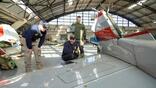
NTSB investigators document the wreckage of the aircraft involved in the mid-air collision near DCA.
I’ve adopted a motto during my time at the National Transportation Safety Board (NTSB)—respect the unexpected. It’s simple, straightforward, and applicable to safety organizations across all modes of transportation. No one knows when an unexpected event will occur, and therefore unexpected events must be respected by mitigating and eliminating identifiable risks.
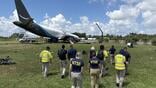
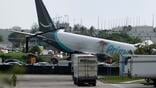
I have used numerous NTSB investigations over the years to reiterate this point, including the PenAir Flight 3296 accident in Unalaska, Alaska and the Atlas Air Flight 3591 accident in Trinity Bay, Texas. Both flights experienced unexpected events, and flight crews were unequipped to handle those events due to systemic errors outside their control. The organizations and systems surrounding those flights did not respect the unexpected.
Over the last year, however, it became apparent there is an underlying premise to this concept that I assumed was true—the expected is always respected. If an organization is aware of an issue, logical thinking—especially in safety—would lead one to believe action would be taken to address that issue and mitigate the risk.
Respecting the unexpected requires proactive safety management and a positive safety culture, both of which can take years to develop. Respecting the expected requires common sense and should result in immediate action.
As the NTSB recently concluded our investigation into the January 2025 midair collision between an Army Blackhawk helicopter and a PSA Airlines regional jet outside of Ronald Reagan Washington National Airport (DCA) in our nation’s capital, claiming the lives of 67 individuals, one thing became abundantly clear—the expected was not respected.
Here’s just a sample of risks that were expected at DCA in the leadup to this accident: the placement of a helicopter route by the FAA that led helicopter traffic to directly conflict with fixed-wing traffic arriving at DCA on runway 33, which local helicopter operators had attempted to fix years prior but were rebuffed by the FAA; the extensive use of pilot-applied visual separation by controllers and helicopter pilots that led to pilots reporting traffic in sight when they did not actually have the traffic visually identified; air traffic controllers deviating from standard practices and communications, which had been identified by multiple external compliance reviews; periods of heavy traffic volume that far exceeded DCA’s mandated arrival rate; muffled and stepped-on communications between air traffic controllers and flight crews, resulting in critical missed communications; Army flight crews regularly flying above the maximum published altitude on the helicopter route chart; and numerous near-midair collisions reported by air traffic controllers and pilots and identified by multiple objective datasets available to the FAA.
While the NTSB discovered many of these issues during the course of our investigation, we were not the first to identify any of these. Each one was known to organizations, operators, flight crews, air traffic controllers, and/or the FAA.
Of the 50 safety recommendations adopted by the NTSB in our final report on the DCA midair collision, many ask the FAA and the Army to fix issues that were known to them prior to the accident.
For example, a time-based flow management system had already been installed at the Potomac Consolidated Terminal Radar Approach Control facility prior to the accident. This system would have helped ensure proper spacing between aircraft arriving at DCA, easing the burden on air traffic controllers. But the system only works if it is turned on, which the FAA chose not to do prior to the accident.
FAA’s procedures require them to annually review all helicopter route charts in the National Airspace System. Our investigation revealed they were not doing that at DCA or elsewhere.
Despite the Army’s knowledge of the complexity of the DC airspace, many of their flight crews were unfamiliar with fixed-wing operations at DCA—specifically the use of runways 15 and 33. And yet, they made no effort to provide personnel specific training to inform them about operations at DCA.
All of these issues were known and expected but were not addressed or respected.
Some of our recommendations will take time to implement, whether because certain technologies need to evolve or a positive safety culture needs to be instilled in multiple organizations. Thankfully, Congress has already proposed legislation that would address many of these recommendations and accelerate their implementation, including improved collision avoidance technologies for all aircraft operating in Class B airspace and a much-needed comprehensive audit of FAA’s safety management system.
In the meantime, all safety organizations must respect the expected and the unexpected. Addressing known risks should be the floor, not the bar, for safety.
This accident would not have happened had the expected been respected. As an aviation community, we owe it to those who lost their lives in this accident to never allow complacency to claim another life again.
Michael Graham is a Member of the National Transportation Safety Board.
Related Content