The European Cockpit Association (ECA) is urging Germany to reject additional traffic rights for airlines from the United Arab Emirates (UAE) unless stronger fair-competition safeguards are secured.
The call intensifies a policy dispute ahead of UAE President Mohamed bin Zayed Al Nahyan’s state visit to Germany on Sept. 9, where he will hold talks with German President Frank-Walter Steinmeier and Chancellor Friedrich Merz. The agenda centers on economic and development cooperation, alongside regional and international issues.
ECA, which represents more than 44,000 pilots, said additional access could divert more long-haul connecting traffic from European hubs to Dubai and Abu Dhabi, weakening European airlines, employment and feeder networks.
“Europe cannot continue opening its aviation market indefinitely when the airlines involved operate under fundamentally different conditions,” ECA Vice President Paul Reuter said. “Competition is important, but it must be fair.”
ECA also points to Russian airspace access as a competitive imbalance. Russia bars European Union airlines from its airspace, forcing them to use longer routings on many services to Asia, while Emirates and other UAE carriers continue to overfly Russia. ECA said this gives UAE airlines shorter routes and lower operating costs in some markets.
“Market liberalization and connectivity must not be viewed in isolation,” Reuter said. “Social standards and European quality jobs, geopolitical realities, climate regulation and the strategic importance of a strong European aviation sector must also be taken into account in political decision-making.”
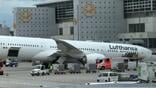
The warning echoes arguments made by Lufthansa Group, which has opposed attempts to expand UAE airline access to Germany. In a policy brief published in March, the airline group said the UAE was seeking additional landing rights and argued that such a move would undermine efforts to strengthen Germany’s aviation sector.
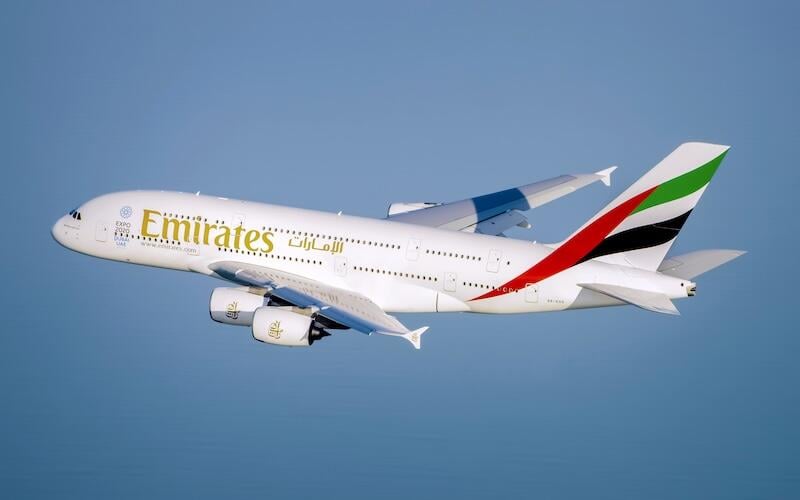
Emirates currently serves four German destinations—Dusseldorf, Frankfurt, Hamburg and Munich. Under the existing bilateral framework, it would need to replace one of those destinations to open another German point rather than add a fifth. The Gulf carrier wants to launch routes to Berlin and Stuttgart.
Lufthansa argues that expanding Emirates’ access would not give Germany more nonstop links to destinations outside the UAE. Instead, it says as much as 80% of the airline’s German traffic connects through Dubai, allowing the carrier to draw passengers away from European hubs.
The dispute comes despite a reduction in scheduled Germany-UAE capacity due to the Middle East crisis. OAG Schedules Analyser data shows airlines are offering approximately 296,100 two-way seats during September 2026, down 14.6% from 346,800 in September 2025.
All scheduled capacity this month is operated by UAE airlines. Emirates is the largest carrier with about 205,300 seats, representing 69.3% of the market. Etihad Airways provides approximately 79,400 seats and holds a 26.8% share, while Air Arabia accounts for the remaining 11,400 seats through its Sharjah-Munich route.
Lufthansa and Condor together provided almost 26,300 seats in September 2025, but both have suspended their UAE services amid regional uncertainty. Lufthansa previously served Frankfurt-Dubai, while Condor operated Berlin-Dubai.
Bilateral trade between Germany and the UAE exceeded €13.6 billion ($15.8 billion) in 2025, while German imports from the UAE increased by more than 50%, according to the UAE Foreign Ministry. About 2,000 German companies operate in the UAE, many using the country as a base for business across the Middle East, Africa and Asia.

Related Content