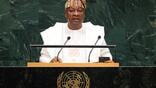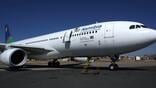
FlyGabon Chairman Marc Gaffajoli.
LIBREVILLE, Gabon—Travel agencies in Africa are capturing a disproportionate share of airfare revenue through pricing practices that have largely disappeared elsewhere, according to the chairman of FlyGabon.
Marc Gaffajoli attributed the issue to weak regulation of the sector in an interview with Aviation Week on the sidelines of the 58th annual general assembly of the African Airlines Association (AFRAA) on Nov. 24. “This is a big problem in Africa,” he said.
Gaffajoli pointed to the early 2000s, when most airlines adopted zero-commission ticketing. In Europe, the United States, the Middle East and Asia, he said, tickets are sold at the airline's price, and agencies charge a service fee reflecting their value as distributors. “This works everywhere, except in Africa,” he said.
In Africa, agencies act as traders, he said. “They purchase tickets and they sell [the tickets] at a different price,” he said, adding that they also receive incentives on top. “They're doing tremendous margins, huge margins, and they catch a large part of the value of the ticket, which is really fed by the passengers.”
Gaffajoli said the imbalance defies the logic of the value chain. Agency work, which he said he respects, requires little capital: premises, computers and skilled staff. Airlines, by contrast, must invest heavily in technology and safety. “It's not normal in a value chain that the airline is taking the small part of the profit, while the travel agency is taking a huge profit,” he said.
Gaffajoli said African markets lack the clear rules on agency activity and the travel agent's mandate found in Europe and the U.S. He noted that airfare data is among the world's most transparent data, and that African carriers publish fares online, sometimes below agency prices. “The internet has replaced the travel agencies everywhere, except in Africa,” he said, adding that nothing comparable exists for displaying a service fee.
The sector, he noted, is mostly held by “Indian groups, with a few Lebanese competitors” that dominate ticket distribution across the continent. Operating “on the edge between formal and informal,” these agencies stay off the radar of tax inspectors and anti-money-laundering rules, “with surprising leniency from our governments.”
Gaffajoli said agencies buy seats at the lowest price and resell them at the highest to individuals and to corporate and government clients, issuing tickets on their own letterhead and altering conditions of travel, cancellation and modification. “They generate remarkable profits and capture most of the value of African air transport,” he said.
Rather than operating as a single monopoly, he added, the agencies operate under multiple brands around three or four large groups, creating an illusion of competition.
Asked how they succeed, Gaffajoli suggested free trips may serve as a tool of influence. He said that agencies also benefit from weak regulation and the discretion of consumer protection bodies, and that they extend credit freely, even to individuals, without involving banks. That, he said, hints at their underlying profitability.
The result is a market “where the average fare charged by airlines is not the one paid by passengers,” he said. Any productivity gain or improvement in the aviation ecosystem's competitiveness, he warned, “will simply swell travel agents' margins.”

Related Content