This article is published in Aviation Daily part of Aviation Week Intelligence Network (AWIN), and is complimentary through Jul 30, 2026. For information on becoming an AWIN Member to access more content like this, click here.
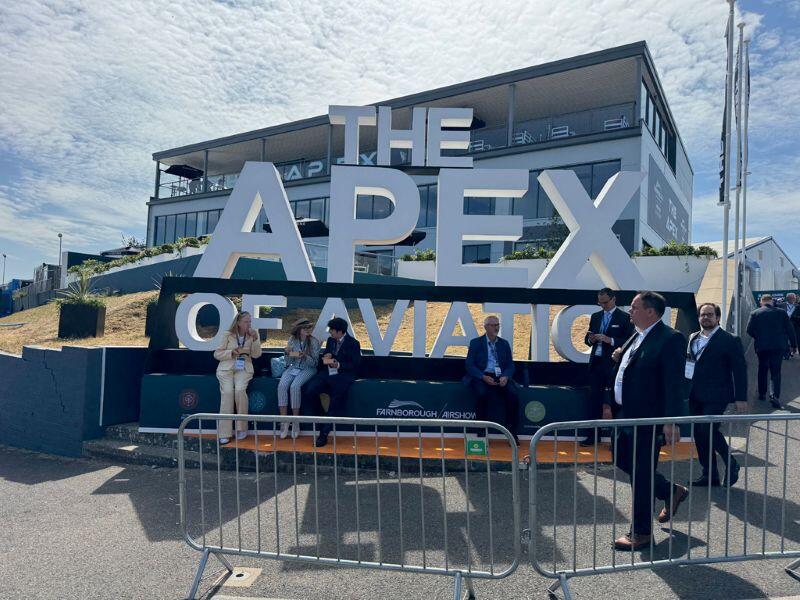
FARNBOROUGH—Commercial aircraft manufacturers accumulated 304 firm orders on the first four days of this week’s Farnborough Airshow.
The numbers per se are unimpressive and mainly serve to show that air shows have lost their appeal as a stage for orders, which are now more often than not announced throughout the year whenever the participants see fit. Exceptions still apply, of course, such as Emirates’ habit to by-and-large sign its orders at its home Dubai Airshow.
With a backlog of 6,800 aircraft for Boeing and a little over 8,000 for Airbus, the marketing value of letting the industry know about another commitment is limited. Even with Embraer, typically operating with a much smaller firm backlog (in a much smaller market and some temporary concern about the attractiveness of the E2, based on sluggish customer commitments), the attention has shifted somewhat from that angle to more strategic matters.
Yet, some of the orders that were presented at Farnborough deserve some more attention. SMBC Aviation Capital decided to buy 100 Boeing 737 MAXs and 100 Airbus A320neo family aircraft. What is relevant here is that the world’s second largest aircraft lessor after AerCap decided to buy straight from manufacturers at all. For a number of years, the leasing company has been largely absent from direct order activities and focused on portfolio acquisitions, mergers or sale-and-lease-back transactions.
One of the main reasons lies in the large backlog that Boeing and Airbus have accumulated. Lessors typically do not like to commit to delivery slots so far in the future when they have to lock in their own prices. Plus, there are escalation clauses demanded by the manufacturers when they don’t have a clue what the lease rate will be that they are going to be able to charge once the aircraft are delivered.
SMBC recently concluded the biggest aviation industry M&A transaction in recent times by buying Steve Udvar-Hazy’s Air Lease Corporation (ALC). That deal gave SMBC access to a sizeable orderbook and a widebody portfolio above its own historic metrics. But that carried it only so far, more or less until the turn of the decade. If SMBC had not acted now, a sizeable delivery stream of aircraft coming off the final assembly lines globally would have been impossible to achieve, cutting off one potential source of growth.
Rival AerCap did not buy nearly as many aircraft in Farnborough, but it did commit to more 787-9s, of which it is now the largest owner globally.
Like the airlines, SMBC is betting on larger aircraft. Of the 100 MAXs, 60 orders are for the -10 and that number can probably rise further should demand shift further that way. Of the 100 A320neo family aircraft, even 65 are for the A321neo.
For Embraer, the times of slow E2 orders have been over for a while. Commitments by SAS, Finnair, Avelo, LATAM Airlines and others bolstered the backlog, and while the aircraft is still in a relatively small niche, it is now becoming also a true commercial success. Interestingly, Embraer won over another major client in Latin America for the E195-E2: Abra Group, the owner of Avianca and Gol and so far a Boeing and Airbus operator, added the E2 to its fleet portfolio.
Embraer now has three very big E2 customers in the region: Azul, LATAM and Abra. The trend is no coincidence. Azul has shown that the E195-E2 works well in the secondary markets it serves. With the help of the E2, Abra and LATAM can now attempt the same.
Azorra’s decision to secure freighter conversion slots for 20 of its owned E190s indicates that confidence in demand for a small-medium size freighter is rising. There are only limited alternatives; the in-service fleet is aging and the E190s are getting to the right age to be converted.
In other news, the first A350-1000ULR for Qantas’ Project Sunrise—flying nonstop from Sydney to London and New York—took off July 23 for its longest test flight so far. The aircraft took off from Toulouse at 7.33 a.m. for a journey of a little less than 20 hours en route to Melbourne. In an otherwise slow day for air show news, Qantas and Airbus got the timing right for maximum attention on aircraft tracking websites.