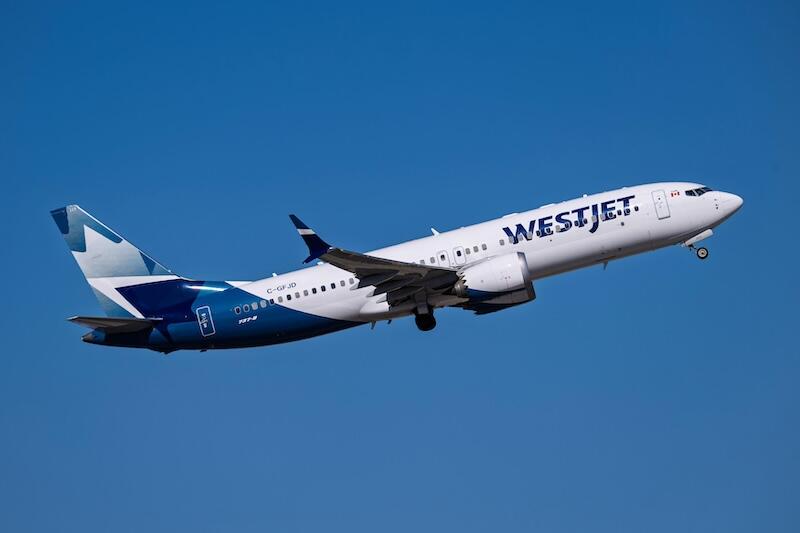
WestJet is planning to expand its transatlantic network during the summer 2026 season as the carrier continues to leverage the long-range capabilities of its Boeing 737 MAX fleet.
The carrier will launch three new European destinations from Halifax Stanfield International Airport (YHZ)—to Copenhagen, Lisbon and Madrid—marking the first time the Nova Scotia hub has had nonstop links to any of the three cities. All routes will operate 4X-weekly using 737-8 aircraft, with Lisbon beginning May 1, Madrid on May 15 and Copenhagen on May 28.
Additionally, Halifax-Detroit will also be operated daily with a 737-8 beginning May 18, expanding WestJet’s transborder partnership with Delta Air Lines and providing YHZ’s first direct link to a Delta hub.
“With shorter flight durations, competitive pricing and seamless access to key European destinations and cultural hubs, WestJet is proud to call Halifax the airline's Atlantic gateway to Europe,” CEO Alexis von Hoensbroech says. “These seasonal additions mark the most European destinations we have flown from Halifax.”
With the new routes, WestJet plans to serve nine transatlantic destinations from YHZ next summer, maintaining existing seasonal service to Amsterdam, Barcelona, Dublin, Edinburgh, London Gatwick and Paris.
Beyond Halifax, WestJet will open new European service from Toronto Pearson International Airport (YYZ) to Cardiff and restore flights to Glasgow for the first time since September 2022. Both routes will begin in May 2026 and will operate 4X-weekly with 737-8s. Toronto-Cardiff will become the airline’s longest single-aisle route at 3,434 mi. (2,984 nm) and the first scheduled Canada-Wales nonstop link since Zoom Airlines’ collapse in 2008.
Cardiff Airport called the new service “a major step forward in reconnecting Wales with North America,” according to CEO Jon Bridge. In addition to boosting leisure demand, the route is expected to support business ties as about 35 Canadian companies operate in Wales, employing 6,500 people, and Canada represents an export market worth more than £300 million ($394 million) a year.
WestJet’s return to Glasgow Airport—its first UK gateway when it launched service there in 2015—also restores a key transatlantic link for the Scottish market. Canada remains one of Scotland’s largest international tourism markets, with visitors spending £135 million in 2024, and an estimated 4.8 million Canadians claiming Scottish ancestry. WestJet will compete on the sector with Air Transat, which plans to serve the route 6X-weekly using Airbus A321LRs next summer.
Toronto will also gain a new link to Colombia next summer, with service to Medellin beginning April 28. WestJet currently serves the country only through its winter seasonal Montreal-San Andres Island route, making Medellin the carrier’s first nonstop South American destination from YYZ.
In Western Canada, WestJet will add a new Edmonton-Reykjavik Keflavik (KEF) service, operating weekly from June 26, complementing its service from Calgary. Flights to KEF from Winnipeg will commence the next day, also operating weekly. According to OAG Schedules Analyser data, the Edmonton-Reykjavik and Winnipeg-Reykjavik markets are currently unserved.
Western Canada will also see the addition of two new domestic routes. A 3X-weekly Winnipeg-London, Ontario, service and a 5X-weekly Vancouver-Penticton route will launch, operated by WestJet Encore’s De Havilland Dash 8-400 aircraft.
The 2026 additions follow a 17.7% year-over-year increase in WestJet’s Europe capacity during the 2025 summer season, when the airline offered 943,000 two-way seats across 18 routes. However, even with the growth, the carrier held a modest 6.5% share of the Canada-Europe market, well behind Air Canada (40.5%) and Air Transat (15.3%).
Despite the planned summer 2026 growth, WestJet is pulling back in several areas. The carrier is set to suspend service on Edmonton-Nashville, Vancouver-Tampa, Winnipeg-Atlanta and Winnipeg-Orlando, among others, and will scale Toronto-Edinburgh back from 11X-weekly frequencies in summer 2025 to a daily operation.
WestJet’s long-haul strategy continues to hinge on the 737 MAX, with 56 737-8s in service and more than 100 737-10s on order, according to the CAPA – Centre for Aviation fleet database. Hoensbroech says the aircraft’s range unlocks new transatlantic opportunities. “The MAX’s long-haul range can connect Eastern Canada to rich cultural destinations that guests want to travel to, and we are proud to be the airline that takes them there,” he adds.

Related Content