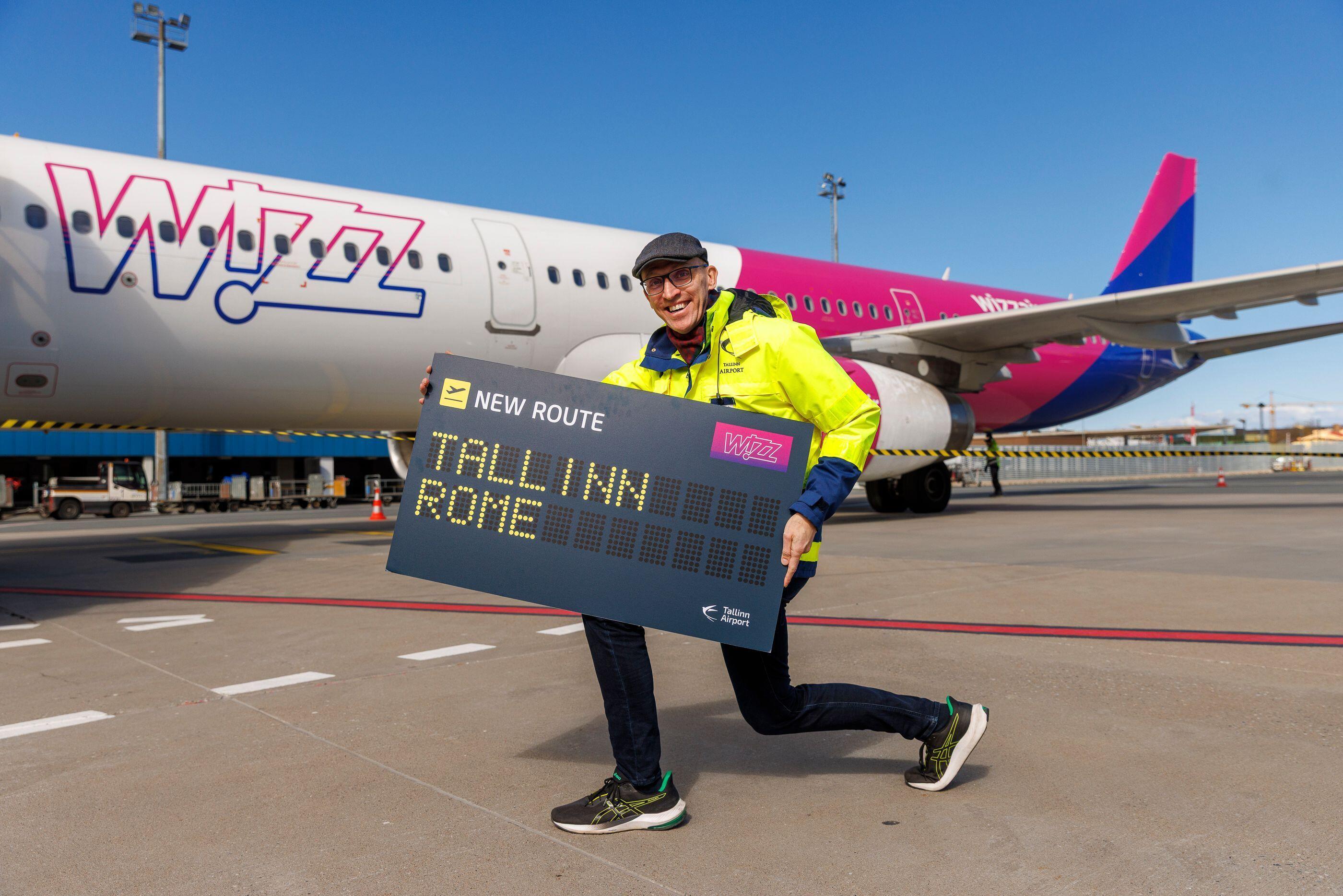
Eero Pärgmäe, Tallinn Airport's chief commercial officer.
RIMINI, Italy—Tallinn Airport (TLL) is targeting further network expansion across Europe and the Middle East as it prepares for another year of passenger growth despite mounting geopolitical and cost pressures.
The Estonian gateway handled nearly 3.5 million passengers during 2025 and expects further growth this year. It expects passenger traffic will rise to 3.7 million during 2026, supported by continued airline expansion and infrastructure investment.
“We’ve seen really strong progress in our route development recently,” Eero Pärgmäe, chief commercial officer and member of the management board at TLL, tells Aviation Week. “In 2025, we added 10 new routes, and another 11 are already confirmed for 2026.”
Wizz Air has been among the most active carriers in the Estonian market, launching eight new routes over the past year, with particularly strong growth focused on Poland. AirBaltic has added services to Vienna, Hamburg and Athens, while Eurowings recently launched 2X-weekly Dusseldorf flights.
Regional connectivity is also expanding. Finnair will launch seasonal summer flights to Saaremaa, improving access to Estonia’s largest island and supporting tourism demand.
On the leisure side, Jet2.com has expanded after launching Christmas market services from three UK cities during winter 2025-26. Two additional UK routes are already planned for the upcoming winter season.
More News And Analysis From Routes Europe 2026
“We’re currently targeting a few key underserved markets, including Portugal, the UK, Germany and Italy,” Pärgmäe says. “Beyond Europe, the Middle East is a priority, and in the longer term we’re also looking at potential long-haul routes, especially to North America.”
Despite the positive momentum, Pärgmäe acknowledges that airlines continue to face operational and geopolitical headwinds. Estonia’s proximity to Russia and wider instability in the region remain factors influencing airline planning decisions.
At the same time, fuel prices and airport costs are becoming increasingly sensitive issues in the Baltic market. Ryanair recently criticized TLL for maintaining what it described as “excessive access costs,” claiming airport charges rose by 70% in 2025 and warning the increases were limiting future growth opportunities.
Nevertheless, the airport says demand fundamentals remain strong. Passenger traffic during April 2026 rose 12% year-on-year to 313,000 travelers, while aircraft movements increased 4%.
One of the airport’s major long-term priorities is expanding infrastructure to accommodate future growth. Phase one of TLL’s terminal expansion project is already underway and is designed to increase annual passenger capacity to 5 million by 2030.
The airport has also been investing heavily in broader aviation infrastructure, including the completion of a new aircraft maintenance complex and the establishment of a fuel terminal partnership aimed at strengthening operational resilience.
Pärgmäe says inbound tourism remains a major growth opportunity for Estonia despite the uncertain operating environment. “One of the main opportunities is growing routes that bring more international visitors,” he says. “Estonia remains an attractive destination, and inbound travel is increasing, while outbound demand from Estonia also stays strong.”

Related Content