EVA Air, Delta Air Lines and American Airlines are among the airlines expanding their long-haul networks to and from the U.S. over the forthcoming winter 2025-26 season.
Taipei-Dallas
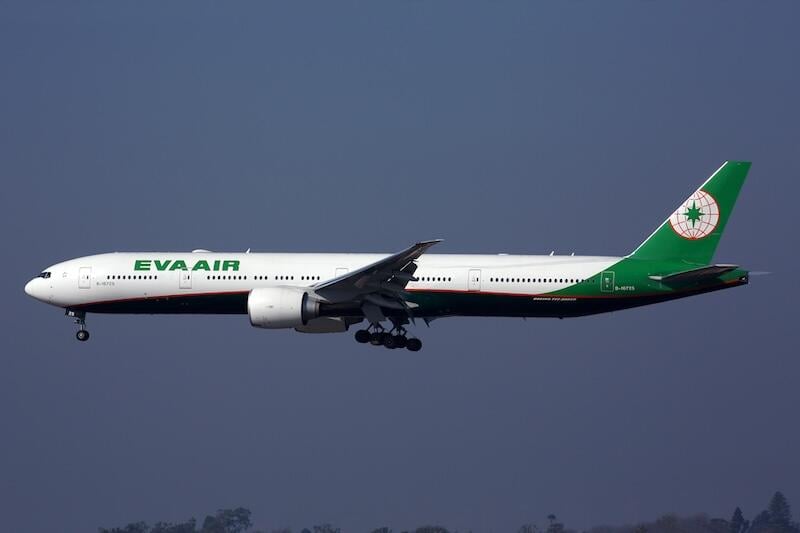
Taiwan’s EVA Air will expand its U.S. network during the fourth quarter with the launch of a new route to Dallas-Fort Worth International Airport (DFW).
Beginning Oct. 3, the Star Alliance member will operate three flights per week between Taipei Taoyuan and Dallas, marking its seventh U.S. destination and second in Texas. EVA already serves Houston George Bush Intercontinental daily, making it the only Taiwanese carrier with two points in the state.
North America is EVA’s third-largest international market, accounting for about 18% of all international departure seats from Taiwan in September 2024. According to OAG Schedules Analyser data, the Star Alliance member currently flies three times per day to both Los Angeles and San Francisco, as well as offering 12 roundtrips per week to Seattle. Chicago O’Hare, Houston and New York John F. Kennedy airports are each served daily.
DFW has become the world’s third-busiest airport by passenger traffic, driven in part by the surge of high-tech and corporate relocations into Texas. For EVA, the route provides access to both business travel and a growing Asia–Texas corridor, while complementing the existing Houston service. The launch also builds on longstanding ties, given that the airline has flown cargo to DFW since 1998.
While rivals such as China Airlines also maintain a strong transpacific presence, EVA’s growth has been supported by its widebody fleet renewal program. The carrier has 85 aircraft in service and a significant orderbook that includes eight Boeing 787-9s, five 787-10s and 24 Airbus A350-1000s, as well as 15 A321neos.
Atlanta-Marrakech
Delta Air Lines will become the only U.S. carrier flying nonstop from Atlanta to Marrakech this fall as the carrier seeks to strengthen its foothold in North Africa.
Starting Oct. 25, the SkyTeam alliance member will operate 3X-weekly flights between Atlanta Hartsfield-Jackson International Airport (ATL) and Marrakech Menara Airport (RAK) with 767-400ERs. The service marks the carrier’s debut in Marrakech and its first direct connection between Atlanta and Morocco.
For Delta, Marrakech adds a new premium leisure destination to its network, complementing established North African flying via joint venture partner Air France-KLM. For Atlanta, which has traditionally lacked nonstop links to North Africa, the launch expands the airport’s long-haul portfolio.
More News And Analysis From Routes World 2025
Delta’s entry comes as North America–Morocco connectivity expands. United Airlines launched Newark–Marrakech flights in late 2024, while Air Transat already operates Montreal–Marrakech service. Royal Air Maroc continues to focus on Casablanca, with flights to Miami, New York JFK, Toronto, Washington Dulles and Montreal, while Air Canada also links Montreal with Casablanca. OAG data indicates that with Delta’s addition, there will be nine nonstop routes between North America and Morocco during the 2025-26 winter season.
Marrakech will become the airline’s sixth African destination once service begins, joining Accra, Cape Town, Dakar, Johannesburg and Lagos.
Los Angeles-Brisbane
American Airlines will add Los Angeles–Brisbane flights this winter, strengthening its joint venture with Qantas.
From Dec. 5, the airline will operate 3X-weekly flights between Los Angeles International Airport (LAX) and Brisbane Airport (BNE) using 787-9s. The service runs through Jan. 30, 2026, and will complement its Dallas Fort Worth–Brisbane flights, which launched in October 2024 and operate on a winter-season basis.
The move aligns with Qantas’ strategy of balancing capacity across the transpacific joint venture. During the peak period, American will assume three of Qantas’ existing LAX–Brisbane frequencies, leaving Qantas to fly the route four times per week. In effect, the Oneworld partners will sustain daily service between the two cities while optimizing fleet deployment.
The LAX–Brisbane market is already competitive. Qantas operates year-round flights, and Delta Air Lines began seasonal service in December 2024, with the Queensland government forecasting the Delta launch alone could generate more than A$200 million ($131 million) for the local economy over three years.
According to OAG data, Qantas holds a dominant 48.8% share of U.S.–Australia capacity, while American accounts for 7.7%. Together, the partners control 56.5% of the market. United Airlines follows with 26.9%, while Delta has 7.8%, Hawaiian 5% and Jetstar 3.7%. Combined, American and Qantas currently offer about 31,100 two-way weekly seats across the Pacific.
Qantas, for its part, is also boosting U.S. flying this winter. The carrier will increase Dallas Fort Worth–Melbourne service to daily from Dec. 3 through January 2026, while Sydney–Dallas Fort Worth will be upgraded to all-A380 operations beginning in January. The changes reflect ongoing strong demand for U.S.–Australia travel, with both premium and leisure segments driving load factors.

Related Content