Air Premia, SAS Scandinavian Airlines and Air China are all preparing to launch new international routes to and from Asia in the coming weeks.
Seoul Incheon-Washington Dulles
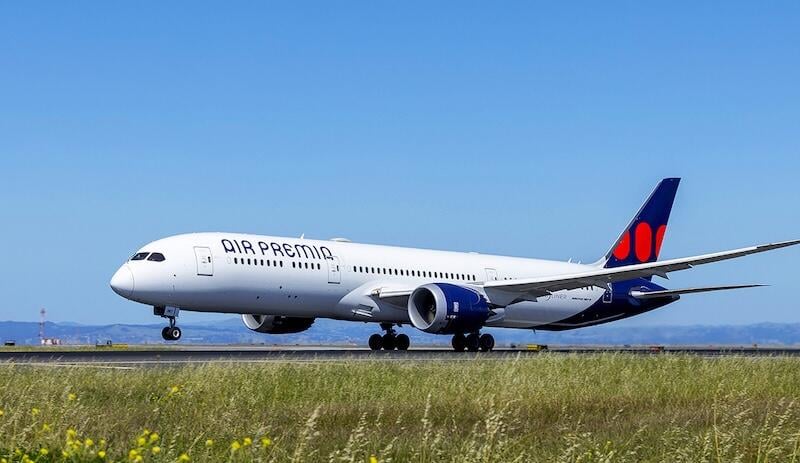
Air Premia’s planned launch of Seoul Incheon-Washington Dulles service adds competition on one of the more specialized U.S.-South Korea long-haul markets, where demand is driven largely by government, business and diaspora travel rather than tourism.
The airline will begin 4X-weekly flights on April 24 using Boeing 787-9 aircraft, competing directly with Korean Air, which already operates daily 777-300ER service on the route. Air Premia will offer about 2,472 two-way weekly seats, compared with Korean Air’s 3,878, giving the hybrid carrier roughly a 39% capacity share of the market.
Sabre Market Intelligence data shows O&D traffic between Seoul and Washington totaled about 123,000 two-way passengers in 2025, up 2% year on year, indicating a stable market. About 70% of passengers already travel nonstop, while San Francisco, Dallas-Fort Worth and Toronto are the largest connecting markets.
The Washington launch fits Air Premia’s broader strategy of focusing on long-haul routes to the U.S., where demand is supported by a large Korean diaspora and premium leisure traffic. Since launching long-haul operations in 2022 with flights to Los Angeles, the airline has expanded to New York Newark, San Francisco and Honolulu, positioning itself as a lower-cost alternative to full-service carriers on transpacific routes.
However, competition in the broader South Korea-U.S. market remains intense, with seven airlines operating nonstop service. Korean Air remains the dominant carrier with more than 40% of total capacity, followed by Delta Air Lines and Asiana Airlines. Air Premia currently holds about 14% of capacity.
Copenhagen-Mumbai
SAS Scandinavian Airlines plans to launch a Copenhagen-Mumbai route in June, marking the airline’s return to India after a 17-year absence.
The carrier will begin 5X-weekly flights on June 2 using Airbus A330-300 aircraft, offering about 2,600 two-way weekly seats. The service will become the second nonstop link between Denmark and India, joining Air India’s 4X-weekly New Delhi-Copenhagen route operated with Boeing 787-8 aircraft, which offers approximately 2,072 two-way weekly seats.
The move comes as demand between the countries continues to grow. Sabre Market Intelligence data shows O&D traffic between Denmark and India totaled about 180,000 two-way passengers in 2025, up 15% year on year.
More News And Analysis From Routes Asia 2026
However, much of this traffic currently travels via one-stop connections, primarily through Middle Eastern hubs such as Dubai, Doha and Abu Dhabi. SAS is likely targeting this one-stop traffic, particularly as geopolitical instability in parts of the Middle East and airspace disruptions have affected connecting flows between Europe and Asia.
The route also aligns with SAS’ broader network strategy as it transitions from Star Alliance to SkyTeam, strengthening connectivity with new partners and expanding long-haul routes from its Copenhagen hub. Mumbai provides access to India’s commercial capital while also offering potential connecting traffic flows beyond Scandinavia to North America and Europe.
Beijing Capital-New Delhi
Air China’s planned resumption of Beijing-New Delhi service marks another step in the gradual restoration of air links between China and India, a market still recovering from pandemic-era suspensions and political tensions.
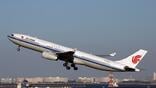
The Star Alliance carrier will restart flights between Beijing Capital International Airport and New Delhi’s Indira Gandhi International Airport on April 21, operating three times per week with Airbus A330-300 aircraft. The service will provide about 1,800 two-way weekly seats and will become the only nonstop route linking the capitals of the two countries.
Air China last served India in February 2020, when it operated flights from Beijing to both New Delhi and Mumbai. Services were suspended shortly afterward due to the COVID-19 pandemic and deteriorating relations following the Galwan Valley border clash in June 2020, which led to a prolonged halting of direct air links.
However, IndiGo relaunched services to mainland China in October, followed by China Eastern in November and Air India in February 2026.
Despite the recovery, capacity between China and India remains well below pre-pandemic levels. About 11,654 two-way weekly seats are currently scheduled between the countries, compared with nearly 23,000 seats in 2019. With Air China’s return and China Eastern’s planned Kunming-Kolkata launch, capacity is expected to rise to around 16,900 weekly seats by early June.
Traffic demand is also recovering. Sabre Market Intelligence data shows origin-and-destination traffic between China and India totaled about 753,000 two-way passengers in 2025, up 16% year over year, although still below pre-pandemic levels.

Related Content