New Chitose Airport, Japan.
XI’AN, China—Hokkaido Airports is targeting further expansion in Southeast Asia and long-haul markets, as the operator looks to balance strong winter demand with year-round growth across its network of seven airports in northern Japan.
The company, which manages New Chitose, Hakodate, Asahikawa, Kushiro, Obihiro, Memanbetsu and Wakkanai airports, is focusing on Southeast Asia as a key driver of future route development. Traffic from markets such as Thailand, Malaysia, Singapore and the Philippines has risen sharply, supported by strong outbound demand and rapid capacity growth.
“On this basis, we are promoting off peak utilization through targeted incentives and detailed, data-driven analysis, enabling airlines to optimize aircraft rotations while expanding access to Hokkaido,” says Kenjiro Karahashi, Hokkaido Airports’ managing director of aviation business development.
The strategy also reflects the region’s capacity profile, with available slots during early-morning and late-night periods aligning well with Southeast Asian flight schedules.
Looking ahead, new aircraft technology is expected to play a key role in expanding connectivity. “The forthcoming introduction of the Airbus A321XLR … has the potential to be a genuine game-changer,” Karahashi tells Routes, adding that its extended range could enable airlines to operate thinner point-to-point routes more efficiently.
More News And Analysis From Routes Asia 2026
However, seasonality remains a structural challenge. Winter demand—driven by Hokkaido’s numerous ski resorts—continues to anchor international traffic, particularly from Southeast Asia and long-haul markets.
“To strengthen year-round demand, we are actively promoting ‘Summer Hokkaido’ across all markets,” Karahashi says, as the operator looks to stimulate traffic during the off-peak season.
Despite these challenges, traffic growth remains strong. Hokkaido Airports expects to handle 32.5 million passengers in fiscal 2025-26, a 6% year-on-year increase, including 5.3 million international passengers, up 20%.
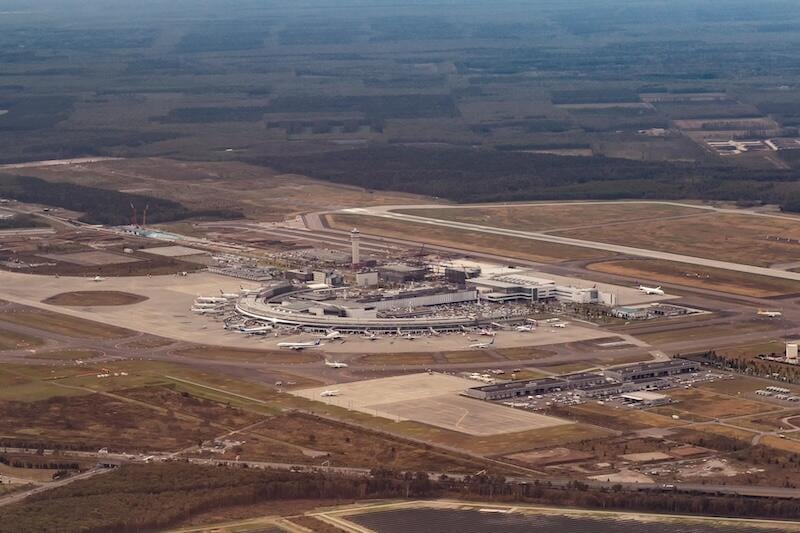
Sapporo’s New Chitose Airport, the region’s primary gateway, handled a record 25.8 million passengers in 2025, supported by expanded airline capacity and network growth. The airport reached 335 weekly international flights at the start of winter 2025, driven by new routes and resumed services.
Long-haul connectivity is also strengthening. Air Canada plans to launch a seasonal Vancouver-New Chitose service in December 2026, creating the airport’s first nonstop link to North America. Meanwhile, Qantas has reinstated flights from Sydney after a six-year hiatus and will increase frequencies to up to five weekly flights in winter 2026.
Across the wider network, regional airports are also adding international services, including Obihiro-Seoul Incheon and Hakodate-Seoul Incheon, alongside increased capacity to Taipei.

Related Content