Air China plans to launch a new route to Venice in July, adding a second mainland China route to the Italian gateway and further expanding Chinese carrier capacity into Europe for summer 2026.
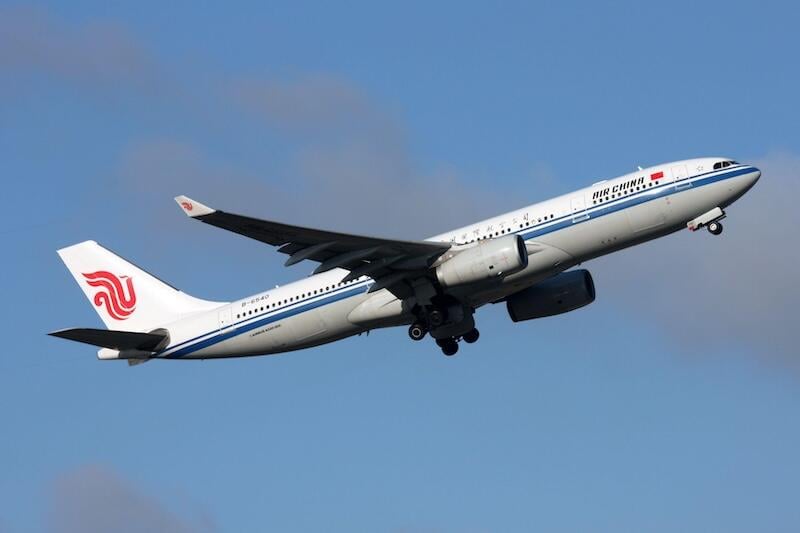
The Star Alliance carrier has filed plans to operate a 4X-weekly service connecting Beijing Capital and Venice Marco Polo from July 2 using Airbus A330-200 aircraft.
The airline will become the sole operator on the Beijing-Venice sector and the second Chinese airline serving Venice, joining China Eastern Airlines, which launched Shanghai Pudong-Venice service in 2024 and is operating the route 5X-weekly this summer with A350-900s.
The addition of Venice forms part of a broader expansion by Air China across Europe, where the airline is scheduled to serve 22 destinations during peak summer 2026 across 42 nonstop routes. Other new Europe services for the season include Brussels-Beijing Capital, Brussels-Chengdu, Frankfurt-Beijing Daxing, London Gatwick-Chengdu and Milan Malpensa-Beijing Daxing.
The growth will increase Air China’s two-way seat capacity between Europe and mainland China to 4.53 million seats in summer 2026, up from 3.63 million in summer 2025 and well above the 2.86 million seats offered in summer 2019 before the pandemic and Russia’s full-scale invasion of Ukraine.
The expansion will make Air China the largest airline in the Europe–mainland China market this summer, accounting for 29.2% of all seats. China Eastern holds 17.2%, followed by China Southern Airlines at 13.5%. Excluding Russia, Air China’s share rises to 33.2%, compared with 15.8% for China Eastern and 13.1% for China Southern. Hainan Airlines ranks fourth with 10.3%, while Turkish Airlines is the largest non-Chinese operator at 5.7%.
Overall, Chinese airlines are expected to control 83.3% of the Europe-China market excluding Russia in summer 2026, up from 82.7% a year earlier and significantly above their roughly two-thirds share in 2019, according to OAG Schedules Analyser data.
The latest expansion highlights the advantages Chinese airlines have retained in Europe-Asia markets since 2022. While European carriers remain barred from Russian airspace and must operate longer routings to China and North Asia, Chinese airlines continue to access more direct overflight corridors, reducing block times and operating costs. That has helped Chinese carriers rebuild faster and more aggressively across Europe, particularly in secondary markets.
Chinese carriers are also benefiting from disruption to traditional one-stop routings via the Gulf. Ongoing instability involving Iran, Israel and U.S.-aligned states in the Middle East has constrained airspace and disrupted operations at major Gulf hubs, historically a key connecting corridor between Europe and Asia.
That has reduced one-stop capacity through hubs such as Dubai, Abu Dhabi and Doha, particularly on Europe-Asia flows, increasing the appeal of nonstop service and further strengthening the position of Chinese airlines in long-haul Europe-Asia markets.
Italy remains one of the strongest growth markets at present. OAG data shows China-Italy capacity will rise 13% year on year in summer 2026, supported by Air China’s Venice launch and growth across Milan and Rome. Other major growth markets include Belgium, where China capacity is up 63% year on year, Spain up 38% and the UK up 10%.

Related Content