Riyadh Air has named Cairo as its third passenger destination, signaling an early test of the Saudi startup’s ability to compete in one of the Middle East’s most densely served short-haul markets.
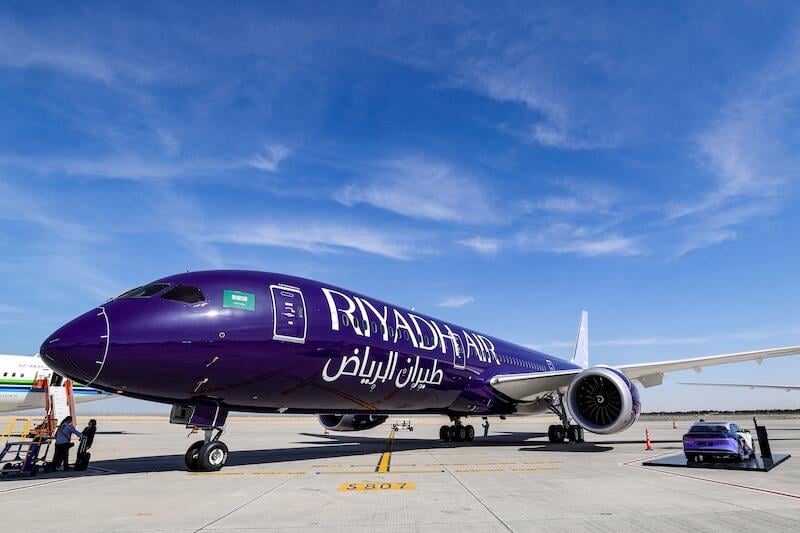
The carrier plans to operate daily Boeing 787-9 flights between Riyadh King Khalid International Airport (RUH) and Cairo International Airport (CAI) once regular commercial services commence, positioning the Egyptian capital alongside London Heathrow and Dubai as part of its initial network rollout.
“This route has been carefully selected to serve a key market that aligns with our ambition to become a global destination and a significant contributor to Vision 2030,” CEO Tony Douglas says.
OAG Schedules Analyser data shows that eight airlines currently serve the RUH-CAI market. Saudia leads with a 33.5% capacity share, followed by flynas at 26.7% and Egyptair at 11.5%. Low-cost operators flyadeal, Air Arabia Egypt, Air Cairo, Nile Air and Nesma Airlines also serve the sector.
According to Sabre Market Intelligence data, O&D traffic on the Riyadh-Cairo corridor totaled 2.15 million two-way passengers in the 12 months to June 2025, up 3% year on year. About 95% of travelers flew nonstop, underscoring the strength of local demand.
Riyadh Air’s plans to serve Cairo come as the carrier continues to work toward full scheduled operations, a process slowed by aircraft delivery delays that have pushed back the start of regular passenger services. The airline has so far operated limited flights between Riyadh and London Heathrow using a former Oman Air 787-9 as part of an operational readiness program restricted to employees and Public Investment Fund affiliates.
Riyadh Air intends to take delivery of one 787-9 per month and has orders for 39 of the type, plus 33 options. It also has up to 50 Airbus A350-1000s and 60 A321neos on order as it builds out its long-term fleet.
The airline plans to reach more than 100 destinations by 2030, initially focusing on long-haul services. Domestic flying will follow the arrival of A321neos in the second half of 2026.

Related Content