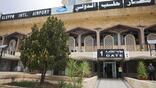
Red Sea International Airport (RSI) has welcomed its second international route following the launch of Qatar Airways’ new direct service from Doha to Saudi’s luxury tourism destination on the west coast.
The new route, announced by the airline on Oct. 21, offers three weekly nonstop flights between Hamad International Airport and RSI. The service gives Qatar Airways an 18.1% capacity share at RSI, which is operated by daa International.
This marks the 12th Saudi destination in Qatar Airways’ network, joining Abha, Al-Ula, Dammam, Jeddah, Medina, Neom, Qassim, Riyadh, Tabuk, Taif and Yanbu.
Qatar Airways Group CEO Badr Mohammed Al-Meer said the new route is “a testament to the close ties between the two countries, and offers travelers seamless, world-class access to one of the Middle East’s emerging destinations.”
Red Sea International Airport CEO Andrew Tyler-Smith added, “This new service introduces an efficient gateway to a wide range of European destinations, unlocking critical access to key target source markets for the first time.”
Opened in September 2023, RSI initially handled domestic flights to Riyadh and Jeddah via Saudia, before welcoming its first international route from Dubai operated by Flydubai in 2024.
Flydubai currently offers three weekly flights using Boeing 737-8s and 737-800s. Saudia connects RSI domestically with three weekly flights from Jeddah and six weekly flights from Riyadh, which is set to become a daily service at the start of the 2025-26 winter season.
RSI is set to become one of the first carbon-neutral airports in the Middle East, powered solely by renewable energy.
Abdulaziz Alabdan, executive director of airport operations at Red Sea Global, the developer, told Aviation Week that RSI will be “100% powered by renewable energy through the solar farm on site at the Red Sea.
“We have already deployed over 760,000 photovoltaic solar panels, avoiding up to 600,000 [tons of carbon dioxide equivalent] per year when fully operational,” Alabdan continued.
“We're also incredibly proud to be the first airport in Saudi Arabia to offer sustainable aviation fuel, reducing carbon emissions by up to 35% per flight, marking a pivotal moment for the entire industry. This immediate reduction directly impacts the carbon footprint of each aircraft using the fuel, contributing to a cleaner aviation sector.”
RSI aims to welcome 1 million guests annually by 2030.