Canada has approved an increase in flights to China as the two countries take further steps to rebuild air connectivity—although capacity remains well below pre-pandemic levels.
The Canadian government says that airlines from both countries will be allowed to incrementally expand direct passenger services, alongside up to 20 weekly all-cargo flights and reciprocal access to all points in each country. The move follows Canadian Prime Minister Mark Carney’s visit to Beijing earlier this year and forms part of a broader effort to strengthen economic ties.
“Increasing passenger and cargo flights with China is a very positive step toward our trade diversification goals while also reinforcing our strong people-to-people ties,” Transport Minister Steven MacKinnon says. “We are giving Canadian travelers more choice and more convenience while growing our commercial relationship with China.”
The announcement comes as the Canada-China aviation market remains well below pre-pandemic levels despite steady improvement over the past 18 months. According to OAG Schedules Analyser data, there are currently about 35X-weekly roundtrip, nonstop flights between the two countries, operated by seven airlines. That compares with just 10X-weekly roundtrips as recently as October 2024, but remains far short of the roughly 110 weekly frequencies recorded at this time in 2019.
Overall, there are about 22,400 two-way weekly seats available in the market, up from approximately 17,500 a year ago, but still significantly below the nearly 66,000 seats offered before the pandemic.
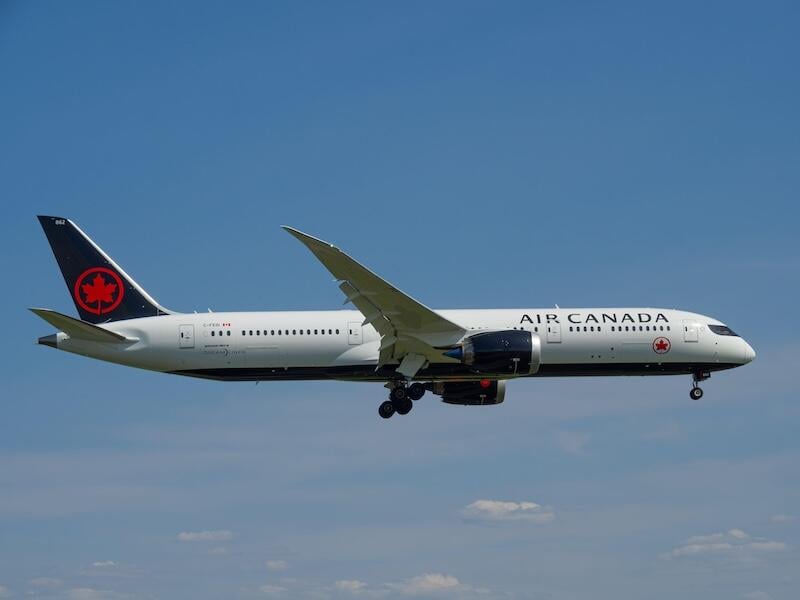
Air Canada is currently the largest operator, accounting for about 29% of total capacity with 11 weekly frequencies linking Vancouver with Beijing Capital and Shanghai Pudong. Chinese carriers—including Air China, China Eastern Airlines and China Southern Airlines—each operate 6X-weekly flights, while Hainan Airlines, Sichuan Airlines and Xiamen Airlines have two roundtrips per week.
Recovery has been slowed by both the gradual return of international travel and geopolitical factors. Canadian airlines cannot overfly Russian airspace following the war in Ukraine, forcing them onto longer, more costly routings, while Chinese carriers retain access to more direct flightpaths.
Despite these challenges, underlying demand has shown signs of recovery. Sabre Market Intelligence data indicates that O&D traffic between mainland China and Canada reached about 1.34 million two-way passengers in 2025, up 29% year on year. However, this remains well below the nearly 2.4 million passengers recorded in 2019.
Only about 23% of passengers traveled nonstop in 2025, compared with roughly 46% before the pandemic, reflecting the reduced availability of direct services and the continued reliance on connecting itineraries.
“Expanding direct air connections with China strengthens the trade corridors Canadian exporters rely on to reach global markets each day,” International Trade Minister Maninder Sidhu says. “[This] announcement supports trade diversification, helps Canadian businesses move goods more efficiently and advances Canada's goal of increasing exports to China by 50%, while contributing to long-term economic growth here at home.”
China remains Canada’s second-largest single-country trading partner, with C$124.8 billion ($91.5 billion) in two-way merchandise trade in 2025, according to Canadian government figures.

Related Content