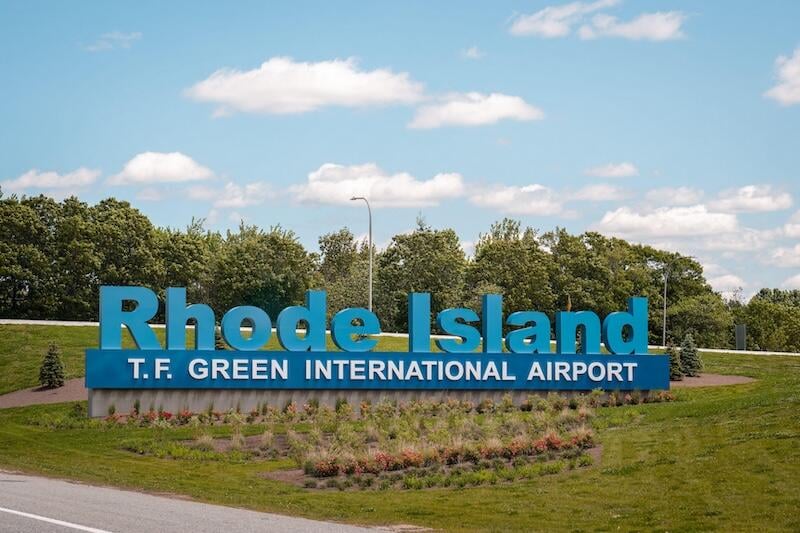
Rhode Island T. F. Green International Airport (PVD) is targeting its next phase of network growth, aiming to capitalize on longer-range narrowbody aircraft and strong regional demand to position itself for future long-haul international service.
In 2025, PVD handled approximately 4.3 million passengers, with scheduled seat capacity rising 10% in the year. “2025 was a banner year for Rhode Island T. F. Green International Airport,” says Markus Berger, assistant vice president for air service development at the Rhode Island Airport Corporation. “Passenger traffic increased by 11% for the 12 months ending in October, with several individual months experiencing even stronger gains.”
Growth has been driven by both network expansion and airline confidence. Between 2024 and 2025, carriers launched 10 new destinations, including Dallas, Denver, San Juan and Cancun, lifting PVD’s nonstop network to 38 destinations—above pre-pandemic levels.
Looking ahead, the airport is targeting international opportunities made feasible by next-generation aircraft like the Airbus A321XLR. “Advances in aircraft technology—particularly long-range narrowbody aircraft—are creating new opportunities to expand service from PVD to Europe, as well as Central and South America,” Berger tells Routes. “These aircraft make it possible to connect midsized markets like Providence to international destinations that were previously out of reach.”
More News And Analysis From Routes Americas 2026
The airport’s catchment is a key part of its pitch. PVD serves a population of approximately 7.5 million people within a 90-min. drive, overlapping with the Providence-Boston corridor. “Our strategy is centered on ensuring existing routes succeed,” Berger says. “Strong performance builds airline confidence and naturally leads to additional investment and network expansion.”
Infrastructure and passenger experience investments also play a role. The airport continues upgrading concessions, amenities and terminal facilities to strengthen traveler preference and support airline load factors.
However, competition remains a defining feature of the region. “While this presents a significant opportunity, the region is also served by multiple airports, creating a competitive landscape,” Berger says.
Beyond competition, broader industry dynamics—including aircraft availability, evolving airline network strategies and economic uncertainty—could influence growth trajectories. “Looking ahead, the greatest opportunity lies in building on this foundation—expanding connectivity while ensuring existing routes perform well and deliver long-term value for both airlines and travelers,” Berger says.

Related Content