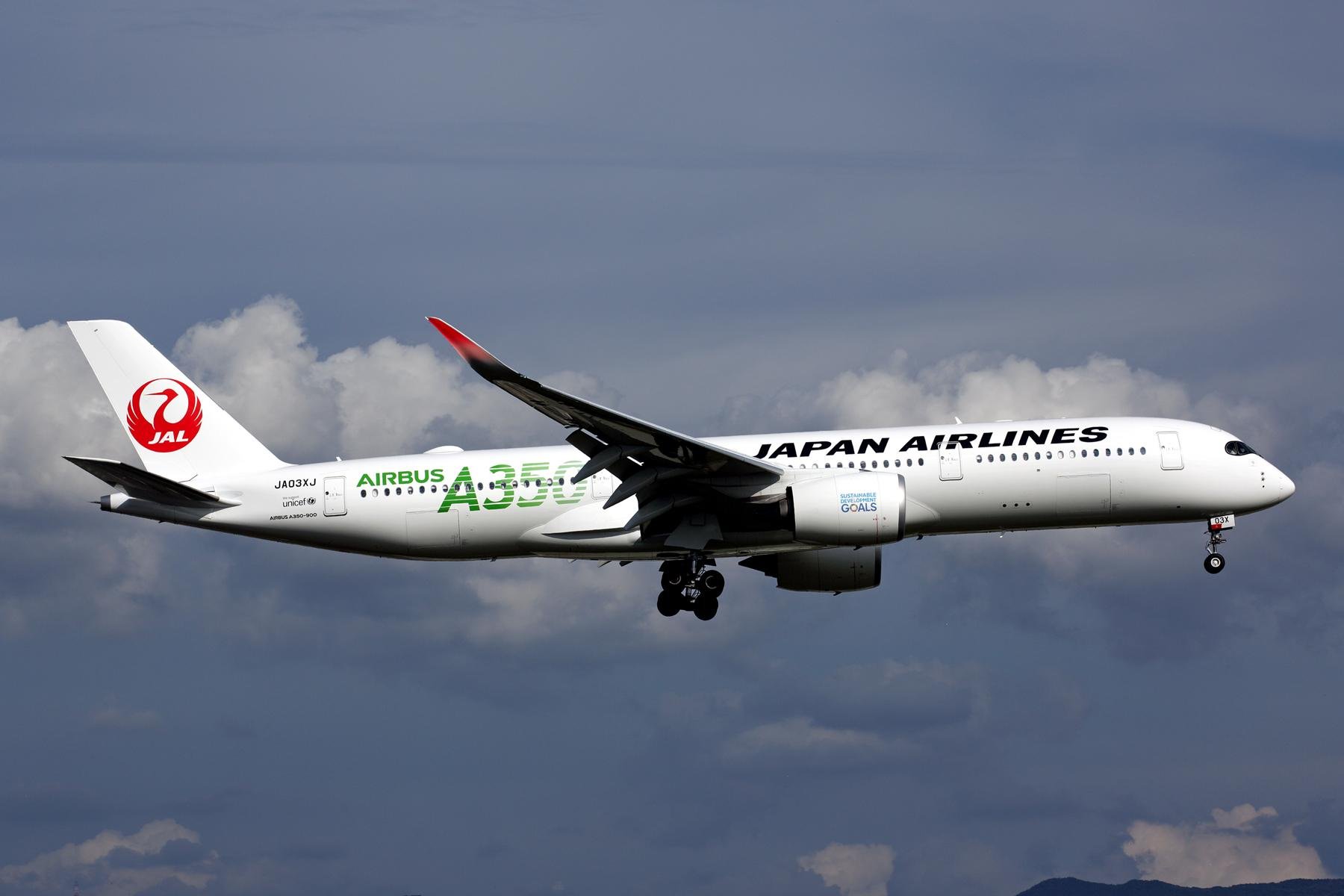
Japan Airlines (JAL) and All Nippon Airways (ANA) have coordinated their schedules on a domestic route for the first time, following recommendations from the Japanese government.
The schedule coordination will occur on the Tokyo Haneda-Okayama route during the winter schedule season that begins Oct. 25. The move aligns with findings released in May by a government panel established by the Ministry of Land, Infrastructure, Transport and Tourism to address concerns about the viability of domestic air service.
Domestic air travel in Japan has been hurt by adverse economic conditions, as well as by long-term trends such as a shrinking population and the expansion of high-speed rail networks.
ANA and JAL each have five daily return flights on the Haneda-Okayama route. The schedule changes will affect two flights in each direction for each carrier. In these cases, the competing flights are relatively close together, but will be spaced more evenly in the winter schedule.
The panel formulated guidelines regarding exemptions from the Antimonopoly Act for coordination on certain domestic routes. Regulations covering investment by major airlines in other carriers were also changed.
ANA said it will “explore deeper cooperation among competitors in the future” through a range of measures recommended by the panel. However, the carriers are not yet considering additional specific routes for schedule coordination, the carrier told Aviation Week.
Likewise, JAL said it “will continue discussions with relevant parties considering various options” in the domestic market, including frequency adjustments, route coordination and codeshare arrangements.
The Haneda-Okayama timetable coordination was part of the winter season schedules revealed on Aug. 18 by both carriers.
JAL announced frequency and route increases in its domestic operation, and in some cases seasonal routes will be upgraded to year-round service.
On the international side, a highlight of JAL’s schedule changes will be a 16% year-over-year capacity increase on its European routes. On some European routes it will introduce more operations with its new Airbus A350-1000 fleet.
JAL’s Haneda-Doha, Qatar, route, which has not operated since late February, will remain suspended during the winter schedule season. The carrier said it will accommodate travel demand to and from the Middle East and Africa through codeshare flights operated by Qatar Airways.
ANA also announced domestic service increases and some reductions. Overall, the carrier expects its domestic flights to be up 1% year over year for the second half of its fiscal year, which begins Oct. 1.
ANA plans to boost international flights by 4% year over year for the fiscal second half. Notable increases will be made on routes from Tokyo Narita Airport to Mumbai, Bangkok and Singapore, and from Haneda to Milan.
Domestic subsidiary Peach intends to increase domestic flights by 10% and international by 9% versus the same period last year.
In terms of fleet, ANA is due to begin receiving its first Boeing 737-8s in October. A new wave of 787-9 deliveries is expected to begin in November, with these widebodies generally intended for growth rather than replacement.
ANA’s new business class product—labeled The Room FX—will be introduced on the 787-9s.
Separately, ANA announced a memorandum of understanding with Riyadh Air aimed at increasing connectivity between Japan and Saudi Arabia.
The airlines envisage cooperation across a range of areas including interline connectivity, codeshare arrangements and loyalty program reciprocity.
Specific routes to be included will be finalized through upcoming discussions, ANA told Aviation Week. While neither carrier operates between the two countries, the deal would cover any potential direct flights if they are started. The airlines are also considering codesharing via gateways in Southeast Asia and India.
Codesharing beyond Riyadh to Middle Eastern and African destinations may be included, as well as Japanese domestic routes beyond Tokyo.

Related Content