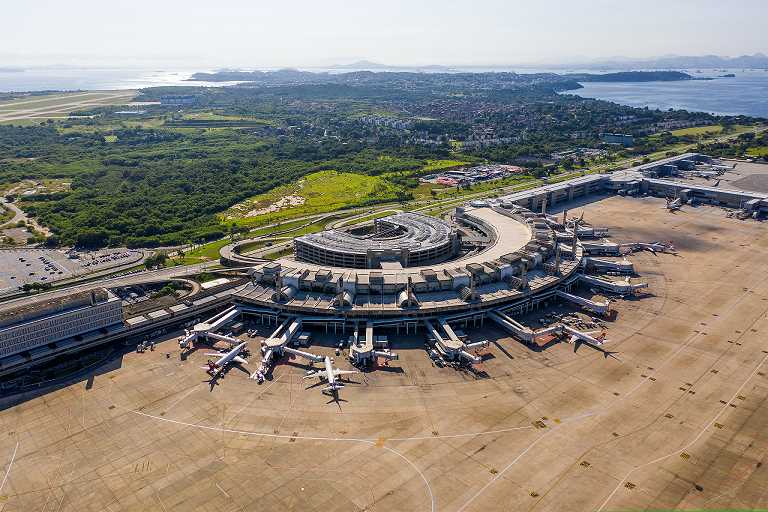
Rio de Janeiro Galeão International Airport (GIG) sees securing a second Middle East hub carrier as critical to its long-term international strategy, with surging e-commerce cargo volumes strengthening the business case for additional long-haul capacity.
At present, Emirates is the only airline linking Rio to the Middle East, operating a daily Boeing 777-300ER service on a Dubai-Rio de Janeiro-Buenos Aires routing. The flight provides roughly 5,000 two-way seats per week and represents GIG’s sole direct connection to the Gulf. The airport currently has no nonstop services to Asia or Africa.
Patrick Fehring, director of Aero Business at Routes Americas 2026 host RIOgaleão, described additional Middle East connectivity as “absolutely” critical. “It opens up Asia and the Middle East and parts of Africa, where we have no connectivity at the moment,” he tells Routes. “We need more capacity into the Middle East and Asia to have more competitive ticket prices and stimulate the market.”
Sabre Market Intelligence data indicates unmet demand. In the 12 months to June 2025, Manila, Singapore and Tokyo ranked as the three largest unserved Asian markets from Rio, each generating more than 10,000 two-way passengers traveling indirectly.
Fehring says an additional Gulf or Istanbul hub would significantly expand one-stop access to Asia and improve fare competitiveness.
More News And Analysis From Routes Americas 2026
Beyond passenger flows, GIG’s fast-growing e-commerce business is increasingly part of the route development equation. “We’ve seen our e-commerce business surge,” Fehring says.
The growth has been driven largely by Shopee, the Singapore-based e-commerce platform, which has expanded its logistics network in Rio and relies heavily on air capacity for international shipments. Much of the cargo originates in China and moves on both freighter aircraft and bellyhold capacity.
“If you come in today as a long-haul passenger carrier from Europe or the Middle East, you can certainly capitalize on e-commerce to Rio,” Fehring says.
GIG has established dedicated e-commerce handling facilities and is expanding warehouse capacity to accommodate other operators. Fehring says the rapid rise in parcel volumes does not merely reflect cargo growth but creates structural support for new long-haul passenger routes. “The passenger network is also an enabler for this business,” he says.

Related Content