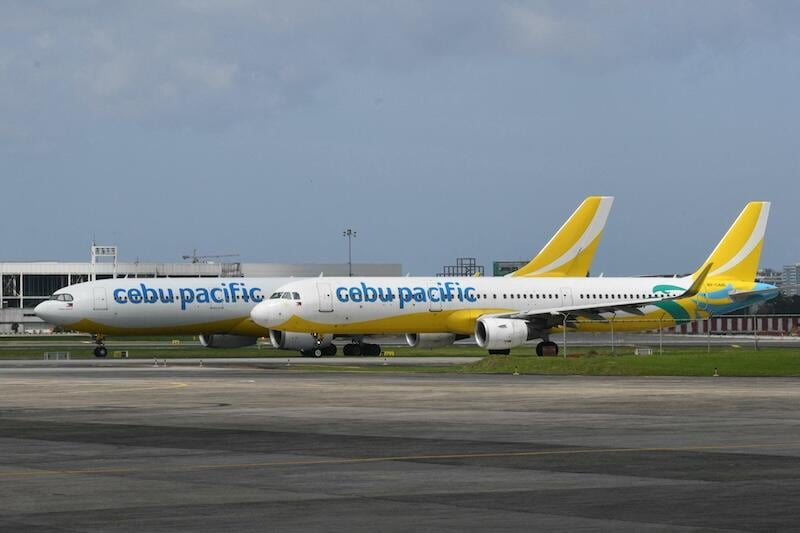
A 65% increase in fuel expenses pushed Cebu Pacific to a third-quarter (Q3) net loss, reversing a profit a year earlier despite continued passenger growth and higher revenue.
The Philippine low-cost carrier (LCC) reported a net loss of 6.9 billion Philippine pesos ($109 million) in the three months through Sept. 30, compared with a 499 million-peso profit in Q3 2025. Revenue rose 14% year over year to 27.7 billion pesos, while passenger numbers increased 4% to 6.3 million.
“The third quarter remained a challenging period, as elevated fuel prices, a weaker peso and broader macroeconomic pressures continued to affect our operations,” CEO Michael Szucs said. “Nevertheless, we are encouraged by the early results of the actions we have taken, including the return to passenger growth.”
For the first nine months of 2026, revenue increased 10% to 96.2 billion pesos from 87.6 billion pesos a year earlier. Passenger revenue rose 9% to 65.3 billion pesos, while ancillary and cargo revenues grew 10% and 13%, respectively. Cebu Pacific carried almost 21 million passengers during the nine-month period, up 4%. Domestic traffic increased 5% to 15.7 million passengers, while international traffic was broadly unchanged at 5.1 million.
The airline recorded an operating loss of 3 billion pesos, reversing a 7.8 billion-peso operating profit, while its pretax result moved from a 2.9 billion-peso profit to an 8.6 billion-peso loss. Foreign exchange translation losses contributed to a net loss of 12.8 billion pesos, compared with a 9.47 billion-peso profit a year earlier.
Cebu Pacific’s domestic market share reached 63% in Q3, up from 55% during the same period in 2025, according to Civil Aeronautics Board data.
OAG Schedules Analyser data shows the carrier offered approximately 12.6 million domestic seats during the northern summer 2026 season, an increase of 14.5% from 11 million a year earlier. International capacity declined 8.9% to about 4.6 million seats, while overall capacity increased 7.2% to approximately 17.2 million seats. The figures show that Cebu Pacific is concentrating more capacity on its larger domestic markets.
During winter 2026-27, domestic seats between Manila and Davao are scheduled to rise 29.2% to about 919,500, while Manila-Panglao capacity increases 33% to approximately 446,100. Manila-Puerto Princesa seats are up 23.8% to about 551,500. The airline is also increasing capacity on domestic routes linking Manila with Bacolod, Tacloban, Cagayan de Oro and Caticlan.
Total capacity is currently set to increase 7.1% year over year to approximately 14.8 million seats during winter 2026-27, comprising a 5.5% rise domestically and a 10.8% increase internationally. New international airport pairs in the winter schedule include Cebu-Nagoya, Japan; Cebu-Shanghai Pudong; and Clark-Hanoi, Vietnam.
“Looking ahead, forward bookings for the holiday season and into Q1 2027 are healthy, and the ongoing improvement in yields gives us greater confidence in the revenue outlook for the fourth quarter and beyond,” Szucs said.

Related Content