Dubai’s $35 billion Al Maktoum International Airport expansion is on track, with more than 100,000 workers on site, Dubai Airports CEO Paul Griffiths said Nov. 17.
“Piling [foundation work] is commencing. Groundworks are well underway, so it’s definitely a live project,” Griffiths told media. Procurement is progressing as well, with major construction contracts being discussed and awarded.
The new airport will undergo at least a year of testing before its first passengers arrive. The testing program will cover critical systems including baggage handling, check-in processes, Wi-Fi and other airport technology. The first phase is due to open in 2032.
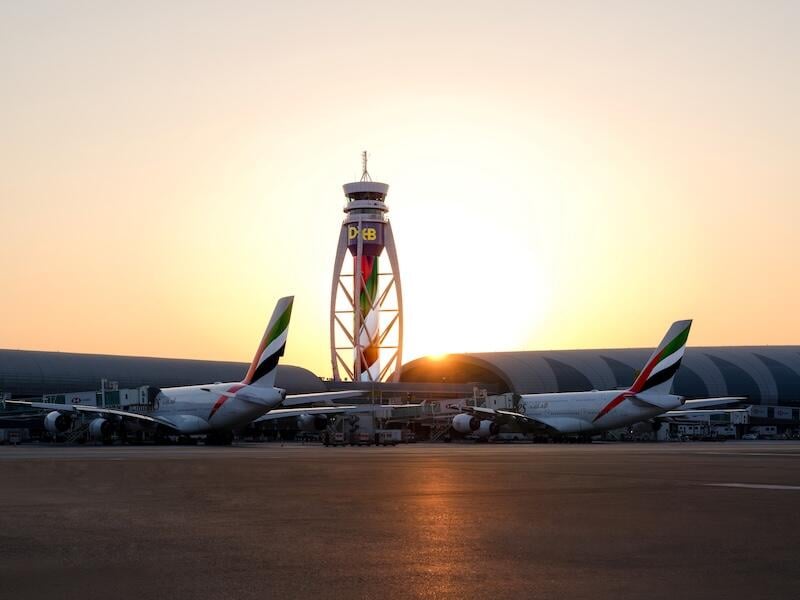
Also known as Dubai World Central (DWC), the airport is expected to have five runways, 400 gates and capacity for 260 million passengers a year by the 2050s, more than any airport handles today. It will cover about 27 mi.², five times the footprint of Dubai International (DXB).
In 2025, Hartsfield-Jackson Atlanta International Airport handled about 106.3 million passengers while DXB processed a record 95.2 million.
Griffiths said the project involves more than terminals and runways: Dubai Airports must keep adding capacity at DXB while preparing to move operations to the new hub.
Separately, Dubai Airports also announced that DXB welcomed 50.4 million passengers in the first nine months of 2026–down 28.1% year over year, after disruptions earlier this year. Third-quarter volumes fell 22.1%, and the operator expects more than 70 million by year-end. Cargo fell 23.2% to 1.215 metric tons.
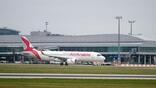
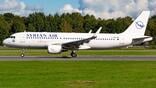
Airlines are returning after the regional conflict. DXB is served by 57 airlines linking 235 destinations in 101 countries. British Airways resumed services earlier this month, joining Royal Air Maroc, SunExpress and Cebu Pacific, with more carriers due back in the coming weeks.
India was the largest market in the third quarter with 2.6 million guests, ahead of Saudi Arabia (1.4 million) and the UK (1.3 million).
“As more airlines return to Dubai and our network strengthens, we are focused on continuing to accommodate future growth while making journeys simpler and more seamless,” Griffiths said.
He added that technology and better ways of working would unlock extra capacity without expanding DXB’s footprint.

Related Content