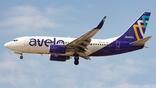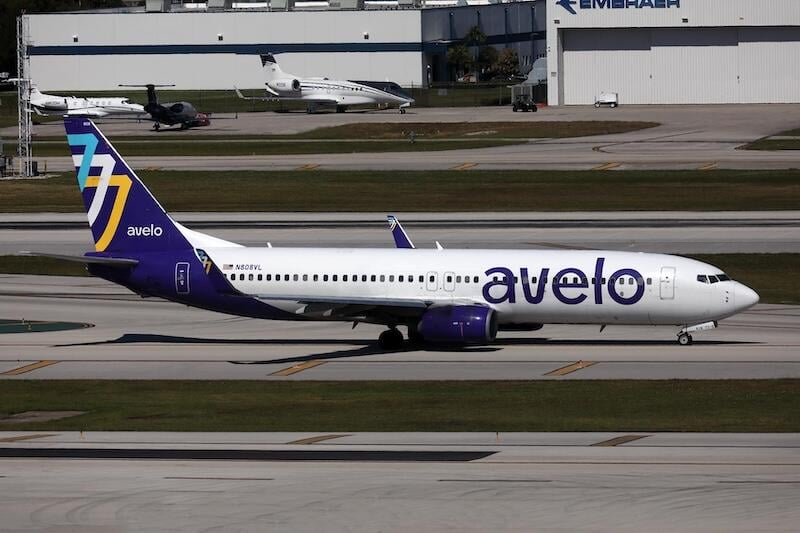
After retrenching from the U.S. West Coast in 2025, Avelo Airlines is further consolidating operations, shuttering three bases and shrinking its fleet as it seeks to stabilize its business.
The carrier recently completed a recapitalization that strengthened its balance sheet, and executives say the restructuring is intended to give the airline financial flexibility as it narrows its operational focus.
It plans to streamline its network around four existing crew bases—Tweed New Haven Airport in Connecticut, Wilmington Airport in Delaware, Concord-Padgett Regional Airport in North Carolina, and Lakeland Linder International Airport in Central Florida—while opening a new base at McKinney National Airport near Dallas in late 2026.
As part of the restructuring, Avelo will close crew bases at Phoenix-Mesa Gateway Airport in Arizona, and at Raleigh-Durham International Airport and Wilmington International Airport in North Carolina. The airline emphasized that it will continue serving Raleigh-Durham and Wilmington on a reduced basis from other cities in its network.
“These changes enable Avelo to focus on sustainably scaling five core bases in 2026 and to prepare the company for growth in the coming years,” the airline says, citing its recent order for up to 100 Embraer E195-E2 aircraft as central to that strategy.
The network shift will reduce Avelo’s footprint at Raleigh-Durham, where the carrier currently operates seven routes and about 2,235 weekly departure seats, according to OAG Schedules Analyser data. Only service to Tweed New Haven and Rochester, New York, will remain, leaving markets such as Grand Rapids, Michigan, unserved. Avelo is Raleigh-Durham airport’s eighth-largest carrier, with a 1.3% capacity share, compared with 7.3% for rival Breeze Airways.
At Wilmington, North Carolina, Avelo is currently the second-largest airline with a 14.3% capacity share and more than 3,100 weekly departure seats. Service will be reduced from 11 destinations to four—Nashville, New Haven, Tampa and Baltimore/Washington—with routes to Florida leisure markets and Punta Cana being discontinued.
Although Avelo does not operate scheduled service from Phoenix-Mesa Gateway Airport, it provides deportation flights for the U.S. Department of Homeland Security following a contract signed in April 2025. Those flights are separate from its commercial network.
The restructuring also includes changes to the carrier’s fleet. Avelo will remove six Boeing 737-700 aircraft, leaving it primarily operating the larger 737-800. The carrier currently operates 22 narrowbodies, comprising eight 737-700s and 14 737-800s.
The changes follow a period of strategic realignment for the airline, which exited the U.S. West Coast entirely last year after shutting down its original base at Burbank, California.
Speaking at the Takeoff North America conference in November 2025, Avelo Director of Network Planning Mike Corcoran said consolidation is a deliberate pause ahead of future expansion. “Moving to 2026, our network is going to be focused on really consolidating into our core bases, which are secondary [East Coast] airports,” he explained.
Growth is expected to resume once deliveries of the E195-E2 begin, with its first aircraft anticipated in mid-2027. The jets are expected to allow Avelo to target smaller, underserved markets.
“We absolutely plan to expand nationally once again,” Corcoran said. “The E2 is really going to enable us to serve the West Coast in a more efficient way.”
“For a long time, we had dual operations on the West and East Coasts. It’s really challenging to run an airline of our size in those two disparate geographies without any connectivity in the middle. The E2 is going to enable us to go back there, probably in a smarter, more effective way,” Corcoran said.

Related Content