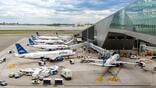
Frontier Airlines and JetBlue Airways are emerging as the largest beneficiaries of Spirit Airlines’ collapse, but the latest schedule data suggests that nearly half of the ULCC’s former capacity remains unfilled.
Analysis of 339 routes served by Spirit during summer 2025 shows that competitors have added approximately 2.7 million seats for the June-August 2026 period, replacing about 48% of the 5.67 million seats the carrier operated across those markets during the same period a year earlier.
However, while airlines have moved quickly to absorb demand on the most attractive routes, overall capacity across the former Spirit network remains down 8.8% year-on-year, OAG Schedules Analyser data shows.
Spirit’s collapse marked the end of a 33-year run for the airline that pioneered the ULCC model in the U.S. By unbundling fares and charging separately for services ranging from baggage to seat assignments, Spirit helped transform airline pricing strategies across the industry. However, after reentering Chapter 11 in August 2025, the carrier grounded its fleet and began winding down operations on May 2 after failing to secure rescue financing.
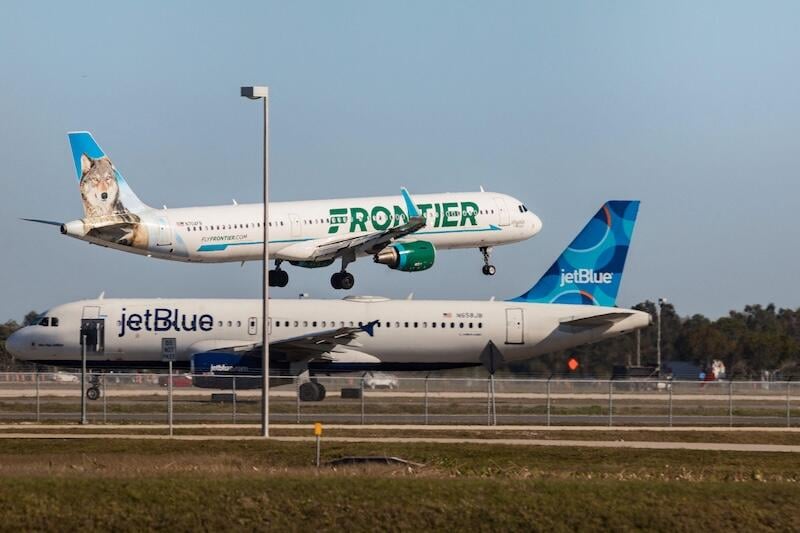
Among Spirit’s former competitors, Denver-based Frontier has expanded the most. Capacity across former Spirit markets has increased by approximately 1.3 million seats year-on-year, a rise of about 70%, lifting Frontier’s share of available seats in those markets from 5.6% to 10.4%.
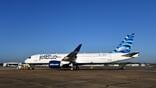
JetBlue has also moved aggressively, particularly in Fort Lauderdale, Spirit’s former home base. Capacity on former Spirit routes has increased by more than 500,000 seats year-on-year, comparing the June-August period in 2025 and 2026.
The airline announced 11 new Fort Lauderdale destinations on the day Spirit shut down and plans to operate nearly 130 daily departures from the airport this summer, representing the largest schedule in its history. JetBlue’s growth is particularly visible on routes linking Fort Lauderdale with cities such as Atlanta, Austin, Dallas-Fort Worth, Houston Intercontinental, Baltimore and New Orleans.
Breeze Airways has also expanded selectively in South Florida. The carrier added approximately 134,000 seats across former Spirit markets year-on-year and has been building out its Fort Lauderdale network with a mix of new intra-Florida routes and links to secondary cities across the Southeast.
Legacy airlines have also captured portions of the displaced demand—although their response has been more selective. United Airlines has added about 334,000 seats across former Spirit markets compared with June-August last summer, and American Airlines has added roughly 299,000 seats. Delta Air Lines’ capacity across the same markets is broadly unchanged, while Southwest Airlines has added about 130,000 seats.
Spirit's exit is also reshaping competitive dynamics at key airports. Looking only at routes that the ULCC operated during peak summer 2025, Fort Lauderdale remains one of the airports most affected by the carrier’s collapse. Capacity from the airport across those markets is still about 268,000 seats below June-August 2025 levels, despite the growth from JetBlue, Frontier and Breeze. Other major Spirit airports—including Las Vegas, Newark, Orlando and Baltimore/Washington—also continue to show declines.
The data also reveals significant gaps that competitors have yet to fill. More than 20 former Spirit routes have no scheduled service this summer. Among them are Fort Lauderdale-St. Thomas in the U.S. Virgin Islands, Fort Lauderdale-St. Croix, New Orleans-San Pedro Sula and Pennsylvania’s Latrobe-Myrtle Beach. Collectively, those 20 markets accounted for more than 250,000 Spirit seats during the June-August 2025 period.
Several larger markets also remain well below last year’s capacity levels despite new entrant activity. Routes including Las Vegas-Los Angeles, Fort Lauderdale-Montego Bay, Atlanta-Los Angeles, Dallas/Fort Worth-Cancun and Newark-Los Angeles continue to show year-on-year reductions.
Looking ahead to September 2026, airlines have replaced about 60% of Spirit’s former capacity, up from 48% during the peak summer period. Frontier remains the largest beneficiary, having added more than 415,000 seats year-on-year in September 2026 compared with September 2025, followed by JetBlue with about 228,000 additional seats.
Overall, the data shows that rather than replicating Spirit’s network, carriers have concentrated expansion on routes offering the strongest demand and revenue prospects, while a number of thinner leisure and VFR markets remain underserved or have lost service entirely.

Related Content