This article is published in Aviation Daily part of Aviation Week Intelligence Network (AWIN), and is complimentary through Jul 09, 2026. For information on becoming an AWIN Member to access more content like this, click here.
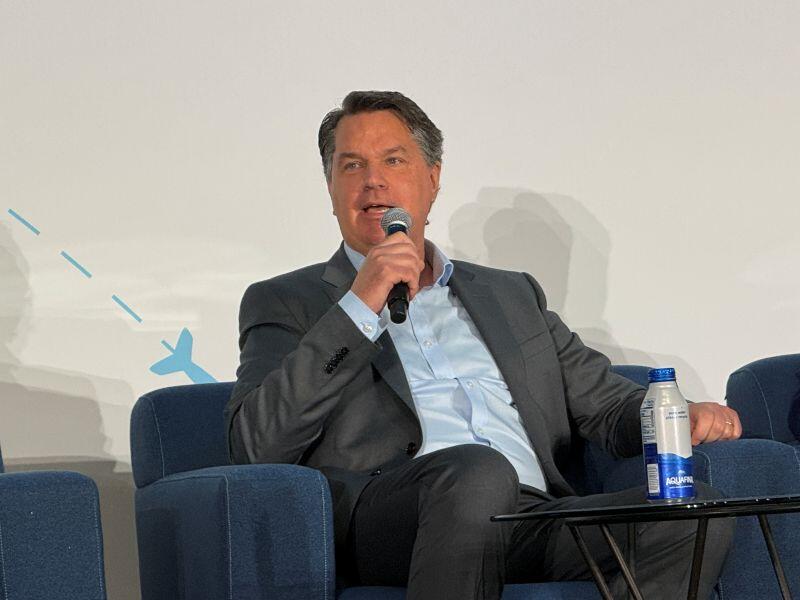
Oneworld CEO Ole Orvér.
MIAMI—Airline global alliances were once built primarily around global network reach. Today, newly minted oneworld CEO Ole Orvér believes they increasingly will be judged on whether the customer experience works seamlessly across airlines, technology platforms and loyalty ecosystems.
Speaking during a panel discussion and later on the sidelines of the Aviation Festival Americas conference in Miami, Orvér outlined the challenges facing the alliance. Orvér previously held senior leadership roles at airberlin and Qatar Airways, while most recently serving as Finnair CCO. He inherited the alliance at a time when airline partnerships are evolving rapidly through joint ventures, loyalty businesses and shifting alliance memberships.
“Let’s fix the basics,” Orvér said. “There’s a difference between what we promise and what we offer.” He repeatedly returned to the idea of “seamless” travel, while acknowledging the industry was still far from delivering it consistently. Dynamic boarding passes that automatically update gate changes, delays and seat assignments may feel routine for many US travelers, he noted, but connecting those systems across multiple airlines and regions remained surprisingly difficult. “American [Airlines] can have their system working, Finnair can have their system working, but does this combined solution, American-Finnair, work? Not necessarily,” Orvér said. “We flew to the moon in the ‘60s, we should be able to solve this.”
The obstacles, he said, were rarely just about technology. Internal airline policies, commercial agreements and the challenge of aligning 15 member airlines often slowed progress. “Monday morning, we can all agree on the priorities,” Orvér said. “Monday afternoon, they may shift because things happen among the member airlines.”
Even so, Orvér pushed back on suggestions that alliances were losing relevance in an era increasingly dominated by joint ventures and bilateral airline partnerships. “Not a single airline on this planet can cover all your customer needs,” he said. “We need to connect networks; we need to connect the hubs.”
Alliance membership itself has become increasingly fluid in recent years. LATAM Airlines Group exited oneworld in 2020 following Delta Air Lines’ investment in the South American airline and its move toward SkyTeam partnerships. SAS recently shifted from Star Alliance to SkyTeam, while ITA Airways moved to Star Alliance following Lufthansa Group’s investment in the Italian carrier.
Rather than resisting those shifts, Orvér suggested alliances should remain flexible and value driven. When asked if smaller alliance member carriers felt they were sometimes “not seen,” he said, “Maybe we need to think about how we engage the smaller airlines to a better extent than we’ve done in the past.
India emerged repeatedly in Orvér’s comments as both a strategic gap and a major growth opportunity for oneworld. He acknowledged the alliance would benefit from a bigger Indian airline presence while acknowledging sensitivity to member Qatar Airways’ strong position in the market. He also pointed to Latin America and Africa as other areas for future markets to penetrate.
On the same day as the conference, oneworld announced a first-of-its-kind loyalty partnership with Indian hotel operator IHCL and its Taj InnerCircle-NeuPass program, expanding alliance benefits into hotels and hospitality.
Another point of differentiation for oneworld is a sustainability officer at the alliance level. Orvér describes it as an increasingly important “value add” for members.
“We’re very much consensus-oriented at oneworld,” Orvér said. “That maybe slows us down, but it also makes us stronger.”