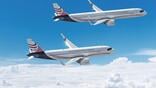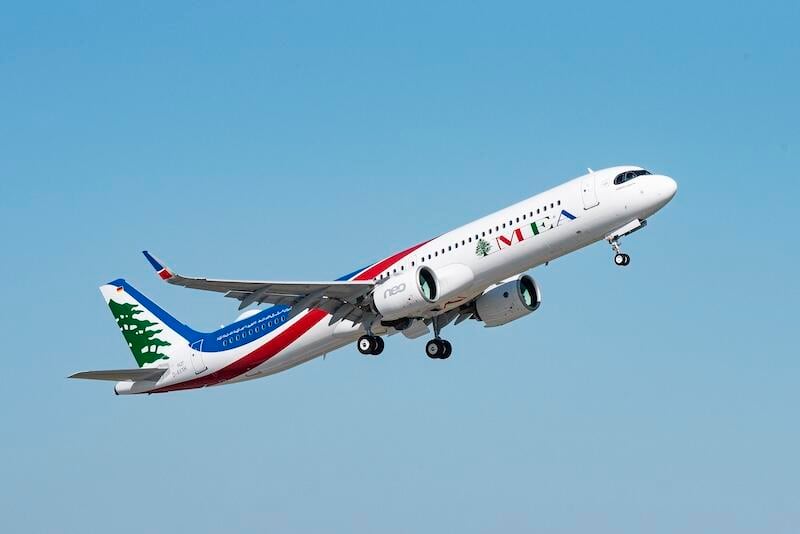
MEA has a fleet of 10 Airbus A321neos which should be joined by an A321XLR before year-end.
The head of Lebanon’s Middle East Airlines (MEA) is working to restore full operations after scheduling services to about 70% of its network in June and is planning to take delivery of new aircraft types.
MEA has continued flying throughout the current conflict, which since early March has seen fighting in Lebanon between Israel and Iran-backed militant group Hezbollah. MEA’s traffic plummeted in March and April with passenger numbers falling by more than 50%, although May was a little better and June could see further recovery, the carrier’s long-serving Chairman and CEO Mohamad El-Hout tells Aviation Week.
“I cannot know how things are going to develop in the summer,” El-Hout says in an interview. “This will have a big effect on whether we are going to make good money or not. But I believe whatever the situation, we will not incur losses,” he says. His confidence is attributed to market dynamics and MEA’s business model. “It is the Lebanese people—whenever you have some peaceful days, they start traveling,” he says.
El-Hout is also looking toward September, when the first of four Airbus A330-900s will be delivered, which will replace its fleet of four A330-200s. Two months later, El-Hout says MEA’s first of five A321XLRs will arrive. The A321XLRs will be equipped with the new Advantage version of the GTF engine which Pratt & Whitney says will spend more time on wing.
“With this engine, there will be no more problems,” he says, referring to his fleet of A321neos, which has been affected by issues with the GTF. MEA has 10 GTF-powered narrowbodies in its fleet, two of which are parked, Aviation Week’s Fleet Discovery database shows.
Balanced growth is the watchword for MEA. “You cannot plan here for the long term. We plan year after year. We don’t expand too much, and we don’t shrink,” said El-Hout. “We would like to have continuous growth, but we must be able to absorb shocks if we face a war or instability ... MEA’s survival over the past 20 years is because of this policy.”
Like everyone in the industry, MEA has been hit by very high fuel prices, and meanwhile its competitors have returned to Beirut in recent weeks offering low fares. “Some are looking for market share with the shrinking market, so with increasing fuel prices it has led a decrease in the price of tickets,” he says. To compete better with low-cost rivals, MEA is working to launch its own LCC, FlyBeirut, in 2027.

Related Content