Jet2 is leaning on its Airbus A321neo orderbook, strong balance sheet and growing southern England footprint to support long-term expansion after reporting record revenue but lower annual profit.
The UK leisure travel group, which owns Jet2.com and Jet2holidays, posted revenue of £7.48 billion ($9.98 billion) in the year to March 31, up 4% from £7.17 billion a year earlier, as flown passengers increased 5% to 20.83 million. Operating profit slipped 2% to £439.6 million, while profit before foreign exchange revaluation and tax fell 6% to £544.6 million.
Jet2 said the result was achieved after absorbing £11 million of startup investment for its new London Gatwick base, which opened in March, as well as about £50 million of additional costs from employment taxes and sustainable aviation fuel (SAF) premiums. The company also announced a new £250 million share buyback, following £363 million of shareholder returns during the 2025-26 financial year through dividends and repurchases.
“Jet2 is a business with strong fundamentals, a clearly differentiated business model, a compelling product proposition, strong customer loyalty and a brand built on trusted award-winning customer-first service,” CEO Steve Heapy said on the group’s earnings call. “We remain confident in Jet2’s ability to deliver sustained, profitable growth through our differentiated, fully integrated business model.”
Jet2’s summer 2026 on-sale capacity is 7.7% higher year over year at 19.9 million seats, while booked-to-date passengers are up 7.1%. The company said the Middle East conflict had led some customers to book closer to departure, but load factor for the first four months of the current financial year is 1.2 points ahead of last year.
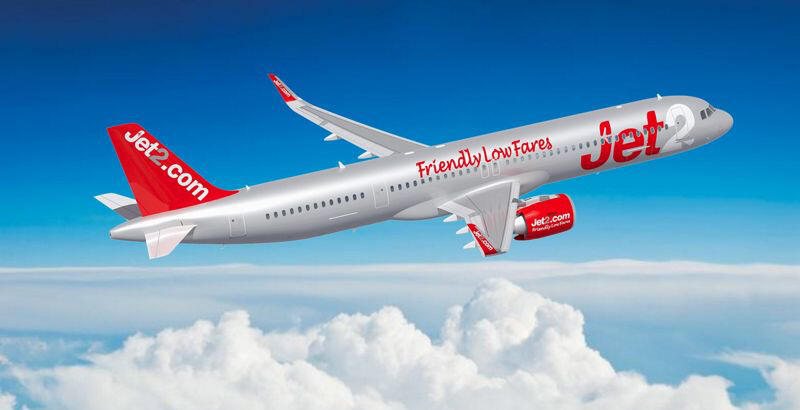
The airline will operate 31 A321neos in summer 2026, representing 22% of its fleet, with 124 scheduled for delivery by 2035. The company expects the total fleet to reach about 162 aircraft by 2032, although this could vary depending on the retirement profile of Boeing 737-800s.
Heapy said the A321neo “is central to our growth and cost efficiency plan,” adding that the aircraft offers 232 seats, 23% more than Jet2’s 737-800s, uses about 20% less fuel per seat and is around 50% quieter. By 2030, he said the neo fleet is expected to deliver annual cost efficiencies of about £190 million, helping to offset SAF mandates, carbon costs and airspace inefficiencies.
Analysts also highlighted Jet2’s Airbus orderbook as a competitive advantage. Jefferies Group pointed to investor interest in the value of airline fleets following Castlelake’s recent takeover bid for easyJet, while Peel Hunt said the aircraft were secured on attractive terms during the pandemic.
Jet2 said it was investing in pricing to stimulate load factor, particularly in flight-only markets, while holiday pricing has held up better. CFO Gary Brown told analysts that flight-only pricing is currently down by mid-single digits year over year, while package holiday pricing is holding up “reasonably well.”
The company has hedged 90% of its full-year jet fuel requirement at an average price of $743 per ton and more than 85% of its foreign exchange needs.

Related Content