This article is published in Aviation Daily part of Aviation Week Intelligence Network (AWIN), and is complimentary through Mar 09, 2026. For information on becoming an AWIN Member to access more content like this, click here.
FlyDubai has delivered a strong financial performance for 2025, reporting a pretax profit of $591 million.
The airline’s total revenue increased 6% year-over-year to $3.7 billion in 2025 from $3.5 billion in 2024, while profit after tax reached $531 million.
The results reflect what the airline described as disciplined cost management, operational efficiency and strategic investment across fleet, technology and talent.
While FlyDubai recorded a robust performance in 2025, it fell short, comparatively, of its record pretax profits of $674 million in 2024.
Passenger numbers reached 15.7 million in 2025, up 2% year-over-year, with business class demand seeing particularly strong growth, increasing 19% over 2024.
Fuel expenses represented 25% of total operating costs, and FlyDubai ended the year with £1.5 billion ($2 billion) in cash and bank balances, including predelivery payments. Operational reliability also improved, with on-time departures increasing 6% from 2024.
Regional expansion played a significant role in the airline’s growth. For FlyDubai, passenger numbers in the Middle East climbed 17%, while Africa and Europe each saw 12% growth, supported by increased flight frequencies and entry into new markets.
CEO Ghaith Al Ghaith highlighted the challenges the airline navigated, including geopolitical uncertainties, supply chain disruptions and rising maintenance costs.
FlyDubai operated 126,604 flights in 2025, making it the second-largest airline in the United Arab Emirates. During December peak travel, the airline recorded more than 400 departures in a single day. Network expansion remained a key growth driver, with nine new destinations launched, bringing the total network to 140 destinations across 58 countries. Capacity, measured in available seat kilometers, and traffic, measured in revenue passenger kilometers both rose 6%, while passenger yield improved 3% over the previous year.
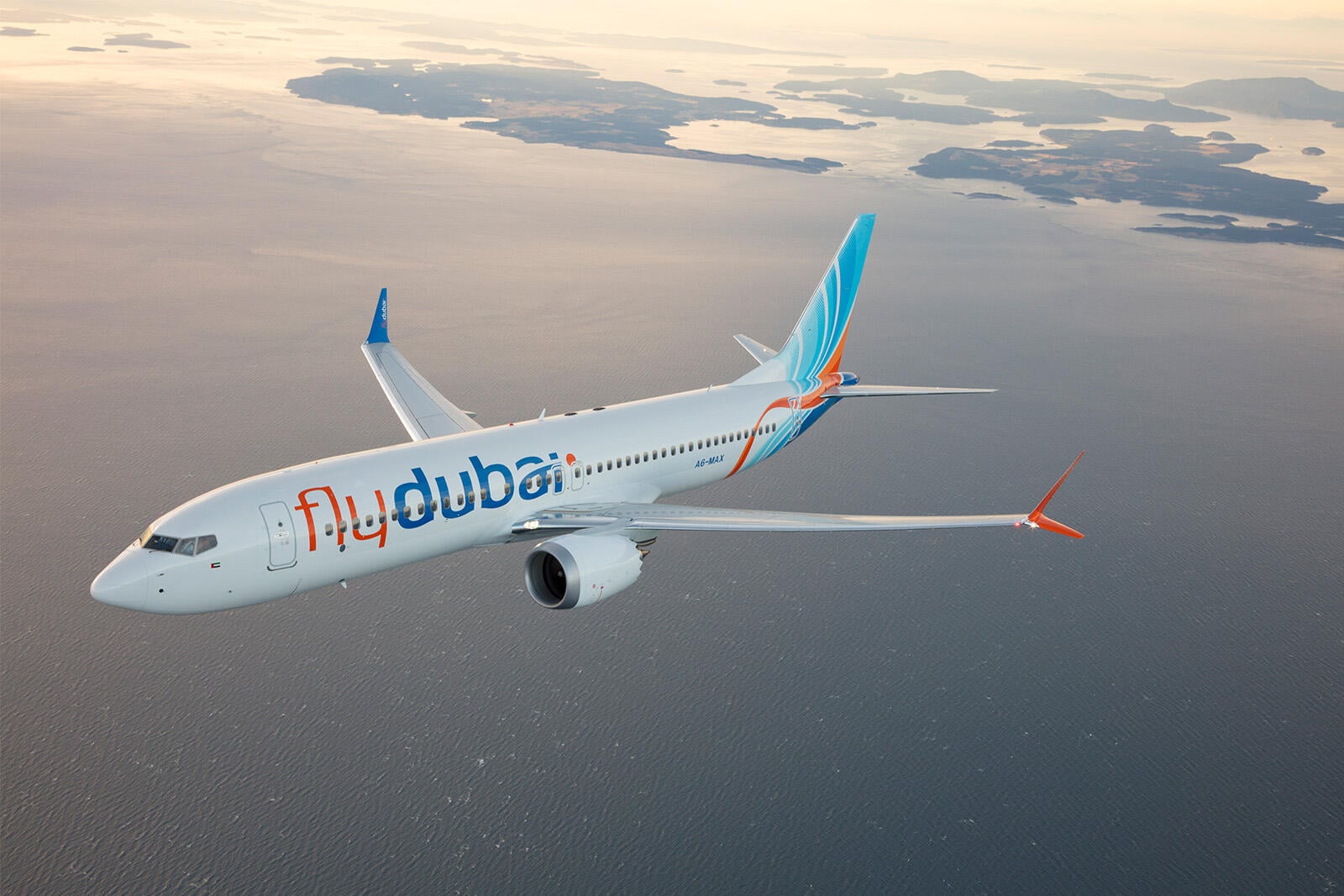
Fleet modernization continued, with the delivery of 12 Boeing 737-8s, increasing the total fleet to 97 aircraft with an average age of 5.5 years. Three older 737-800s were retired, and eight others retrofitted, bringing the total retrofitted fleet to 25. At the Dubai Airshow, FlyDubai announced a major order for 150 Airbus A321neos and 75 737 MAX family aircraft.
Sustainability initiatives advanced, with the 737 MAX fleet achieving 14% greater fuel efficiency. A new solar project at the airline’s Dubai campus is expected to reduce CO2 emissions by 1,211 tons annually. Global connectivity also expanded with 11 new interline agreements, maintaining codeshare partnerships with Air Canada, Emirates and United Airlines. FlyDubai’s workforce grew 11% to 6,763 employees to support its expansion.
The airline expects 12 new aircraft deliveries in 2026, including seven 737-9s and five 737-8s, and plans to launch Bangkok as a new Southeast Asian gateway.
Delayed aircraft deliveries have constrained capacity. “There are routes that we currently have that are crying for capacity,” Ghaith told Aviation Week, noting a backlog of 20 aircraft behind original projections despite receiving 12 aircraft in 2025.
He added the airline also continues to focus on talent development through its Cadet Programs for pilots, engineers and dispatchers. A new Aircraft Maintenance Center at Dubai South is scheduled to open in late 2026, enhancing operational control and maintenance turnaround for the growing fleet.