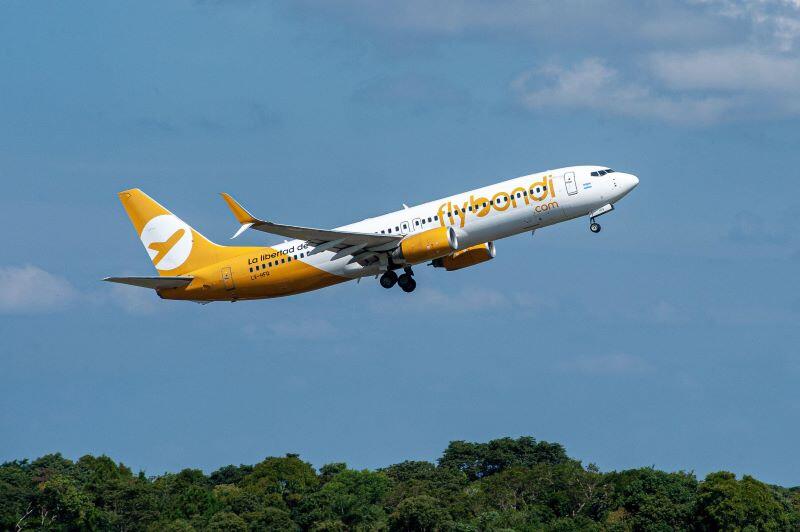
Argentina’s low-cost market is facing fresh upheaval as Flybondi’s operational problems continue to deepen.
OAG Schedules Analyser data shows that the ULCC was scheduled to offer about 370,000 seats across its network during July, about 4% higher than a year earlier. However, the published schedule no longer reflects actual operations.
The airline has not operated a flight for five consecutive days, while Flightradar24 data lists several scheduled services on July 7 as “unknown,” suggesting they have been canceled.
The apparent operational halt comes during Flybondi’s most challenging period since launching operations in 2018. Argentine media reports have highlighted supplier disputes, operational disruption and growing financial pressures, while creditors have reportedly sought bankruptcy proceedings.
Although CAPA Fleet Database lists nine active Boeing 737-800s and three aircraft that are not in service, it is understood that only three aircraft are currently available for operations, with the remainder parked. The airline’s leadership has also become unsettled. Former CEO and vice chairman Mauricio Sana stepped down from the board in May, while his successor as CEO, Paz Lovisolo, reportedly resigned in June after only about four months in charge.
The operational challenges have been reflected in Flybondi’s traffic performance. The latest passenger data shows the airline carried 70,863 domestic passengers in May, down 65.5% year over year, while international passenger numbers fell 39.4% to 16,077.
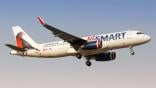
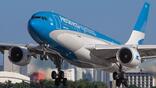
Prior to the latest flight cancellations, Flybondi had intended to offer 26 nonstop routes in July, down from 33 a year ago. OAG data shows that the ULCC would have accounted for about 12.5% of scheduled seats in Argentina this month, compared with 12.8% a year earlier. Aerolineas Argentinas remains the country’s largest airline with about 45% of scheduled capacity, while JetSmart has expanded to 19.1%.
In June 2025, Miami-based COC Global Enterprise became Flybondi’s lead investor, pledging to strengthen the carrier’s finances, add aircraft and expand its network. Six months later, the airline unveiled plans for a major fleet renewal, becoming Latin America’s launch customer for the Airbus A220 with an order for 15 A220-300s, plus options for five more. It also ordered 10 737-10s, with options for a further five.
Flybondi’s current challenges also come as rival JetSmart accelerates its expansion in Argentina. The carrier recently confirmed plans to grow its Argentine fleet to 23 aircraft by early 2027 with the addition of 10 A321neos.
Flybondi has been approached for comment on the latest operational disruption.

Related Content