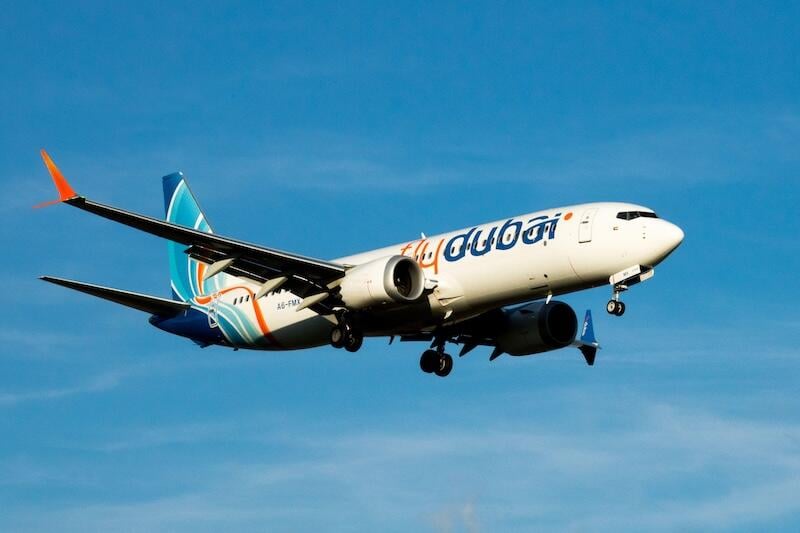
Credit: Cum Okolo/Alamy Stock Photo
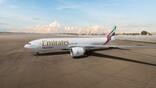
Over the past few years, flydubai and Emirates have grown increasingly close in a partnership, forged back in 2017, that is shifting flydubai's performance into a higher gear.
The former LCC is evolving rapidly into a powerful regional player under the wing of CEO Ghaith Al Ghaith, who is interviewed in the latest issue of Arabian Aerospace.
The Emirati national has led a team to create a highly profitable business, a performance that may put him in the running to succeed Tim Clark at the top of Emirates when that time is deemed right.
At inception, flydubai was deliberately established by the government as a separate entity and brand to fill a gap between Emirates and pure LCCs.
Dubai now has two dominant and intertwined carriers: Emirates, with its focus on long-haul, premium widebody routes; and flydubai feeding passengers from smaller, often underserved cities into Dubai on narrowbody aircraft.
In parallel, flydubai’s financial success is growing. In 2024 the carrier posted record pre-tax profits of AED2.5 billion ($674 million) for the financial year ending Dec. 31, 2024—an increase of 16% compared to 2023.
This was its fourth consecutive year of record profits, demonstrating how strongly the carrier has recovered since the COVID-impacted loss of 2020.
The move toward Emirates has brought a better business result and seen flydubai change its product.
To enable a seamless passenger experience across the networks of flydubai and Emirates, the smaller player has moved from a single-class cabin to introduce a business-class product with lie-flat seats and dedicated check-in zones at hub Dubai International, as well as inflight entertainment across the entire cabin.
The strategy is reaping rewards. At the Dubai Airshow in mid-November 2025, the airlines announced they had together carried more than 5 million passengers on codeshare flights in the last year alone—a 10% increase over the previous year.
When he was asked to lead the carrier by Emirates Chairman Sheikh Ahmed in 2008, he was expressly told not to make flydubai “Emirates Lite,” he told a media roundtable during the show last November.
That line may have blurred somewhat as the partnership tightens, but the outcome is more important than semantics.
As Ghaith tells Arabian Aerospace: “In this business, it is so powerful that you have the two airlines working in the same place and producing this business. When the new airport opens, we will be under one roof, and we will be even stronger.”
That one airport is Dubai World Central, slated to open and succeed the current Dubai International Airport in the early 2030s.
The partnership with Emirates is seeing flydubai evolve from a pure-play LCC as it develops its product offering.
“But there are certain fundamentals in the low-cost model and in the way we operate that are not changed. This may be behind the scenes, and you don't see it, but it keeps us focused,” Ghaith says.
“As a general statement, yes, there is more cost, but there is more revenue, the profit is also increasing and our margins are very high.”
It is stressed that the two airline businesses remain separate to ensure flydubai can retain its LCC heritage as much as possible, but most areas on the commercial side are coordinated, including network planning, airport operations and loyalty programs.
Networks and schedules are optimized, and the pair codeshare on more than 240 destinations in their combined network.

Related Content