This article is published in Aviation Daily part of Aviation Week Intelligence Network (AWIN), and is complimentary through Jun 13, 2026. For information on becoming an AWIN Member to access more content like this, click here.

Etihad To Add Further Widebodies As Full Recovery Beckons

aircraft
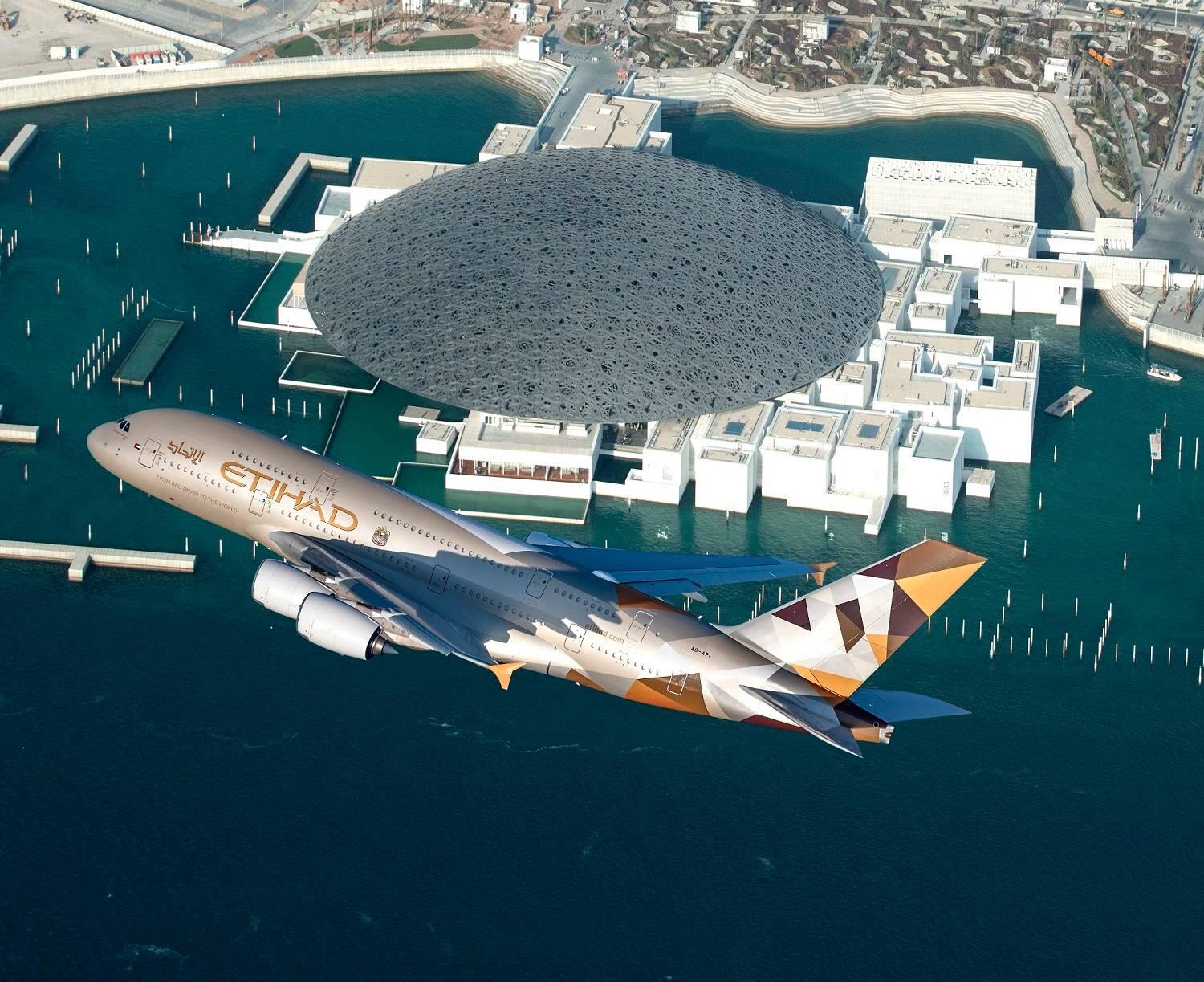
An Etihad Airways Airbus A380 flies over the Louvre museum outpost in Abu Dhabi.
Credit: Etihad Airways

RIO DE JANEIRO—Etihad Airways is demonstrating its confidence in a successful recovery from today’s conflict-impacted period with a top-up order for extra widebodies, Antonoaldo Neves, Chief Executive of the Abu Dhabi-based carrier told Aviation Week in an interview at the IATA Annual General Meeting in Rio de Janeiro.

“We have not changed our plans,” he stated, when asked if the carrier might slow its growth and defer aircraft deliveries. “In fact, just the opposite. We are just about to close a deal on incremental widebodies for the next five years.”

Several widebodies have become available on the market and “I’m getting some of those” in a very short timeline, Neves said. “Our decision-making process is crazy fast.”

There will be “double-digit” extra aircraft going to Etihad between now and 2031, explained Neves.

Despite flying very little in March and April because of the airspace closures, Etihad is seeing traffic volumes recover and network wide load factors are 84%, he said.

In terms of capacity, “our schedule starting June 15 is actually bigger than last year,” because its operation is weighted towards widebodies compared to narrowbodies. “We are the fastest growing airline in the world. This year we are growing 20% in terms of ASKs.”

On the financial side, Neves said, “2026 is a year that we’re going to be generating cash to finance our growth. I don’t know about profitability; it’s too early to tell.” He added that Etihad has a “relatively good [fuel] hedging position”.

“Demand is there. Right now, we are selling 110,000 to 120,000 [flight] segments per day, which is exactly what we were selling before the conflict,” he said.

“Average fare is back to where we were before the crisis, which is good, but not great,” while yields have recovered somewhat, he added. “We have an advantage because we have different aircraft types—this helps when you have downturns because I can deploy different fleet types for different markets and take into consideration the demand situation.”

For instance, “Paris is booming so we are putting double-daily [Airbus] A380s on this route,” he said.

And elsewhere, “India to U.S. and vice-versa is booming so instead of the [Boeing] 787-9, I am sending out A350s to the U.S.,” Neves said. “I have the A321LR that I can send to markets that are not doing that well given the conflict and my trip costs are much lower.”

“The breadth we have to adjust the network and deploy different aircraft is a competitive advantage for us during these times,” Neves said. “I always tell our people what we need is a business model that when we have a crisis, whether economic, airspace closure or conflict, we must have adaptability to survive those days, and that is why we are confident about the recovery.”

Mark Pilling

Mark Pilling is Managing Editor of Aviation Week's award-winning Arabian & African Aerospace and Show Business. He also leads Aviation Week TV.