This article is published in Air Transport World part of Aviation Week Intelligence Network (AWIN), and is complimentary through May 02, 2026. For information on becoming an AWIN Member to access more content like this, click here.
CAPA: US Consolidation Is A Model Of Success
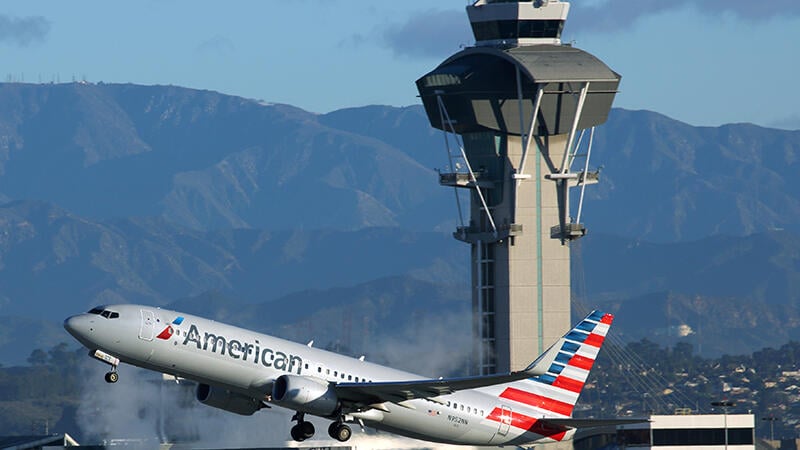
Executed well, consolidation makes airlines more resilient and better performing.
The modern structure of the US airline industry is the product of nearly five decades of consolidation, shaped by repeated economic shocks, regulatory change and relentless competitive pressure. What began as a fragmented, chronically unprofitable sector following deregulation has evolved into a concentrated market dominated by a handful of financially resilient airlines. This transformation has delivered sustained profitability, global competitive leadership, and a powerful premium-driven business model that increasingly defines success. This consolidation continues and has extended to the LCC sector.
The roots of consolidation lie in the aftermath of the 1978 Airline Deregulation Act, which unleashed intense competition, triggering decades of fare wars, overcapacity and serial bankruptcies. By the early 2000s, structural inefficiencies and cyclical volatility had pushed most major carriers through Chapter 11 restructuring. This painful period laid the foundation for consolidation as a mechanism to rationalize capacity, stabilize pricing and generate sustainable returns.
Consolidation of the US network carriers between 2005 and 2013 fundamentally reshaped the industry. Mergers, including those of America West–US Airways; Delta Air Lines–Northwest Airlines; United Airlines–Continental Airlines; Southwest Airlines–AirTran; and American Airlines–US Airways, reduced the number of large legacy operators to three global network giants led by American, Delta and United, alongside Southwest as the largest low-cost carrier.
This period marked the end of destructive capacity wars and the emergence of rational capacity deployment, pricing discipline and structurally lower costs. From 2013 until the end of the decade, interrupted only by the COVID pandemic, capacity to, from and within the US grew year-on-year. Since recovering from the pandemic in 2023, the US market grew in 2024 but plateaued in 2025 (-0.2%), its first year-on-year decline since 2013 (excluding the COVID-affected 2020 year).
Over the past decade, US airlines have consistently outperformed global peers in profitability, cash generation and shareholder returns. This performance has proven durable, even in the face of unprecedented shocks, including the pandemic, inflationary pressures, geopolitical disruption and regulatory volatility. The ability of the US majors to maintain financial momentum through the turbulence of 2025, including government shutdowns, air traffic disruptions and tariff uncertainty, illustrates the resilience that consolidation has delivered.
At the center of this success lies a decisive shift toward premiumization. Delta and United, in particular, constructed business models anchored in premium seating, expansive lounge networks, sophisticated loyalty ecosystems and high-yield corporate travel. Premium cabin revenues have continued to materially outperform main cabin performance, reinforcing the strategic primacy of affluent leisure and business travelers. This structural advantage has widened the gap between premium network carriers and ULCC airlines, whose models remain heavily exposed to price sensitivity, rising costs and limited revenue diversification.
The scale achieved through consolidation has enabled massive and sustained investment in product, technology and customer experience. Co-branded credit cards, dynamic pricing systems and premium airport infrastructure have become essential pillars of profitability, positioning US majors not only as airlines but as sophisticated consumer and financial services platforms.
Yet consolidation has not eliminated competition; it has intensified it. With fewer major players, strategic battles have become more concentrated and consequential. Nowhere is this more evident than at Chicago O’Hare, where American and United are engaged in a high-stakes contest for long-term dominance. Despite years of restructuring, balance sheet repair and operational improvement, American continues to lag Delta and United in margin performance, highlighting that execution discipline and premium depth have become decisive differentiators.
This competitive dynamic illustrates a broader post-consolidation truth: market leadership increasingly depends on premium product strength, network relevance and loyalty monetization. Airlines unable to deliver across all three dimensions face mounting pressure, regardless of size. The experience of American, alongside the struggles of ULCC operators, demonstrates that consolidation is a necessary but insufficient condition for sustainable profitability.
The ripple effects of consolidation are now cascading through lower market tiers. Alaska Airlines’ acquisition of Virgin America in 2018 marked a pivotal moment in the evolution of a regional carrier into a national competitor. Alaska’s subsequent move to acquire Hawaiian Airlines extends this trajectory, providing access to widebody operations, transpacific connectivity and enhanced leisure and international exposure.
Further down the value chain, the proposed merger between Allegiant Air and Sun Country Airlines represents a defining moment for the US leisure and LCC segment. Unlike previous attempts at ULCC consolidation, which often struggled under regulatory, cultural and operational constraints, this transaction unites two carriers with highly aligned business models. Both specialize in serving price-sensitive leisure travelers through low-frequency routes, charter operations and disciplined cost management. Their combined scale enhances network breadth, fleet utilization and revenue diversification, while preserving a strategic focus on markets largely avoided by larger airlines.
This approach reflects a crucial lesson from the broader US consolidation experience: success depends not on size alone, but on staying within a clearly defined strategic lane.
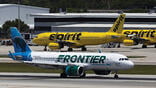
The struggles of ULCCs Frontier Airlines and Spirit Airlines further highlight this dynamic. Rising costs, volatile demand and limited pricing power have undermined the traditional ULCC model, forcing repeated attempts at consolidation and, in Spirit’s case, deep financial and ongoing restructuring. These challenges reinforce the growing polarization of the US airline market, increasingly divided between premium-led network carriers and niche leisure specialists, with limited room for undifferentiated low-cost operators.
Southwest’s ongoing strategic pivot underscores the gravitational pull of premiumization. The introduction of assigned seating, extra-legroom products, bag fees and international partnerships recognizes that revenue diversification and product segmentation are essential.
Consolidation is likely to remain a defining force in shaping the US airline landscape. The structural drivers of consolidation—capital intensity, cost inflation, network complexity and shifting consumer preferences—will continue to exert pressure across all markets.
For aviation policymakers, the US experience offers a compelling case study in how consolidation, when executed effectively, can transform an industry and demonstrates that consolidation is not a one-time event but an ongoing strategic process.