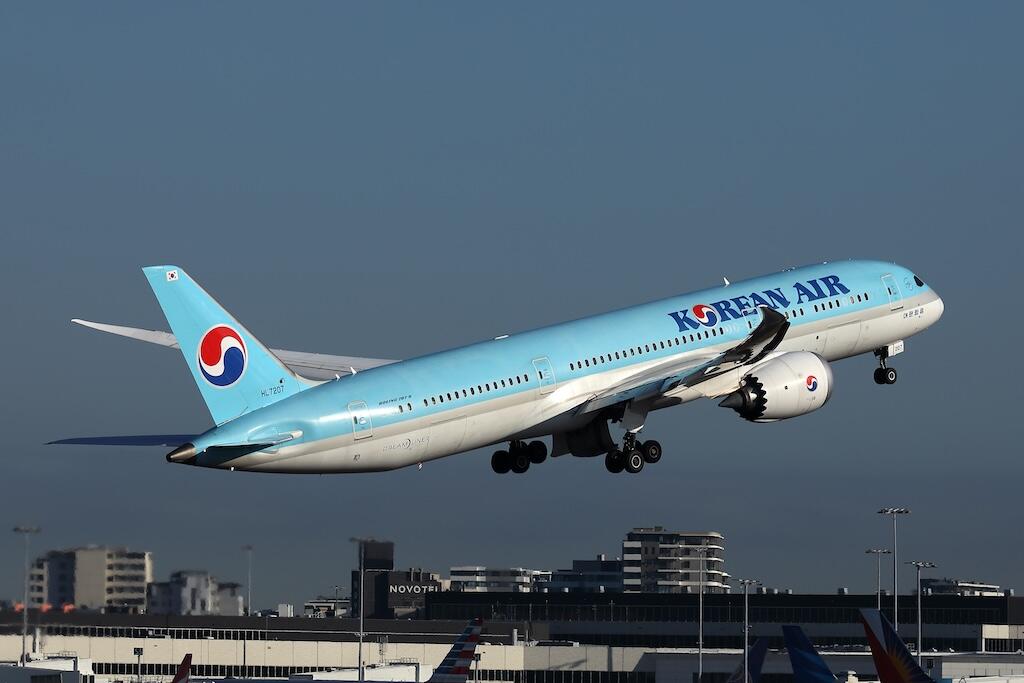
A Korean Air Boeing 787-9.
Asia-Pacific airlines delivered another year of robust international traffic growth in 2025, as resilient travel demand and expanding networks offset trade and geopolitical uncertainty, according to preliminary full-year data released by the Association of Asia-Pacific Airlines (AAPA).
Carriers in the region transported a combined 390.5 million international passengers during the year, a 9.4% increase compared with 2024. Passenger demand, measured in revenue passenger kilometers, rose 11%, reflecting continued strength on long-haul routes, while intra-regional travel remained buoyant amid steady regional economic growth.
Available international seat capacity increased 10.2% year over year, pushing the average international passenger load factor up by 0.5 percentage points to a record 82.2%.
“Asia-Pacific carriers saw a year of strong growth in international passenger traffic, supported by robust demand across key markets in the region, including China, India, Japan and Vietnam,” AAPA director general Subhas Menon said.
Cargo performance also remained resilient despite an increasingly complex trade environment, with Menon citing continued growth in e-commerce demand and intermediate goods flows from manufacturing hubs across the region.
Overall, Asia-Pacific airlines reported a 5.6% increase in international freight demand, measured in freight tonne kilometers, building on the strong rebound seen in 2024. Freight capacity rose 6.8% during the year, driven in part by growth in belly-hold space, resulting in a 0.7 percentage point decline in the average international freight load factor to 60.3%.
Looking ahead, Menon says the outlook for 2026 remains positive, supported by steady economic growth and ongoing network expansion—although trade tensions could weigh on cargo demand.
He adds that airlines continue to face inflationary pressure on operating costs, partly due to persistent supply chain disruptions, and are focused on cost management, digital investment and network optimization as they navigate ongoing uncertainties.

Related Content