An Appreciation Of FedEx Founder Frederick W. Smith

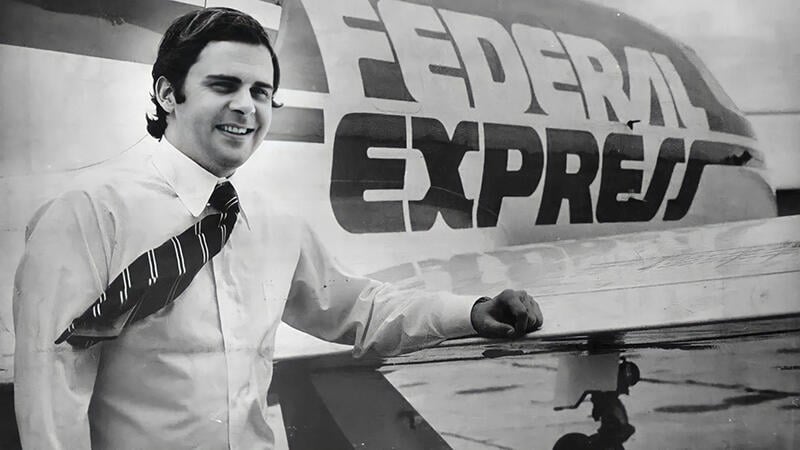
Fred R. Smith in 1973

Fred Smith in 1973.

Credit: FedEx

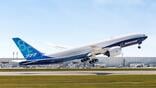
The two photos show the same man 50 years apart. In the first, taken in 1973, Fred Smith stands behind the wing of one of his Dassault Falcon 20 business jets, leisurely resting his arm on the retracted flaps. In the other, he stands at the top of the stairs to Door 2 of one of his Boeing 777Fs. Both were parked at the airport in Memphis, Tennessee.

Here is another way to measure Smith’s impact on aviation: On the day FedEx launched cargo flights in 1973, the small airline transported 186 packages to 24 cities. On an average day in 2025, the airline flies about 17 million shipments.

Some low points occurred in between those dates—the small airline almost ran out of money more than once in the early years. Because of the initial crises, two half sisters of Smith sued him in the 1970s over concerns that the significant family inheritance created by his father would vanish in his attempts to establish this new airline with its strange business model. But over time, it was exactly that model that not only made Smith a multibillionaire but also transformed the airline industry. The model has since been called hub and spoke.

Smith, the son of a wealthy businessman who owned a large bus company, studied at Yale University and worked as a charter pilot. As early as 1965, when he was still at Yale, Smith laid out his vision of what would become FedEx. But first, he served as a U.S. Marine Corps infantry officer and forward air controller in the Vietnam War. Years later, he turned his Yale theory into practice, launching a cargo airline focused on business-to-business shipments of small parcels and inventing the idea of the hub along the way.

Smith bought a fleet of 14 Falcon 20s for the launch of FedEx. Its hub—built in Memphis because the weather was generally good and the airport had space for the new operator—linked multiple destinations with a one-stop connection, enabling the small airline to offer its services in many more markets.

Passenger airlines latched on to the principle before too long. KLM Royal Dutch was an early adopter, enabling the airline to grow its Amsterdam operations well beyond the demand of the local market. Over time, most large international airlines took on the hub-and-spoke strategy. The Big Three U.S. airlines operate multiple hubs, and the Big Three in the Middle East have taken the concept further by offering long-haul-to-long-haul connections. Whenever airlines want to grasp the opportunity in an emerging market, they build hubs. Even low-cost carriers, which went into business on the premise of trying the exact opposite, have long recognized the value of at least some connecting flows supporting their networks when local demand is not strong enough.

Fred R. Smith in 2023
Fred Smith in 2023. Credit: FedEx

Initially limited to a small domestic network, FedEx expanded to become a global logistics company, although Memphis has remained its core. According to the Aviation Week Network Fleet Discovery database, FedEx operates a fleet of 371 mostly widebody aircraft, employs more than 500,000 people and serves some 220 countries and territories.

Like Dubai International Airport, FedEx’s Memphis operation is busiest during the night, when the apron is full of widebodies being unloaded and reloaded after their cargo has been processed through and redistributed in its huge ground facilities. To maintain a competitive edge, Smith bought a ground distribution company in 1998, renamed FedEx Ground, that uses licensed truck companies and their drivers to deliver goods.

The rise of e-commerce offered an opportunity—and challenges. Demand for exactly the kind of cargo in which FedEx specialized rose dramatically, yet its business model was designed for the higher-yield business-to-business segment. In 2019, FedEx and Amazon terminated a deal to transport packages, as they could not agree on pricing.

Over the years, Smith became deeply involved in American politics as well. His former Yale fraternity brother, George W. Bush, during his presidency twice asked Smith to be defense secretary. In a statement released after Smith’s death, Bush called him “one of the finest Americans of our generation.”

Smith had been a major supporter of free trade, in contrast to the push for tariffs and barriers pursued by the current U.S. administration. Yet The New York Times reported that, in part due to the company’s lobbying, FedEx’s corporate tax bill dropped to zero from $1.5 billion under the tax cuts introduced during the first Trump administration.

Smith remained FedEx CEO until 2022 and then took the role of executive chairman. “Frederick W. Smith pioneered express delivery and connected the world, shaping global commerce as we know it,” FedEx President and CEO Raj Subramaniam said. “His legacy of innovation, leadership and philanthropy will continue to inspire future generations.”

Fred Smith died on June 21 in Memphis at age 80.

Editor's note: This appreciation has been updated to include Smith's correct roles with the Marine Corps in the Vietnam War. 

Jens Flottau

Based in Frankfurt, Germany, Jens is executive editor and leads Aviation Week Network’s global team of journalists covering commercial aviation.