This article is published in Air Transport World part of Aviation Week Intelligence Network (AWIN), and is complimentary through Dec 24, 2025. For information on becoming an AWIN Member to access more content like this, click here.

2025’s Dubai Airshow Spotlights The Emirate’s Aviation History

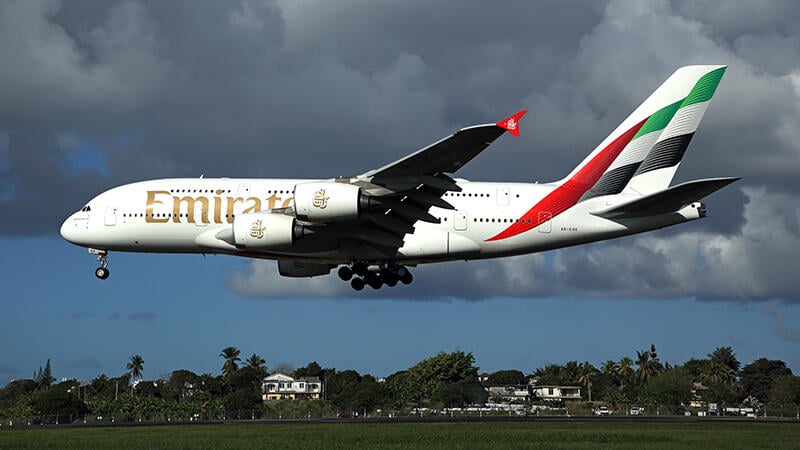
Emirates aircraft

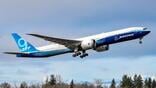
Emirates would like future A350 and 777X variants to have capacity closer to that of the A380.

Credit: Rob Finlayson

Few states have placed as much emphasis on the aerospace sector as Dubai. Almost 30% of the GDP of the tiny emirate, one of seven that constitutes the UAE, is composed of aerospace, or aerospace-related, activities.

Some of the emirate’s aviation assets are obvious, most notably Emirates Airline and its sister company flydubai.  Beyond those, however, lies a complex of ground assets and infrastructure that constitutes an entire ecosystem backing up those two international ambassadors.

A major factor behind this success is Dubai’s government; many of the aerospace sector’s most significant leadership positions are held by members of the ruling Al Maktoum family. And one man, Ahmed bin Saeed Al Maktoum, sits at the head of multiple entities, including the emirate’s two airlines, Dubai Airports, Dubai CAA and several major investment companies.

Paul Griffiths, CEO at Dubai Airports, which includes both Dubai International (DXB) and Dubai World Central (DWC), ranks focus and coordination as some of the most important factors behind Dubai’s success.

eVTOL
Joby Aviation has an exclusive contract to operate eVTOLs such as this one in Dubai. Credit: Joby Aviation

That focus began in the early years of Dubai’s independent existence, when the ruling family grasped the importance of aviation in growing the economy. “That focus on a single objective is probably the fundamental reason why Dubai has grown,” Griffith said.

When it comes to coordination, having a chairman who sits across the head of all the aviation entities is a considerable advantage, Griffiths said. “Having that single link to the top is incredibly important.”

This concentration of power, together with the overall vision of successive Dubai rulers, means that everyone is pulling in the same direction when it comes to aerospace developments; a situation rarely achieved in other countries.

Coordination can also be seen in the close links between Dubai Airports and Emirates, Griffiths said: “The relationship between [Emirates’ president] Tim Clark and myself is the closest between any airport operator and airline in the world.”

And at the more technical level, “My team are in and out of [Emirates’] offices every week. We’re very closely coordinated.”

Emirates is arguably the only airline to extract the full benefits from the Airbus A380. The aircraft features in Emirates’ plans as far out as 2041, and Clark is already urging both Airbus and Boeing to develop larger variants of the Airbus A350 and Boeing 777X to get their passenger capacities closer to the 484 seats of the A380. This is essential to allow the types to take on the A380’s mantle without Emirates having to find large numbers of additional slots at its destinations.

In recent years, Emirates has increasingly worked in tandem with flydubai to bolster its network, with ever-increasing levels of interchange between the two airlines’ passengers.

CEO Paul Griffiths
Dubai Airports CEO Paul Griffiths. Credit: Dubai Airports

While the geography of the Gulf region, nestled between Europe, Africa and Asia, has been helpful in positioning Emirates as a super-connector, the airline has also shown considerable skill in developing its network, UK-based aviation consultant John Strickland said. “Everything they’ve done has had nothing but coherence and commercial logic.

“They are delivering for Dubai, but they are delivering it very much as a commercial entity. I think that’s quite a contrast to some other countries in the region where it’s much more directed and much more political.”

HUB GROWTH

On the airport side of the equation, Griffiths expects DXB to pass the 100 million annual passenger threshold by the end of 2026 and reckons that continued investment could enable it to hit 115 million. But the site is now largely surrounded by the city and further expansion is constrained.

That is where DWC, set in open country around 55 km (34 mi.) away, comes into its own. The site offers huge potential for growth. At present, it is mostly used by freighters and relatively minor operators, and passenger throughput is anticipated to reach a modest 8 million by 2030.

The airport’s capacity is already 26 million, but phase two of DWC’s expansion, announced in 2024, envisions an airport that will eventually become the world’s largest hub. DWC will have five runways and capacity for 150 million passengers annually within the next decade, with capacity ultimately increasing to 260 million passengers per annum and 12 million tonnes of cargo.

There is no doubt in Griffiths’ mind that there is no place for DXB to remain operational once DWC is up and running: “The viability of operating two major hub airports within a fairly short distance of each other doesn’t make any sense at all. As [DWC] will have five runways, that will provide all the aviation capacity the city needs,” he said.

AIR TAXI LAUNCH

Yet developments will continue at DXB. Next year, for example, is expected to see the opening of a vertiport just outside the airport’s southern perimeter that will be the initial base for Joby eVTOL aircraft, one of four around the emirate.

Flights are scheduled to start in Q1 2026. In September, it was announced that Joby will start operating in 2027 to Ras Al Khaimah, the most northerly of the emirates, cutting what can be a traffic-clogged 75-minute road journey to around 15 minutes. There will also be several vertiports within Ras Al Khaimah itself.

Joby, which has been granted a six-year exclusive contract to operate in Dubai, will use “qualification” from the UAE aviation regulator to operate, even before it receives FAA or EASA certification—another example of the emirate pushing boundaries.

“I think the idea of eVTOLs is going to be quite transformational,” Griffiths said. “I think the utility of it will be brilliant.”

Can aviation’s impact on Dubai’s GDP continue to grow? Dubai-based Strategy & Middle East management consultants’ principal Nabil Katicha noted that Dubai is now a mature economy and that while the aerospace sector will continue to grow, he suspects it will do so at roughly the same pace as the emirate’s overall economy.

He, too, makes the point about strong coordination and policy decision-making at the top guiding Dubai’s aerospace sector.

Significantly, Dubai’s aviation interests are spreading internationally: airport services and ground-handling organization data operates in 80 countries and contributes to Dubai’s larger gross national income.

Alan Dron

Based in London, Alan is Europe & Middle East correspondent at Air Transport World.