This article is published in Aviation Daily part of Aviation Week Intelligence Network (AWIN), and is complimentary through Jul 23, 2026. For information on becoming an AWIN Member to access more content like this, click here.

Rolls-Royce Transformation Effort Sees Time-On-Wing Results

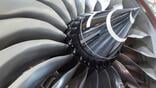
The Rolls-Royce Trent 1000 engine powers the Boeing 787 Dreamliner
Credit: Rolls-Royce

DERBY, England—Three years since launching its transformation program, Rolls-Royce Civil Aerospace president Rob Watson says the engine maker has already achieved or is on track to hit a 100% improvement in engine time-on-wing compared to its performance two years ago.

“We have delivered our commitments in many areas, and in some areas, we’ve outperformed,” says Watson, who cautions that there is still work to do as part of the company’s £1 billion ($1.28 billion) investment in its Trent fleet.

“In 2023, our ambition around time-on-wing was to drive a 40% improvement, generically, across our engine fleets. In 2024, we updated that, and we said we believe we’re going to drive towards 80%. Now today, in 2026, we’re saying we have got a 100% improvement around time-on-wing, or routes towards it,” Watson says.

Key improvement initiatives include the upgraded Trent XWB-84EP enhanced performance program on the Airbus A350-900 and the Trent 1000XE upgrade for the Boeing 787, which builds on the high pressure (HP) turbine improvements developed for the Trent 7000-powered A330neo.

Marking the first anniversary of the debut of the Trent XWB-84 EP, which entered service in May 2025, Rolls-Royce says the upgrade has generated better fuel savings than expected. The package was certified with a 2-decibel noise reduction and an initial 1% fuel burn saving compared to the standard Trent XWB-84. However, data from the first 34 engines in service across three major operators shows the engine is delivering a 1.8% reduction in fuel consumption, Rolls-Royce says.

Following several years of durability issues, particularly on the 787 program, Watson says “our engine programs are all in good shape and on track and really delivering everything that we said we wanted to deliver.”

“We continue to develop the XWB-97, which is on the A350-1000 where we’re continuing to focus on improving time-on-wing, particularly in hot and dusty environments. We have a major roll program there, and that is in good shape and on schedule,” he adds.

Rolls-Royce is also accelerating introduction of the Trent 1000XE upgrade, which it aims to complete throughout the 787 fleet by the end of 2027.  Following delivery of the initial upgraded engines with Phase 1 improvements on a 787-9 to Lufthansa in November 2025, “we have rolled more than a third of the fleet,” says Rachel Walker, Trent 1000 program director.

“We are hurtling towards our next milestone on that, which will be 50% of the fleet, and we’re hoping to be in a position to announce that very soon. Our fleet leader is also approaching 1,000 cycles,” she adds.

Considered a critical element of Rolls-Royce’s battle to restore confidence in the engine and to boost market share on the 787 where the UK manufacturer competes with GE Aerospace’s GEnx-1B, the two-phase upgrade is being introduced initially on the Trent 1000TEN version. Phase 1 produces a 40% increase in the cooling flow and doubles the time-on-wing, Walker says.

The additional upgrades for Phase 2, which will provide up to 30% additional time-on-wing, includes a blade weight reduction to lower stress on the blade. It also includes the addition of an advanced calcium-magnesium-alumino-silicate resistant coating on the combustor tiles for hot and sandy environments. Other changes include improvements to the film cooling on the HP nozzle guide vanes. Also included are Trent XWB-84 style design improvements to the combustor/HP nozzle interface for reduced wear.

The Phase 2 upgrade was introduced into new build engines in March. 

“I’m really pleased to say that just in the last week we have released the first of those from one of our MRO shops as well, so we are making great progress and are ahead of plan on the rollout of all of that,” Walker says. “So, we’ll have the whole fleet rolled with either Phase 1 or Phase 2 in its entirety by the end of 2027. When the engine comes in for their next shop visit, which will be in many years’ time, then if they have the Phase 1 fit at that point, then they will get the Phase 2."

Guy Norris

Guy is a Senior Editor for Aviation Week, covering technology and propulsion. He is based in Colorado Springs.