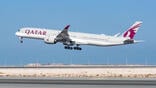
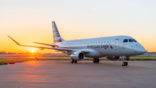
ATR 72-500
Forty years ago, on Dec. 2, 1985, ATR delivered its first aircraft, an ATR 42-300 to Air Littoral. Therefore, this week’s Flight Friday looks at how the ATR 42 and the larger version, the ATR 72, have been utilized over the last six years
With over 200 ATR 42s still in-service, and another 30 in storage, the ATR 42 in some regions still plays a key role in connecting people. Though the current in-service fleet (ISF) has dropped from the pre-COVID levels of around 250 aircraft.
The drop in ISF, however, has not necessarily translated into a drop in utilization (note that ADS-B mandates for aircraft and coverage pre-COVID is slightly different from today’s environment).
ATR 42 utilization has remained reasonably consistent for the last two years at around 14,000 hrs. per month as an aggregated fleet.
The larger ATR 72, which was first delivered in 1989, has also seen a drop in its ISF, from over 830 in early 2020 to a little over 810 today. Similar to the 42, the 72’s utilization has also ticked up from its early 2020 levels and is almost 100,000 hrs. per month.
Since De Havilland Aircraft of Canada announced the halting of DHC-8 production in 2021, which led to the conclusion of DHC-8 deliveries in 2022, ATR has been the sole original equipment manufacturer (OEM) for turboprop aircraft in this size category.
Looking forward, ATR faces some competition in certain markets from the Xian MA700 and, in the future, from the possibility of alternative-powered aircraft, which this 40-70 seat market seems to suit.
This data was put together using Aviation Week’s Tracked Aircraft Utilization database.

Related Content