This article is published in Aviation Week & Space Technology and is free to read until Dec 25, 2025. If you want to read more articles from this publication, please click the link to subscribe.

Emirates Wants Larger Jets, But Will Anyone Listen?
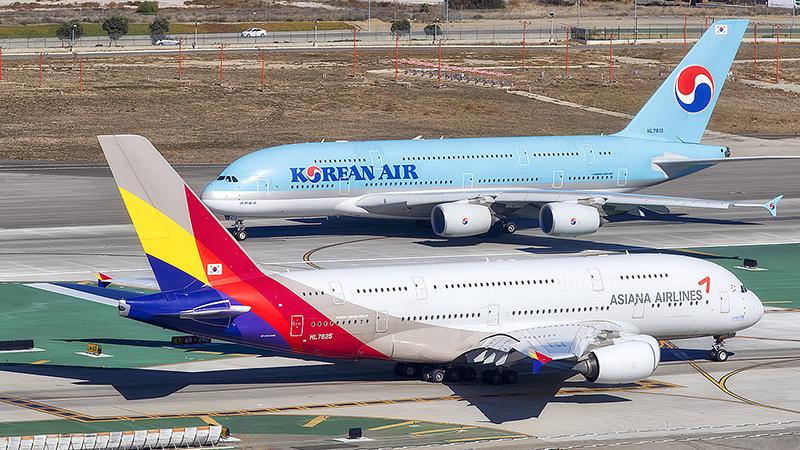
widebody aircraft on tarmac

While Emirates wants bigger aircraft, Asiana and Korean are phasing out the A380 in favor of lower-cost twinjets.

Credit: JoePriesAviation.net

As CEO of Lufthansa Group’s main airline, Jens Ritter is accustomed to managing a diverse fleet of widebody aircraft. The carrier operates Airbus A330s, A340s and A350s as well as Boeing 787s and two generations of 747s on its long-haul routes. Factoring in Lufthansa affiliates Swiss, Austrian Airlines and Brussels Airlines, the mix includes even more types, such as the Boeing 777 and 767.

But as Ritter recently recalled, after years of fleet succession planning, Lufthansa awaits delivery of its next widebody, the 777-9, without clear plans for what might follow. Boeing and Airbus have each discussed the prospect of offering new narrowbody aircraft in the 2030s. But the next all-new widebody to enter commercial service could very well be China’s Comac C929. Or it could be JetZero’s Z4 blended wing body (BWB), an outside disruptor not designed for true long-haul flights.

  • No plans are in sight for a new widebody except Comac’s C929
  • Engine-makers are ready to meet higher thrust demands

Among smaller and medium-size widebodies, relatively new models are available, even though the 787 and A350 have been in service for 14 and 10 years, respectively. These aircraft are still the most recent all-new developments from Boeing and Airbus, not including the Bombardier-initiated Airbus A220. But when it comes to the larger widebodies, the technology used for the A380 is generally from a generation earlier, and the 747-8 is based on the 1960s-era iconic Boeing aircraft. Of course, both the A380 and 747-8 are out of production.

Big widebody twinjets form the backbone of today’s high-capacity air transport system and are set to grow even larger with the coming debut of Boeing’s 777-9, designed to accommodate more than 420 passengers.

But at 251.9 ft. in length and tipping the scales at 775,000 lb., has the big twin reached the upper limit of the evolutionary ladder? And even if a larger twinjet were practicable, does a market exist for such a leviathan?

“I don’t see the business case,” AeroDynamic Managing Director Richard Aboulafia says. According to Airbus A380 champion Emirates Airline President Tim Clark, though, further stretches of the two biggest twins—the A350-1000 and the 777-9—are not only doable but are essential to the industry’s long-term growth.

“I’m pushing very hard [for Boeing] to make the 777-10,” Clark said at the recent APG World Connect conference in Spain. “We have basically said that’s what we want.” As the airline executive who spearheaded the launch of the 777X and A380, Clark understands big aircraft and, just as important, the feasibility of developing higher-capacity aircraft.

At the core of these growth plans is the ability of the engine-makers to handle the extra power that would be required by these bigger aircraft. The increase in engine power for the second-generation big twinjets—the A330 and 777—laid the foundation in the 1990s for the development of even larger engines for the current generation A330neo, A350, 777-300ER, 777X and 787. Aboulafia points out that “if you are not GE, you are risking your presence in other segments,” highlighting the substantial investment required to develop much larger engines.

The growth in engine thrust for twins has progressed at a steeper rate than earlier generations of turbofans for the first widebody twins, trijets or quadjets. This arc, coupled with improvements in aerodynamics and lightweight structures, has enabled two-engine aircraft to become disproportionately large in the past 20 years.

The reason for this faster rate of growth in power is simple. Twinjets require considerably more thrust per engine than trijets or quadjets because they must be able to continue a safe takeoff in the event of a single engine failure. If a twin loses an engine on takeoff, the aircraft’s total thrust is reduced 50%, whereas a single engine failure on a trijet or quadjet reduces total thrust only 33% or 25%, respectively. Twinjets must provide twice the minimum thrust needed to climb, whereas trijets require only 150%, and quadjets 133%.

Based on this calculation, GE Aerospace’s dominance at the upper end of the power scale began in 1999 when it committed to investing further in the GE90 after Boeing chose the engine-maker to develop the GE90-115B for the 777-300ER. GE solidified its position in 2013 when it secured sole-source selection to develop the GE9X for the 777X.

Emirates A380s aircraft on tarmac
Emirates’ fleet of A380s is planned to grow to 110 by the end of 2026. Credit: Emirates

Rolls-Royce enjoys a similar position with Airbus, supplying the Trent 7000 for the A330neo and the Trent XWB for the A350. Although the XWB reaches a maximum thrust of 100,000 lb., the UK engine-maker has designs to incrementally enhance the current A350 powerplant and offer higher thrust with the geared UltraFan engine.

“GE has said: ‘That’s OK, we can handle that,’” Clark said. “This is the aircraft for the future for Emirates. I reckon you can get 150 in. out of it—that’s 13 ft., maybe 14 ft. It’s manageable, and Boeing knows where we’re coming from.” Thus, the proposed 777-10 would, in Clark’s view, be a relatively modest stretch compared with the original leap from the baseline 777-200 to the 777-300/300ER or the 777-9.

Compared with the baseline 777-200, the original 777-300ER was stretched to 242 ft. in length, or about 4 ft. longer than an A380, with the addition of a nine-frame (189-in.) aft fuselage extension and a 10-frame (210-in.) forward fuselage plug. Wingspan was also increased to 212 ft. with the addition of 6.5-ft. tip extensions.

The 777X expanded on these modifications with a 9-ft. overall fuselage stretch, resulting in a total length of 251 ft. 8 in.

The most substantial dimensional change to the 777-9, however, was a 26-ft. increase in wingspan designed for greater cruise efficiency, higher altitudes and longer ranges. The increase in span to 238 ft. 10 in. was achieved by adopting an all-new, stiffer, composite wing and incorporating 12-ft. folding wingtip sections to ensure airport compatibility. The wing’s higher lift-drag ratio also meant the aircraft’s GE9X engines would require a takeoff thrust rating of 105,000 lb., or 10,000 lb. lower than the GE90-115B on the 777-300ER.

“We were the only ones talking about the -9 in the first place,” Clark said, adding that the increased -10 stretch could add up to six rows in the economy cabin. “The -10 is, at the moment, fairly unique to us, but I’m quite sure when others see what we’re doing, they’ll probably want a bit of that,” he notes.

However, even if Boeing does commit to a larger 777X version, Clark said it might still fall short of meeting the airline’s projected capacity needs—particularly since Emirates plans to phase out its A380s. “It will reduce the gap, but it will still be a big gap,” Clark said.

“Demand is so strong now,” he adds. “For every seat you sell, there are three people waiting for it. Extrapolate that in a linear manner. In 10 years, where is it going to take you? Do we really want to go south on gauge? Look at the 100 A380s coming out [of service], eventually. My nearest one [in capacity] today is the 777-9,” he says. “We’ve got a 140-seat gap straight away. So that spill rate that I’ve got to accommodate doesn’t really go into smaller airplanes. It needs to be bigger airplanes.”

But while engine-makers say they can meet the higher thrust demand, do Airbus and Boeing have the appetite for new derivatives? With regard to Boeing, Clark appears to be pragmatic: “I don’t blame [Boeing]. They’ve got all these programs gradually coming out of distress mode into a fighting chance of getting them going. And the 777 is a bit of a blow, but nevertheless, they’re gradually getting there. They’re not minded—not this board—to think, ‘Now we’re going to spend another $20 billion on a new airframe.’”

Airbus CEO Guillaume Faury told Aviation Week in June: “We have to look at things with prudence, in my view. The 777X is a slightly larger product than the A350-1000, so it is a natural question. The -1000 is in service, and we are ramping up production. It serves a large share of the widebody market successfully, and we have more demand than supply. So we don’t feel the need to do something more that would create more diversity of products when ramp-up capacity is limited. In the short term, there is no need to make the product range more complex” (AW&ST June 16-29, p. 58).

However, Faury added that “at a later stage, it will probably be a natural evolution of the product line to continue to increase capacity from the -900 to the -1000 to something slightly longer, bigger, with more capabilities that will come close to the 777X in terms of seat count.”

The critical question is whether a market for very large aircraft exists beyond Emirates. The industry has witnessed considered fragmentation since the 787 and A350 entered service, whereas orders for the A380 and 747s have dwindled. On the other hand, the 777X backlog has remained strong despite numerous delays in the program. Larger aircraft might be needed in the big hubs. But many new players, such as IndiGo, are betting on the A350 and the A321XLR in what seems to be an acceleration of fragmentation. “Boeing was right [in believing in fragmentation], but it did not know how right it was,” Aboulafia said.

While further stretches remain one option for future widebodies, other alternatives are emerging that could provide the basis for next-generation successors to today’s medium and large twin-aisle designs. These options range from reengining the current A350 and 787 in a Neo-style upgrade with advanced powerplants, such as the Rolls-Royce UltraFan, to longer-term concepts, such as BWB aircraft, that shift away from today’s traditional tube-and-wing configurations.

Although BWBs by their very nature redefine the concept of widebody with their multicabin cross-sections, their compact configuration suggests that the majority of the addressable market will likely fall within the midsize sector or the gray area between today’s larger single-aisle and smaller widebody aircraft. But California-based BWB developer JetZero, which is aiming for first flight of a full-scale demonstrator in 2027, says its design is sufficiently flexible to expand into the mainstream widebody sector.

JetZero’s initial BWB, dubbed the Z4, is designed to carry 170-290 passengers, whereas a proposed follow-on Z5 could accommodate 300-370 passengers, the company says. JetZero is among several companies to be awarded demonstration contracts under NASA’s Advanced Aircraft Concepts for Environmental Sustainability (AACES) 2050 program, which focuses on technologies for future single-aisle and widebody aircraft.

As part of NASA’s Advanced Air Transport Technology project, AACES falls under the Advanced Air Vehicles Program, which evaluates and develops technologies for new aircraft systems and explores promising air travel concepts. Although widely expected to be curtailed by recent stringent budget cuts, initial work focuses on alternative aviation fuels, propulsion systems, aerodynamic technologies, aircraft configuration and other technology areas.

Beyond Airbus, Boeing and various Western-based startups and research groups, the only other notable widebody projects on the horizon are China’s fledgling Comac C929 and C939. Designed to carry 282 passengers in a standard layout over a maximum of 6,500 nm, the first C929 variant, the C929-700, is expected to be similar in size and performance to the 787-9.

Comac has outlined other C929 variants in its family plan, including the C929-600, comparable to the 787-8, and the C929-800, similar to a stretched 787-10. Further ahead, the Chinese company has announced plans for a C939 project, expected to rival the 777 in size and capacity.

Guy Norris

Guy is a Senior Editor for Aviation Week, covering technology and propulsion. He is based in Colorado Springs.

Jens Flottau

Based in Frankfurt, Germany, Jens is executive editor and leads Aviation Week Network’s global team of journalists covering commercial aviation.

Victoria Moores

Victoria Moores joined Air Transport World as our London-based European Editor/Bureau Chief on 18 June 2012. Victoria has nearly 20 years’ aviation industry experience, spanning airline ground operations, analytical, journalism and communications roles.