This article is published in Aerospace Daily & Defense Report part of Aviation Week Intelligence Network (AWIN), and is complimentary through Jan 29, 2026. For information on becoming an AWIN Member to access more content like this, click here.
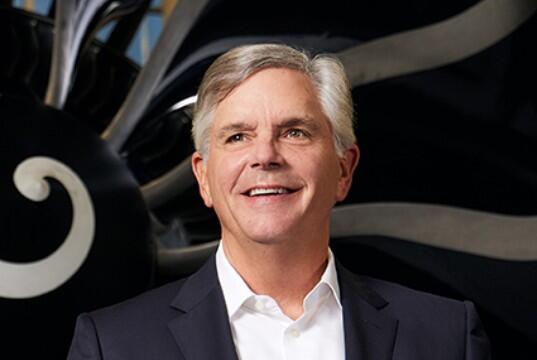
Larry Culp Jr.
Suppliers to GE Aerospace boosted their material input to the engine OEM by more than 40% in 2025, including a double-digit improvement in the latest fourth quarter over the year before.
But Chairman and CEO Larry Culp Jr. acknowledged to Aviation Week that it may be harder to match those results in the future.
“Are we going to be up 40% every year from here? Probably not,” Culp said in a brief interview after announcing the company’s latest quarterly and yearly results on Jan. 22. “But if you reach for 50% and you fail and you come in at 35%, aren’t you better off than aiming for 10 and beating that with say, a 12-15% improvement?
“So many organizations are afraid to stretch, to push, to make that safe for their people,” Culp continued. “A good bit of what I think we’re trying to instill in our own organization is, ‘let’s go for it.’ Not recklessly, but we’re far better off stretching ourselves and falling short than we are in negotiating safe targets and delivering a cosmetic beat.”
GE Aerospace’s earnings beat for the fourth quarter and full-year 2025 likewise was not cosmetic. Financial analysts lauded the latest results, which generally beat their expectations across the board, and many advised investor clients to buy GE stock in any dip in share price.
“Overall, we thought this was another excellent quarter from GE,” analyst Scott Mikus of Melius Research said. He noted that GE’s core sales saw growth of 20%, six points above consensus expectations, and it will likely rank in the top decile of Melius Research’s broader coverage universe this reporting season. “Crucially, GE’s commercial aftermarket sales growth reaccelerated to 31%, while aftermarket orders were up 18% in the quarter and 27% for the year,” Mikus stressed.
Analyst Robert Stallard of Vertical Research Partners echoed the sentiment: “2025 was a banner year for GE, as strong results in a buoyant equity market helped propel the stock above its previous high from 25 years ago.”
For all of 2025, commercial deliveries rose 25% compared with 2024, including record Leap engine deliveries up 28% to 1,802, while defense deliveries were up 30%. Total backlog of work rose to $190 billion from $170 billion. Total orders for 2025 were $66.2 billion, up 32%, while adjusted revenue was $42.3 billion, or 21%. The company’s operating profit came in at $9.1 billion, up 25%.
For 2026, operating profit is forecast to be in the range of $9.85-10.25 billion, with the midpoint of $10 billion representing a milestone GE Aerospace previously did not expect to hit until 2028 but now will do so two years earlier.
GE Aerospace’s results have been powered by defiantly robust aftermarket demand—a condition analysts said might simply plateau at the current elevated state in the coming year—while new-aircraft production by major airframers finally begins to approach pre-pandemic levels. But Culp also spotlights Flight Deck, the company’s business improvement process, as well efforts spearheaded by a relatively young Technology and Operations office led by Mohamed Ali that brought together supply chain, engineering, quality control and other support functions to apply at both GE and supplier facilities.
On Jan. 15, GE Aerospace announced Ali’s office is merging into the company’s Commercial Engines and Services division and that Ali is succeeding Russell Stokes as its head. Stokes will retire in July after 29 years at the company.
“Integrating our product line, engineering and supply chain teams will improve our end-to-end engine lifecycle management,” Culp explained during a Jan. 22 earnings call.