This article is published in Aviation Week & Space Technology and is free to read until Sep 04, 2026. If you want to read more articles from this publication, please click the link to subscribe.

CFM Marks Leap 10th Anniversary Amid ‘Historic’ Production Ramp-Up

CMF Leap-1

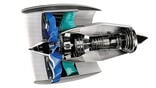
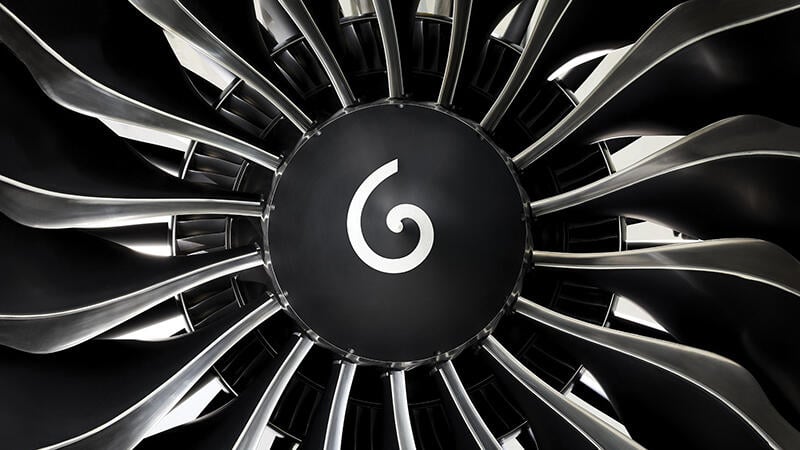
CFM’s Leap-1 is the first single-aisle airliner engine with a composite fan.

Credit: CFM International

To the casual observer in Istanbul on a particular warm August morning in 2016, there was nothing remarkable about the sight of a Pegasus Airlines Airbus A320 departing on a routine domestic flight to the Turkish resort town of Antalya.

Yet, for those in the know and with keen observation skills, this was no ordinary A320 and no routine flight. The 9:30 a.m. Pegasus service that day was the first commercial service of a CFM International Leap-1A-powered A320neo—a milestone for the operator, Airbus and the GE Aerospace-Safran engine joint venture.

  • Certification of the reverse bleed system on the 737 max is due by year-end
  • Leap orders and commitments pass 30,000

In the decade since, the Leap-1 has established itself as the most successful turbofan engine in pure numbers, in commercial aviation history, eclipsing even its forebear—the ubiquitous CFM56. As the 10th anniversary of the debut revenue flight approached, orders and commitments for the engine had passed the 30,000-unit mark.

About 10,000 Leap engines are in service and have logged more than 100 million flight hours powering A320neos, the Boeing 737 MAX family and China’s Comac C919.

But achieving these remarkable in-service and flight time records at almost double the rate of the CFM56 has not been easy. Production and supply chain challenges have hampered deliveries, most notably in the wake of the COVID-19 pandemic, while durability and maintenance issues have affected operator costs and time on wing—particularly for airlines flying in harsh environments.

Part of CFM’s production challenge stemmed from the architectural differences between the Leap and the CFM56. For the Leap, which was designed to achieve an improvement of at least 15% in specific fuel consumption over the previous generation, CFM eschewed a further evolution of the CFM56’s General Electric F101 heritage in favor of an all-new centerline.

Sometimes referred to as a “baby GEnx” because of its similarity to GE’s larger widebody engine, the Leap incorporates Safran-developed composite fan blades, a composite fan case, a 22:1 high-pressure-ratio compressor, a two-stage high-pressure (HP) turbine derived from GE’s eCore program and an all-new low-pressure (LP) turbine. Together this means the Leap’s bill of materials and supply chain are completely different from that of the CFM56.

Pegasus A320neo with Leap-1As
Pegasus Airlines was the first to accept a Leap-1A-powered A320neo and the first to debut it in service in 2016. Credit: Airbus/C. Brinkmann

Another challenge has been unprecedented demand, as both Airbus and Boeing accelerate single-aisle airliner production to new levels. “It’s almost impossible to be prepared for such an overwhelming demand in our products, and so we are in the midst of the biggest ramp-up in the history of commercial aviation,” CFM president and CEO Gaël Méheust says.

Building on deliveries of more than 1,800 Leap engines in 2025, CFM expects to break a delivery milestone of 2,000 units in 2026. “Then again, the following year we’re going to deliver more,” Méheust says. “We’re going to break records like that until the end of the decade. We came out of COVID with a completely bruised supply chain. But our team, our people [and] our suppliers as well have done an amazing job to put us back on track and to allow this ramp-up.”

But beyond the production challenges, CFM also has had to develop a series of engine upgrades to address durability issues and restore time on wing to levels comparable with those achieved by the CFM56. “It was an important message,” Méheust says. “We heard it, we tackled it, and we came with an action plan—a successful one.”

At the core of the Leap’s durability challenges were premature wear of the HP first-stage turbine blade and nozzle, as well as fuel nozzle coking. CFM has designed, tested and produced kits for both retrofit and forward fit to address both issues. The problems have been particularly acute in harsh operating regions with hot, dusty conditions like those in the Middle East.

Progress on outfitting the fleet with the new features is well advanced. CFM achieved both FAA Part 33 engine and Part 25 aircraft-level certification for the Leap-1B HP turbine durability kit on the 737 in mid-2026 and is on track for a full industrial switch to that configuration in the first quarter of 2027.

The engine-maker is in the process of producing parts and building inventory to put the kit configuration into original equipment production and the maintenance, repair and overhaul (MRO) network. Around 40% of Leap-1A-powered A320neos also have been upgraded with the HP turbine durability kit, said Tom Levin, CFM vice president of commercial programs.

The fuel nozzle coking issue has been solved with a reverse bleed system (RBS), which reduces carbon deposit buildup and related maintenance needs by backflowing cooling air from the engine bleed manifold through the combustor after shutdown. The RBS was introduced on the Leap-1A in mid-2024 and is now installed on more than 70% of that fleet.

“The performance of the RBS and the fuel nozzles is right on target,” Levin said during a press conference at the Farnborough Airshow. “On the Leap-1B, we have achieved engine level certification, and we are partnering closely with Boeing to achieve [Part 25] aircraft-level certification in the second half of this year, with high confidence.

“By 2030, we’ll double the Leap install base from where we are today,” Levin added, describing collaborations with suppliers to unlock more capacity within existing footprints—and to build even more beyond that. CFM also is investing in capability and capacity to support Leap engine aftermarket requirements; additional capacity is coming online this year, including recent expansions in Belgium and Mexico.

“Existing footprints won’t be enough to enable the ramp that I talked about, and so there we are also investing significantly in new capacity,” Levin said. That includes Safran’s recent groundbreaking on a new facility in Morocco for Leap-1A production and MRO and a $1 billion commercial engine production investment announced by GE Aerospace featuring a particular focus on its Leap ramp-up.

—With Christine Boynton in Farnborough

Guy Norris

Guy is a Senior Editor for Aviation Week, covering technology and propulsion. He is based in Colorado Springs.