This article is published in Aviation Daily part of Aviation Week Intelligence Network (AWIN), and is complimentary through Apr 22, 2026. For information on becoming an AWIN Member to access more content like this, click here.
Boeing 737 MAX Wiring Issue Forces Delivery Pause, Rework
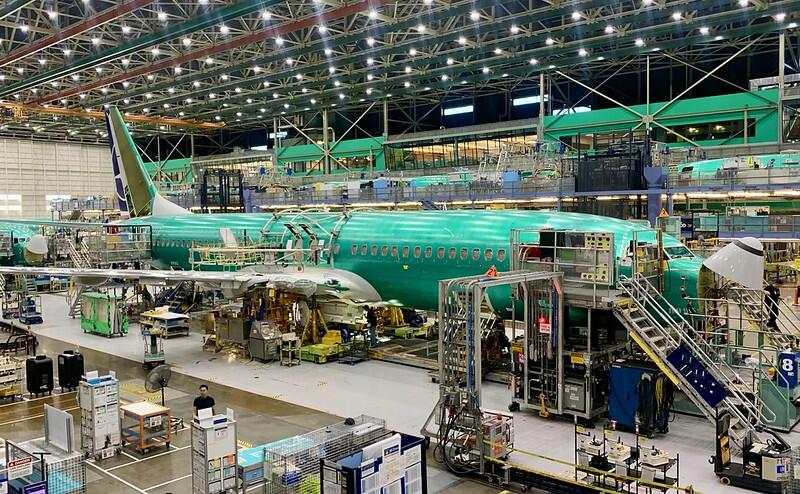
Boeing has paused 737 MAX deliveries while it assesses the scope of wiring damage on an undetermined number of aircraft and fixes the ones that have not gone to customers.
“We paused ticketing and deliveries as we work through this issue,” 737 program VP and general manager Katie Ringgold said at ISTAT Americas in San Diego March 10.
“There is going to be disruption [for] the next few days. It will take several days to resolve, not weeks,” she added.
Affected wiring has “small scratches due to a machining error,” Boeing said in a March 10 statement. It is not clear how many aircraft are affected or whether any have been delivered to customers.
“All in-service 737 MAX airplanes can continue to safely operate,” the statement added. “If action is required for the in-service fleet, we will issue updates through our normal service bulletin process.”
Boeing informed both the FAA and customers of the issue. Boeing declined to say what wires are affected or provide details on the repair process or duration.
The company’s statement said it expected “some near-term delivery delays that may affect our deliveries in the first quarter.”
Repairs are expected to take at least several days per aircraft, one source said. The wiring damage occurred within Boeing, not at a supplier facility, the source added.
Boeing confirmed it is not adjusting its 737 MAX production rate while the work is done.
The short-term ramifications will reduce expected deliveries in March and for the first half of 2026. Boeing’s full-year target of at least 500 737 program deliveries remains in place, however. The issue does not affect military variants of the 737.
Boeing delivered 43 737 MAXs in February, the company confirmed. Aero Analysis Partners (AAP) reports three deliveries in March, but none since March 5.
Word of the notice of escape came within the last few days, a second source tells Aviation Week.
Boeing’s February activity also included just three 787 deliveries amid ongoing supply chain struggles. The monthly figure was Boeing’s lowest for its signature widebody twinjet since November 2024.
Separately, Ringgold said Boeing’s planned 737 expansion in Everett, Washington, slated to open later this year, will increase capacity, “but it comes at a cost.” The line, which will build 737-8s, -9s, and -10s, will slowly ramp up and will have its own rate adjustments, separate from Boeing’s three MAX lines in Renton.
CEO Kelly Ortberg has said 737 rates will increase at five-per-month increments, with at least six months between rate changes. The three current lines are combining for about 42 aircraft per month, Boeing’s current upper limit as agreed upon with the FAA. AAP reported 82 rollouts for the first two months of 2026.
Boeing’s target is 50-60 per month by 2028. Each of its lines will aim to produce 15-17 aircraft per month, Ringgold said.
While overall production quality and stability will drive rate increases, engine supply is not a near-term concern. Ringgold said CFM International’s Leap-1B delivery plan will meet Boeing’s needs through 2027.
“Rate 47 is protected and we are working with CFM to protect higher rates as well,” she said.
Many of the 737 suppliers have shifted to Rate 47 in preparation for Boeing’s next increase—which the FAA must approve, she added.
Production and delivery rates will be bolstered by FAA approval of both the 737-7 and 737-10. Ringgold said 737-10 approval, expected to follow 737-7 sign-off, is on track for this year. Boeing recently re-started building 737-10s; AAP reports three recent rollouts include WestJet 737-10s.


Comments
But an impact on first half would mean some of these issues will take to third quarter to fix?