Henil Patel: 20 Twenties Winner Shaping Aerospace Innovation At Boeing
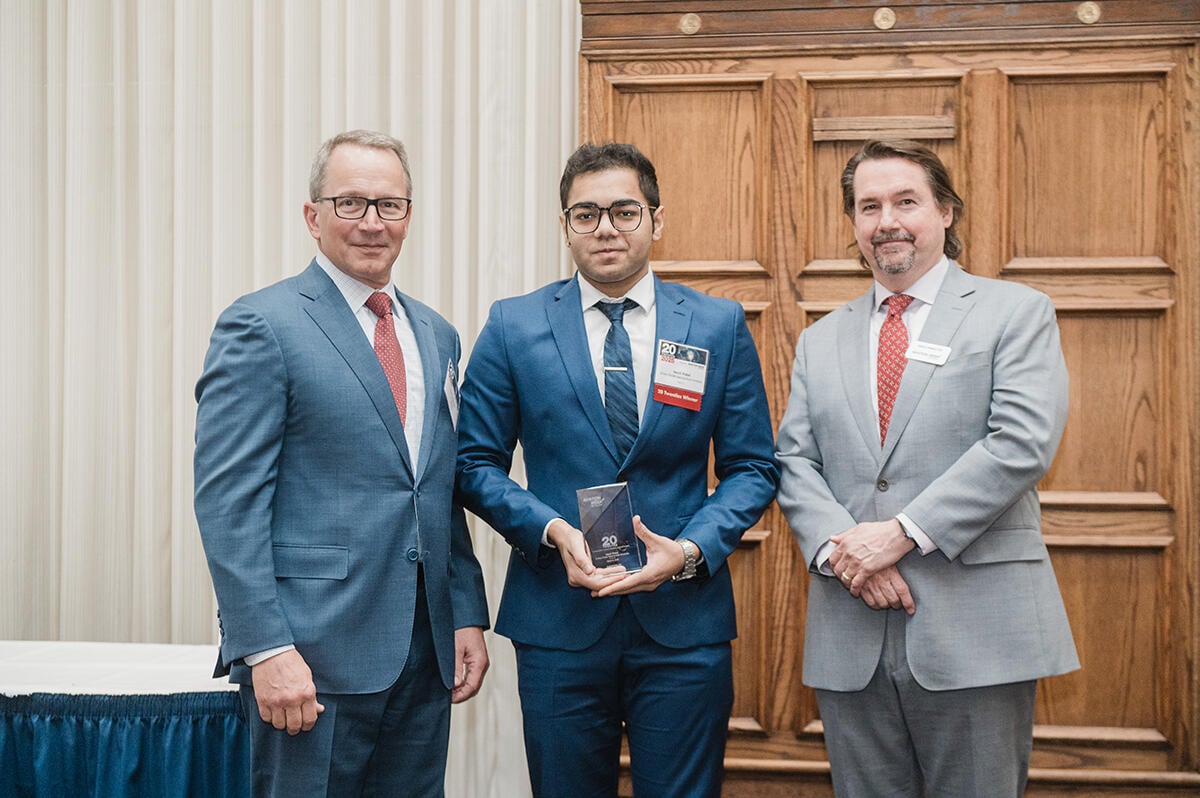
Henil Patel—Embry-Riddle Aeronautical University | Undergraduate Student, Aerospace Engineering | Class of 2025
Henil Patel, a 2025 20 Twenties winner, is a manufacturing engineer at Boeing, driving certified hardware changes on the cutting-edge 777-9 program. The award sharpened his focus on safety-critical engineering and opened doors to transformative industry opportunities. We had the chance to interview him to learn more about his journey and insights.
Congratulations on being recognized for your amazing research! Has the award opened any new resources or opportunities you're excited about?
Being recognized by Aviation Week placed my work in front of senior leaders and executives across the aerospace industry. What had previously been a traditional recruiting process—cold emails, applications, and referrals—shifted almost overnight. Several companies reached out proactively to discuss potential roles, which was both humbling and affirming. It was a powerful example of how the award truly embodies the idea that “talent meets opportunity.”
Tell us about your current role in aviation and what it involves.
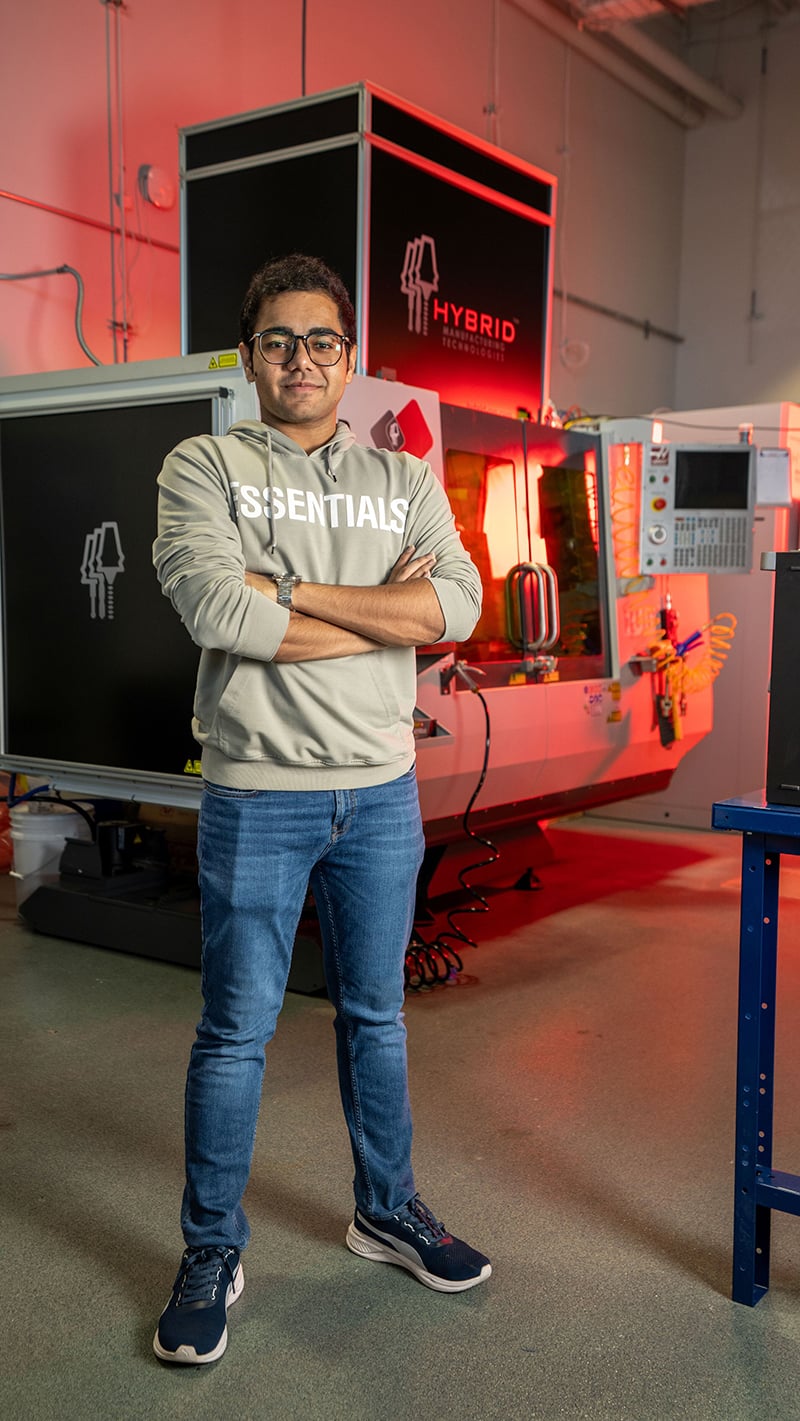
I currently work as a manufacturing engineer at Boeing on the 777-9 program, supporting the change incorporation & refurbishment team. My role involves translating engineering intent into certified, producible hardware changes on the airplane. I coordinate complex configuration changes with design engineers, manufacturing teams, and quality organizations to ensure modifications meet FAA regulations, customer specifications, and Boeing’s safety and quality standards. Supporting the aircraft’s final configuration changes is both challenging and rewarding, directly enabling certification and delivery of the world’s most advanced widebody aircraft.
Was this always your goal, or have your goals changed in the years since you were recognised as a 20 Twenty?
My original goal was always centered on excellence in engineering, regardless of whether my path led through industry or academia. Each experience since being recognized as a 20 Twenty has broadened my perspective on how rigorous engineering contributes to safer, more capable aircraft. The opportunity to now work hands-on with commercial airplanes at the world’s largest aerospace company, Boeing, has exceeded that vision in every way.
There is something uniquely motivating about walking into Boeing’s Everett factory each morning and standing just feets away from airplanes that will eventually carry millions of passengers. That proximity to such incredible products reinforces a mindset of first-pass quality and accountability, because the work I do has real, human consequences. Over time, what has changed is not the ambition to enter aerospace, but the emphasis on applying disciplined engineering to safety-critical products and systems.
What advice would you give to the next generation of 20 Twenties just beginning their journey?
Stay humble, stay curious, and remember that you are still learning. Early recognition is an incredible honor, but it’s also just the beginning. The most successful engineers I’ve encountered are the ones who listen more than they speak, ask thoughtful questions, and remain open to being challenged. Treat every opportunity as a chance to grow, and let your work ethic, not your title or awards, speak for you.
Has winning this award changed what you're thinking about doing after graduation? Have any interesting internships or job opportunities come your way because of it?
“The award didn’t change my direction—it sharpened it.”
Winning the 20 Twenties award didn’t fundamentally change what I wanted to do after graduation, but it significantly clarified how I wanted to approach it. It reinforced my interest in applying rigorous engineering to real-world aerospace problems, particularly in environments where safety and quality is non-negotiable. The recognition has validated that the kind of work I enjoy—deep technical problem-solving and persistence, grit through challenges—has relevance beyond the university & research setting. Rather than redirecting my path, the award sharpened my focus on gaining experience in complex airplane programs where engineering decisions are tested at larger scale and where learning never really stops.
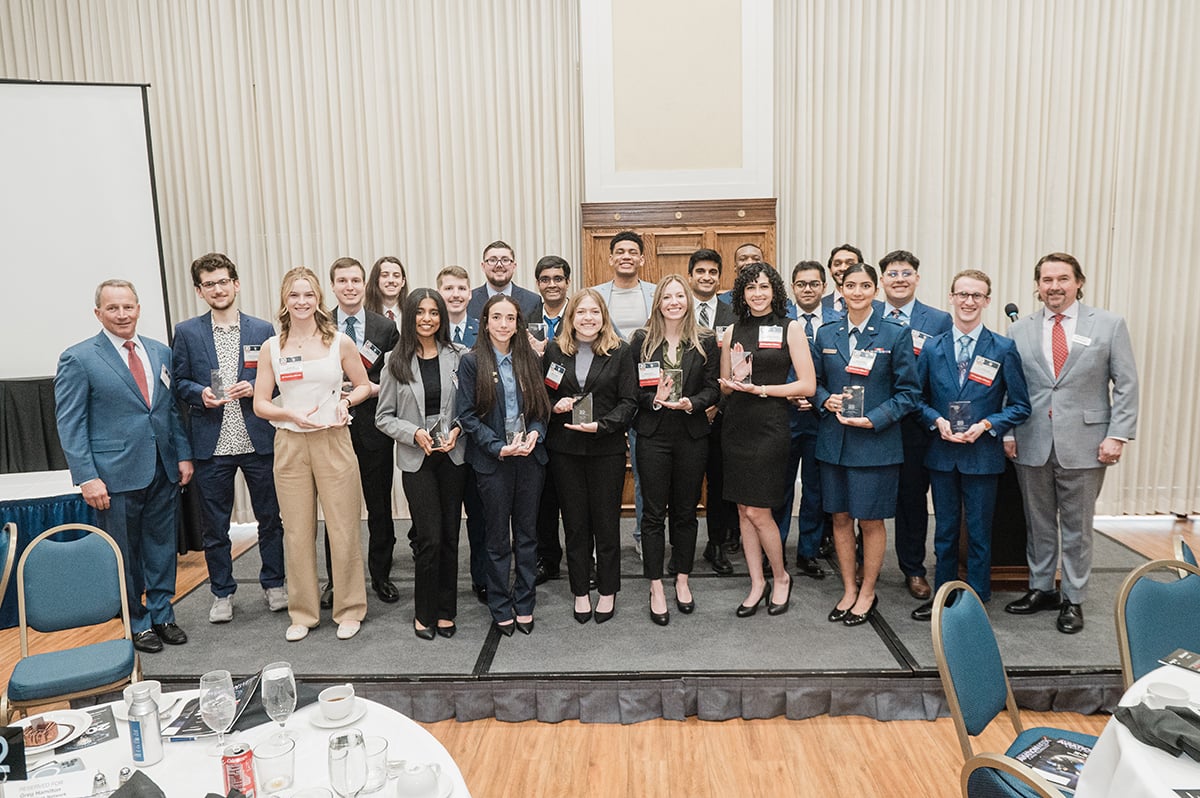
As a direct result of the award, I was approached by one of the top aerospace engine manufacturing companies regarding full-time opportunities. While I ultimately chose Boeing, the exposure validated the relevance and industry impact of my work and significantly broadened my professional network.
Have you met any cool and interesting people from the aerospace world through this award? Anyone you really clicked with? How do you stay in touch with them while juggling classes and everything else?
Through the award, I connected closely with university leadership and trustees, relationships I continue to maintain. Those conversations provided valuable perspective on leadership and institutional impact a student can have on a university-level.
What skills from your award-winning project do you think will be most helpful in your first job? Has this experience given you any clearer ideas about what you want to do after college?
The most valuable skill I gained was persistence. My research frequently required solving open-ended problems without clear direction—whether that meant learning new software, redesigning components, sourcing new materials, or reaching out to industry experts through cold emails. Basically, to sum it up, just “figuring it out,” when there was clearly no path forward. That same persistence is essential in my current role on the 777-9 program, particularly when supporting certification and flight-test activities where problems are complex, timelines are tight, and solutions must be both technically sound and certifiable. The stakes are really high as public safety, airline customer’s expectations, and company’s reputation depends on this product.
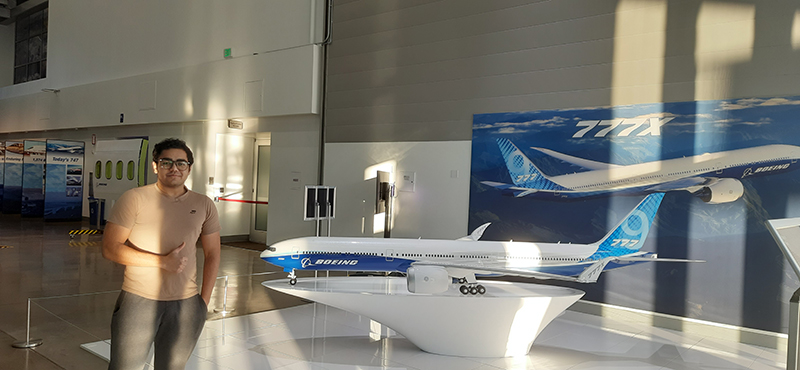
More broadly, this experience solidified my commitment to industry. While research is intellectually fulfilling, true purpose comes from seeing your work directly impact people’s lives. By working on commercial airplanes at Boeing, I contribute to that exact purpose—connecting the world safely and reliably.
Can you share a memorable story or piece of content from Aviation Week that resonated with you? Looking ahead, are there any topics or editorials you’re particularly excited to follow?
One piece of Aviation Week coverage that stood out to me was the reporting on Boeing’s X-37B spaceplane. The way the article unpacked the vehicle’s long-duration missions, autonomous re-entry capability, and incremental experimentation in orbit highlighted a side of aerospace very insightful. What resonated most was how the story focused not just on the platform itself, but on the engineering philosophy behind it—designing systems that operate reliably in extreme environments with limited intervention. Looking ahead, I’m particularly interested in Aviation Week’s continued coverage of advanced experimental platforms and spaceplane concepts.
As we wrap up, we’d love for you to have the final word. Is there any advice you’d like to share with others, perhaps something you’d tell your younger or future self? Or is there a standout moment or milestone since winning the 20 Twenties that you’d like to highlight?
"Preparation and hard work rarely looks glamorous in the moment, but it’s what makes opportunity recognizable when it arrives"
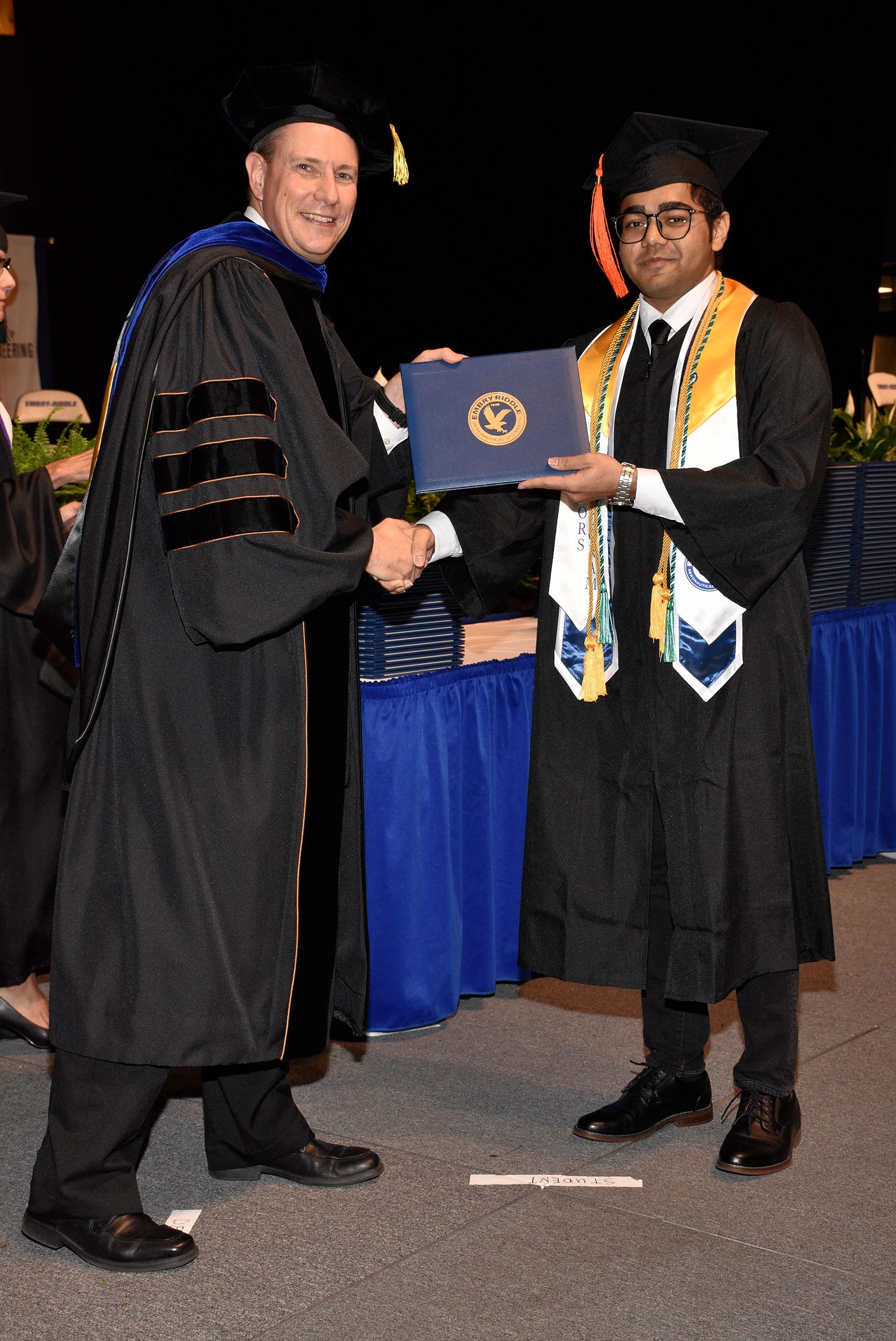
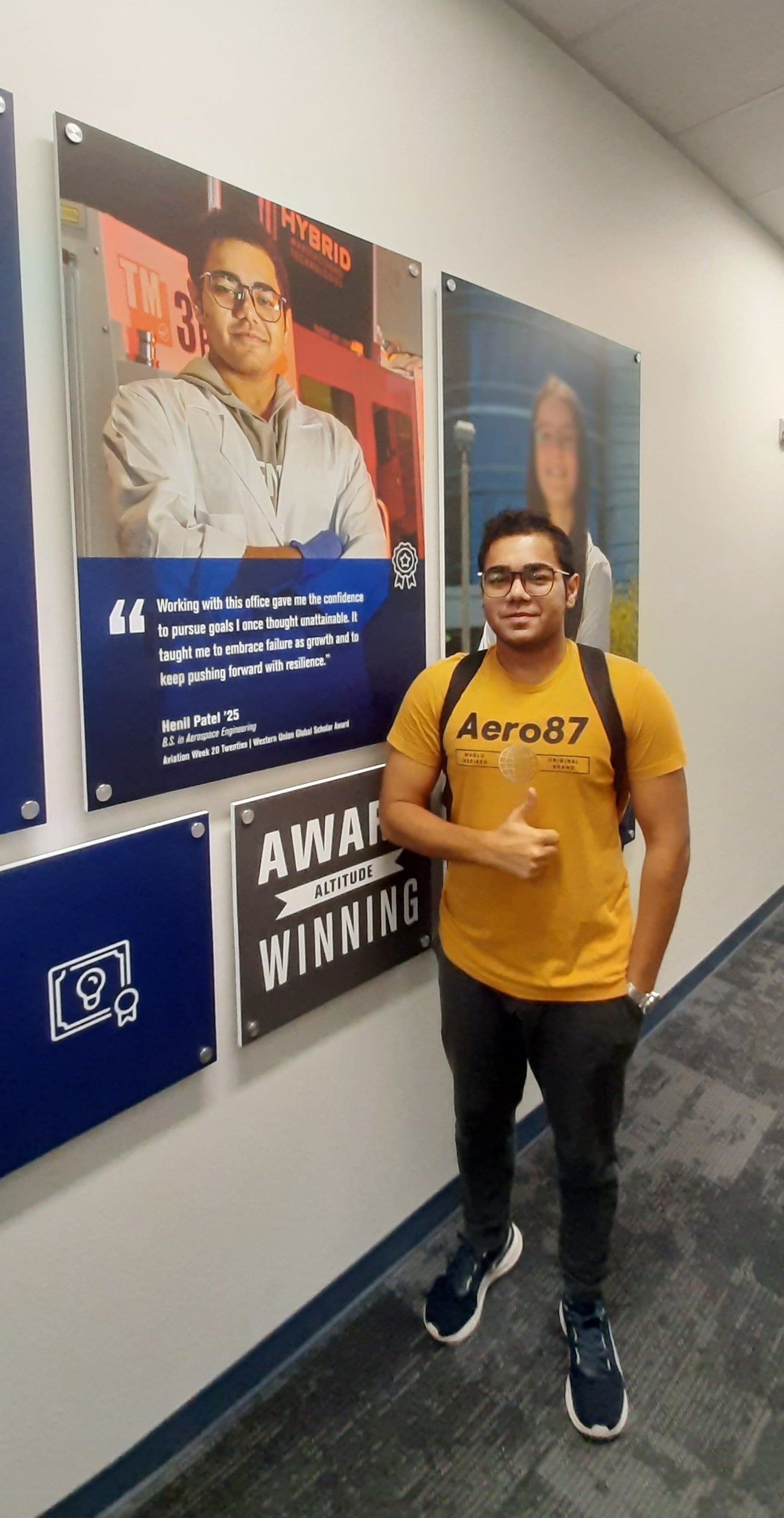
One standout milestone since winning the 20 Twenties award was seeing my portrait installed at Embry-Riddle Aeronautical University. It was a humbling reminder that the effort, setbacks, and persistence along the way can leave a lasting impact beyond any single project or role.
If I could offer advice to my younger self, it would be simple: trust the process. Every challenge, detour, and late night ended up serving a purpose. I wouldn’t change the journey—only appreciate it sooner. For others just beginning their path, my advice is to aim with intention and follow through with discipline. Recognition is never the goal, but when preparation meets opportunity, meaningful outcomes have a way of finding you.
Related Content