This article is published in Aviation Week & Space Technology and is free to read until Aug 05, 2026. If you want to read more articles from this publication, please click the link to subscribe.
The views of the two jetliner prime CEOs have diverged on next-generation single-aisle timing. In his Aviation Week interview, Boeing CEO Kelly Ortberg said he sees the service entry of Boeing’s next narrowbody “moving to the right,” possibly beyond the 2030s (AW&ST June 29-July 12, p. 32). Airbus CEO Guillaume Faury, meanwhile, said the launch of his company’s next single-aisle program is on track for 2030 followed by service entry “in the second half of the decade” (AW&ST June 29-July 12, p. 36).
There are sound reasons to be skeptical about the timing of the next-generation single-aisle (NGSA), given the delays driven by supply problems with current generation jets, new technology maturation, customer preferences for better aircraft readiness and other factors. But in reality, the timing of the NGSA is not really in their hands.
Consider the events that led to the launch of today’s single-aisles. In July 2008, fuel prices hit an all-time high—$147 per barrel on the spot market. This led to the launch of Bombardier’s C Series (Airbus’ A220 today) also in July 2008. That program prompted Pratt & Whitney to develop its geared turbofan (GTF), which Pratt hoped would restore its single-aisle market presence. CFM International responded to this new engine with the Leap-1 series. Airbus responded to the C Series with the A320neo, using the Leap-1 and GTF. Boeing responded to the A320neo in 2011 with the 737 MAX powered by the Leap-1.
Yet before this chain reaction began, neither the Airbus CEO nor the Boeing CEO would have said he wanted a new aircraft. The only difference now is that Boeing—and probably Airbus—needs clean-sheet jets. Otherwise, the catalysts behind the last series of product launches are still in play. So we can identify three primary factors—as well as many smaller ones—that will determine when replacements for the A320neo and the 737 MAX might arrive:
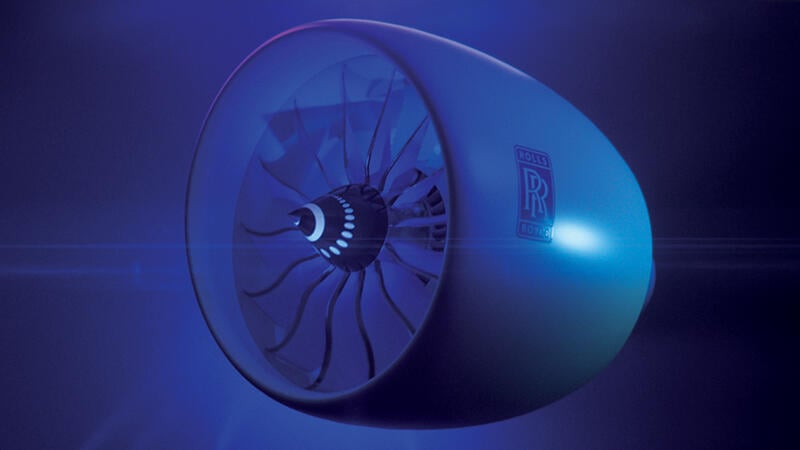
1. Engines (and engine OEM competitive pressures). Propulsion is the most important factor. While CFM continues to develop its RISE next-generation product, it is safe to say that anyone with a single-aisle market share of at least 75% is not in a rush to change the game. Pratt is still ironing out the kinks in its GTF series. Rolls-Royce, whose 2012 decision to exit the single-aisle market looks even worse in hindsight, is the wild card. This year, the company began discussing its UltraFan 30, leveraging the geared architecture of its previously proposed twin-aisle engine. All Rolls needs is an application—and about €3 billion ($3.4 billion).
2. Airframer competitive pressures. Who would bring competitive pressure on a reluctant duopoly? In the 2000s, China, Russia, Japan and Bombardier all played roles in selecting next-generation engines. Today, China is unlikely to move beyond the Comac C919 anytime soon, and Japan is in no hurry to repeat the Spacejet disaster with a larger jetliner. Russia is not a factor in the market, and neither is Bombardier, since it sold off its jetliner business.
A new Embraer aircraft, perhaps using a Rolls engine, is the ultimate wild card product. The big problem is resources. The C Series happened in large part because United Technologies Corp. (now RTX) provided extensive support. Embraer, a much smaller company than Bombardier was at the time, would need even more support, but Rolls’ pockets are not that deep.
But then there is Airbus. Airbus might think that its higher production rates and stronger balance sheet give it a competitive advantage over Boeing for the next few years. If Faury follows through with a 2030 launch, Boeing might have little choice but to respond, just as it had little choice in 2011. Then again, if none of the engine primes wants to invest in a new engine, Airbus will have a hard time launching an NGSA.
3. Fuel prices and the market. Airlines have a very different attitude toward fuel savings when fuel is expensive. According to Argus, the U.S. jet fuel index averaged $4.29 per gallon in April, almost double the January average of $2.21. Given thin airline margins, if a carrier can save 15% off its fuel bill with a new-generation engine and fuel is at the outer end of that range, it will push the airframers to develop an NGSA with that new engine.
Clearly, the jet-makers can strategize, plan, market and message, but the timing of the next generation is largely out of their hands.
Contributing columnist Richard Aboulafia is managing director at AeroDynamic Advisory.


Comments
838-7: 150+ pax 4,600 nm
838-8: 180+ pax 4,200 nm
838-9: 210+ pax 3,800 nm
838-10: 225+ pax 3,600 nm
Cabin width: 150 inches, 3.81 m
Pratt and Rolls GTF engines under gulled wings
32,000 lbf thrust
90 inch 2.3 m fan, 14:1 bypass ratio
Airframe mixed carbon, aluminum
SAF 100% fuel
Provision for LNG tanks in cargo bay later