This article is published in Aerospace Daily & Defense Report part of Aviation Week Intelligence Network (AWIN), and is complimentary through Jul 12, 2026. For information on becoming an AWIN Member to access more content like this, click here.
Microliner
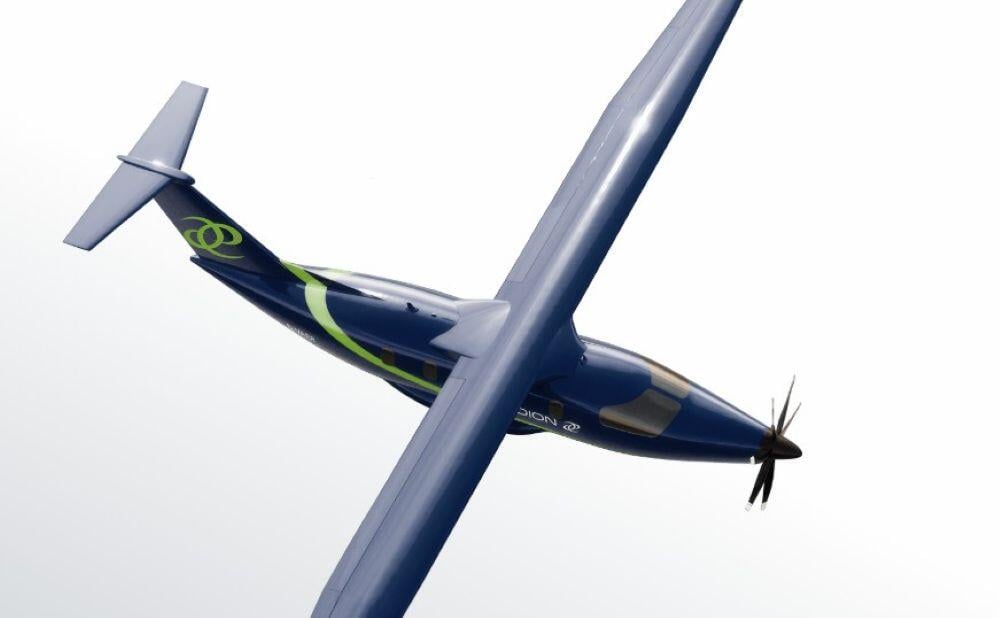
BERLIN–For its nine-seat, all-electric Microliner, Vaeridion has successfully completed the preliminary design review (PDR), forming a solid basis to proceed with detailed design, company CEO Markus Kochs-Kamper said June 11 at the ILA Berlin Air Show.
The Munich-based startup is one of the promoters of full electric propulsion, as opposed to the hybrid-electric architectures that a number of would-be airframers are pursuing for similar aircraft sizes. Vaeridion contends full electric propulsion means a more manageable technical and regulatory path. The company is also betting on more stable energy prices and lower maintenance costs. The PDR’s outcome may now support Vaeridion in its ongoing funding effort.
Passing the review has encouraged the company’s engineers. “It showed the technical approach is feasible,” Kochs-Kamper said. “It suggests the weight, cost and safety level estimates are acceptable.” The design is thus deemed mature enough to move to the next stage, which may involve suppliers. External advisors participated in the PDR, Kochs-Kamper added.
The PDR included the aerodynamic configuration, the structural layout and the status of the electric propulsion system, in addition to other systems such as flight controls. Vaeridion is also working toward its Design Organization Approval (DOA), a key step needed to support prototype flight permits and certification work. Kochs-Kamper expects to obtain the DOA from the European Union Aviation Safety Agency (EASA) in 12-18 months.
The next review after the PDR is the critical design review (CDR). It may take place in 12-15 months, Kochs-Kamper said. “That is when you release drawings and design data,” he noted. “You start cutting metal, even though some long-lead items might be ordered before, as an acceptable tradeoff.”
Vaeridion has planned the aircraft’s first flight to happen by May 2028, targeting entry into service in 2030. The two years of flight testing will take place in Oberpfaffenhofen, one of the few airports allowing such flights, Kochs-Kamper said. “Our three prototypes will be as representative as possible of the production standard, especially in aerodynamics and structure,” he emphasized.