This article is published in The Weekly of Business Aviation part of Aviation Week Intelligence Network (AWIN), and is complimentary through Jul 29, 2026. For information on becoming an AWIN Member to access more content like this, click here.

AIR Eyes Mosaic Entry With Production eVTOL Aircraft

air

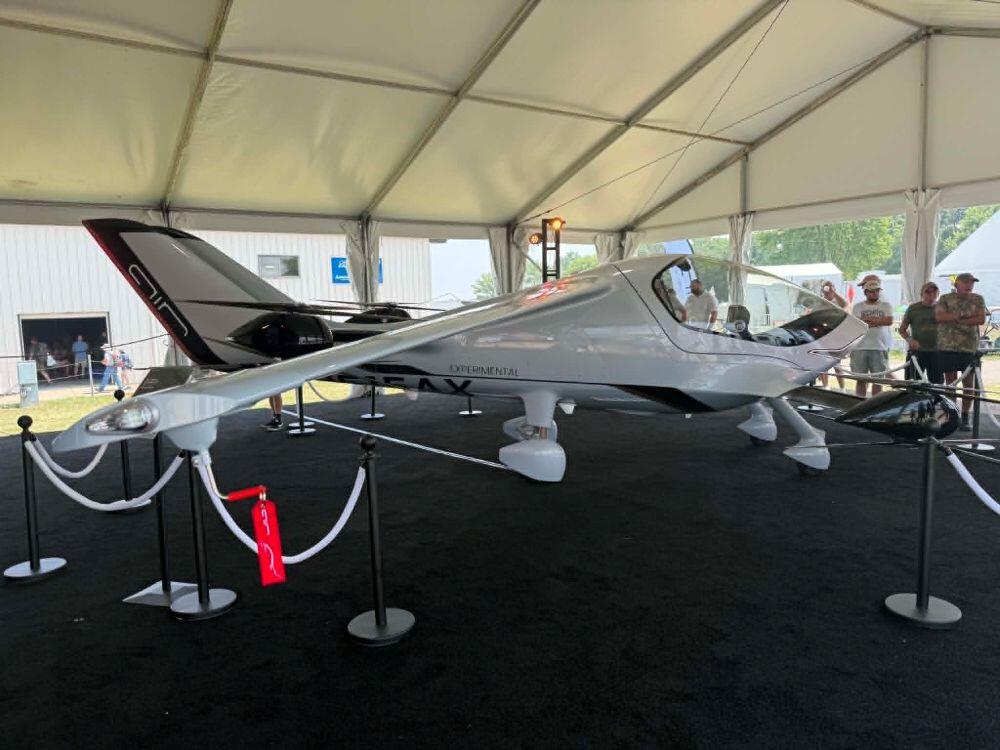
AIR has already built roughly 30 production airframes of its AIR ONE eVTOL aircraft.

Credit: Ben Goldstein/Aviation Week

OSHKOSH, Wisconsin—Israeli startup AIR has begun flight testing the production version of its AIR ONE eVTOL aircraft as the company prepares to commercialize the design under the FAA’s new Mosaic rule while ramping up production of an uncrewed cargo variant for defense customers.

“We started flying with the production version this April,” AIR co-founder and CEO Rani Plaut told Aviation Week during EAA AirVenture Oshkosh here. “Compared to the prototype version, everything is new. It’s a new software stack. It’s a new hardware stack. The structure is mass-production ready. The same goes for the motors, the batteries, the harness–everything.”

The production-intent aircraft replaces the company’s earlier flying prototype and is designed for serial manufacturing. Plaut said AIR has already built roughly 30 production airframes and developed the manufacturing infrastructure needed to support much higher production volumes.

AIR currently operates production facilities in Israel and Florida, each capable of producing roughly 60 aircraft annually, although Plaut said the company will require a substantially larger U.S. facility to expand output into hundreds of aircraft per year.

AIR plans to bring the aircraft to market under the FAA’s recently finalized Modernization of Special Airworthiness Certification (Mosaic) rule, while a longer-term type certification effort proceeds in parallel.

“We’ll have a smaller batch of experimental aircraft before that,” Plaut said. “Mosaic will come second, and type certification will come when we see fit.”

AIR is also accelerating development of an uncrewed cargo version that replaces the cockpit with a flatbed capable of carrying 550 lb. The two aircraft share roughly 85-90% commonality.

Plaut said he believes defense logistics represents the strongest near-term market opportunity.

“My personal opinion is that civilian logistics is extremely complicated,” he said. “Contested logistics for defense is by far the biggest application those aircraft have. The numbers are staggering.”

He said the company has secured purchase orders for more than 20 cargo aircraft backed by nonrefundable deposits and expects to deliver approximately 10 aircraft this year.

Plaut also argued that AIR occupies a different niche than larger eVTOL developers pursuing military applications.

“When the air taxis are going to the defense sector, they are building something that resembles a Black Hawk,” he said. “We are closer to a pickup truck in terms of complexity, price and operations.”

For the piloted aircraft, the company’s immediate priorities are expanding the flight envelope and accumulating flight hours with the production configuration.

“The major activity is flight testing,” Plaut said. “Take it to the air, clock hours, open the envelope and get some credit from the FAA. The other vector is just ramping up for production.”

Looking ahead to next year’s AirVenture, Plaut hopes visitors will be able to see the aircraft flying demonstrations–and perhaps even ride in it.

“I would provide joyrides,” he said. “That’s my goal.”

Ben Goldstein

Based in Rhode Island, Ben covers advanced air mobility and is a contributor to Aviation Week’s Business Aviation & AAM Report.