
Sustainable Aviation Fuel
With governments and airlines committed to decarbonizing aviation by 2050, innovative solutions are required and sustainable aviation fuels (SAF) could play a major role in meeting targets. IATA estimates that SAF could contribute around 65% of the reduction in emissions needed by aviation to reach net-zero in 2050. This will, however, require a massive increase in production in order to meet demand.
Top Story
Sponsored Content
Latest News On Sustainable Aviation Fuels
Mar 19, 2025
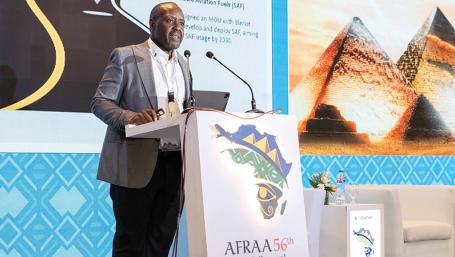
A lack of SAF and common government policies are hindering Africa’s decarbonization progress.
Mar 18, 2025
Industry says new legislation aimed at turning decarbonization into a growth driver does not go far enough in supporting green transition.

Mar 17, 2025
Japan Airlines and Airbus have joined a consortium of three other companies that plans to produce sustainable aviation fuel (SAF) in Japan.

Mar 14, 2025
Europe resets its ingredients to achieve carbon net zero as the mission gets more complicated.

Mar 14, 2025
JetBlue Airways will begin using SAF for flights from its New York JFK base, marking the first time sustainable fuel will be regularly used at the airport.

Mar 11, 2025
Less than four years after boldly pledging to reach net zero emissions by 2050, IATA appears to be dropping the target. Is the airline industry abandoning sustainability or just acknowledging reality?

Mar 10, 2025
Japan has completed the construction of its first large-scale sustainable aviation fuel facility, which is set to produce 79 million gal. by 2030.

Mar 06, 2025
Net zero—out of reach by the middle of the century ... or is it?