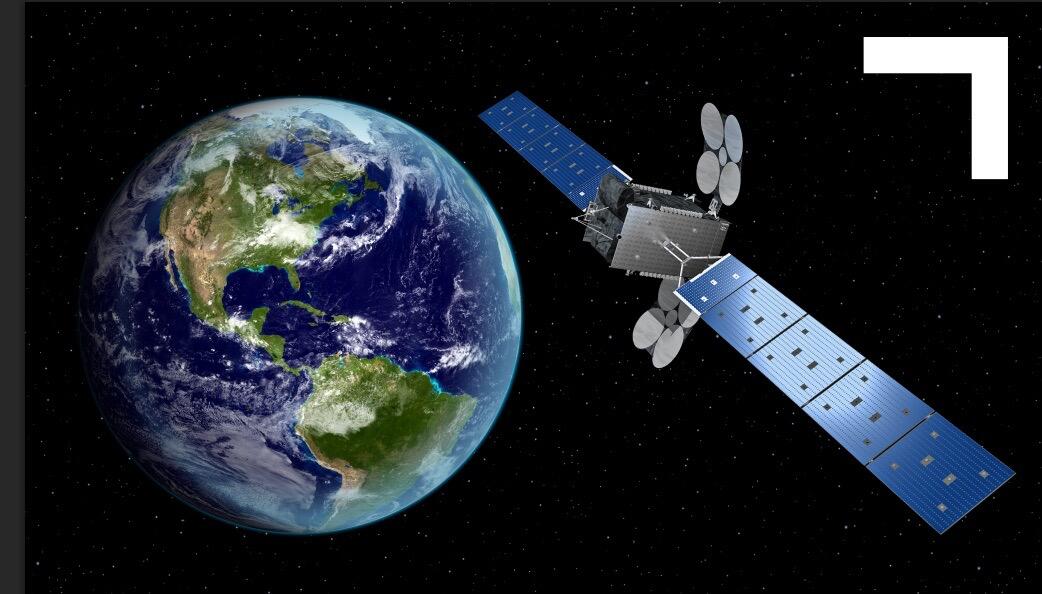
Northrop Grumman’s second PTS-P system will use a company GEOStar-3 satellite bus.
The U.S. Space Force expects to launch two prototype spacecraft next year as it looks toward the next generation of anti-jam satellite communications.
The service has tapped Boeing and Northrop Grumman to demonstrate the use of an updated, encrypted signal called the Protected Tactical Waveform aboard company-built spacecraft. Both companies are now developing two prototypes under the service’s Protected Tactical Satcom-Prototype (PTS-P) program, following a May 15 contract award to fund a second free-flyer system from Northrop Grumman. The initial prototype from each company is on track for launch, on-orbit demonstration and testing no earlier than 2027, a Space Systems Command (SSC) official said May 21.
The new, $398 million “Enhanced PTS-P” contract award funds a second prototype free-flyer to launch no earlier than 2030, hosting capabilities that “exceed the current PTS-P baseline,” the official said. A Northrop Grumman spokesperson described the Enhanced PTS-P system as “a more operationally relevant, higher-capacity, and more resilient protected satcom capability for the joint force while moving faster through SSC’s accelerated acquisition approach” in a May 22 statement. The second free-flyer will use Northrop Grumman’s GEOStar-3 satellite bus, while the initial prototype will be hosted on a company ESPAStar-HP bus.
Meanwhile, Boeing’s two prototype payloads are to be hosted on the 11th and 12th Wideband Global Satcom (WGS) spacecraft. WGS-11 is manifested on a United Launch Alliance Vulcan heavy-lift rocket, SSC said. Boeing is performing software enhancements for the prototype payloads that will be hosted on WGS-12, SSC added.
The Space Force is focusing on incremental upgrades to the PTS program, rather than pursuing the original plan of a larger source selection for either Boeing or Northrop Grumman to build two new space vehicles under the PTS-Resilient (PTS-R) program.

Related Content