This article is published in Aerospace Daily & Defense Report part of Aviation Week Intelligence Network (AWIN), and is complimentary through Oct 16, 2026. For information on becoming an AWIN Member to access more content like this, click here.

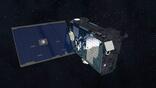
L3Harris Technologies is building more than 70 satellites for the Space Development Agency's Tracking Layer, including 18 for the nascent Tranche 3 program.
L3Harris Technologies has completed the preliminary design review (PDR) for 18 new satellites in development for the Space Development Agency’s (SDA) missile warning, tracking and defense-centric satellite constellation, the company announced Sept. 24.
The defense company has received contracts to build 74 satellites across the Tracking Layer portion of the SDA’s Proliferated Warfighter Satellite Architecture, including four prototype satellites launched to low Earth orbit (LEO) in 2024 under Tranche 0, and 36 spacecraft in some level of production between Tranche 1 and Tranche 2.
Now, L3Harris has completed the baseline design for its Tranche 3 satellites, about nine months after the SDA awarded contracts worth a cumulative $3.5 billion to four companies—L3Harris, Lockheed Martin, Northrop Grumman and Rocket Lab—for a 50/50 split of missile warning/tracking and missile defense payloads.
The SDA has overseen a spiral development acquisition model for its space architecture—which also includes a mesh network connectivity constellation known as the Transport Layer—aiming to get new capabilities on orbit every two-three years.
While L3Harris made minimal design changes between its Tranche 1 and Tranche 2 satellites, largely focused on software, Tranche 3 required “major updates to our payload and payload performance” to meet the SDA’s requirements for near-continuous global missile warning and tracking, Josh Lovejoy, the company’s general manager for missile warning and defense, tells Aviation Week.
The company has retained more than 90% of its supply chain from previous Tracking Layer contracts for this Tranche 3, but also decided to bring certain elements in-house, such as circuit card assembly, that leverage other L3Harris business areas, he says.
Meanwhile, the Tranche 1 Tracking Layer satellites could launch within the next six months, SDA Director GP Sandhoo recently told reporters at the Air and Space Forces Association’s Air, Space and Cyber Conference in National Harbor, Maryland. The four planes of 16 satellites each, split evenly between L3Harris and Northrop Grumman, could begin launching by early December, although early spring was more likely, he said.
Lovejoy says his team is working closely with the SDA to coordinate the company’s first Tranche 1 launch, noting that the readiness of the launch site, launch vehicle and the space vehicles themselves were all factors in the scheduling. “We are working daily with SDA to kind of coordinate that ballet,” he says.
He referred to the SDA for a status update on the Tranche 1 satellites, but said L3Harris is “well through production” on its Tranche 2 vehicles, which are slated to begin launching in 2027, a January 2024 contract award release said.
L3Harris was also recently awarded a separate $955 million contract named Accelerated Missile Defense Tranche 3 (AMDT3) for 18 missile defense-focused satellites across two orbital planes, due to launch by late 2028. Those satellites would essentially be enhanced versions of the two Hypersonic and Ballistic Tracking Space Sensor (HBTSS) space vehicles that L3Harris developed for the Missile Defense Agency and launched in 2024.
That contract is “well past” traditional design review milestones from a maturity perspective, but it has its own requirements and review processes in place with the SDA, Lovejoy says.
“We are working some improvements to enhance our production speed and our on-orbit capability. But for the most part, that is really accelerating the production of a mature design that we have already launched and tested on orbit,” he says.
Sierra Space was also named a vendor on the AMDT3 contract, awarded up to $798 million to build 18 missile warning/missile tracking satellites within the same time frame.
Meanwhile, L3Harris is still “actively flying” the Tranche 0 satellites, Lovejoy says, while deferring to the SDA for mission updates. The company has previously said those satellites successfully demonstrated they can observe, detect and track missile threats in LEO, using background suppression techniques to filter out unwanted signals.

Related Content