This article is published in Aerospace Daily & Defense Report part of Aviation Week Intelligence Network (AWIN), and is complimentary through Oct 15, 2026. For information on becoming an AWIN Member to access more content like this, click here.
Legacy Missile Warning Sats Perform Dynamic Maneuvers Before Retiring

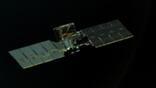
Defense Support Program satellite.
The last of the U.S. military’s Cold War-era missile warning satellites got a final dance on orbit as part of a recent exercise before their planned retirement.
The U.S. Space Force’s 2nd Space Warning Squadron (2 SWS) demonstrated “dynamic on-orbit maneuvers” with two Defense Support Program (DSP) satellites during a live-fly exercise known as the Apollo Maneuvers, hosted by U.S. Space Command in September. The satellites then maneuvered into supersynchronous orbit as part of a planned system decommissioning, the service’s Combat Forces Command announced Oct. 1.
The DSP satellites, built by Northrop Grumman, were initially launched in the early 1970s and have provided early missile warning from geosynchronous orbit since. “These last two satellites were the culminating end to over a half century of space-based warning,” Mission Delta 4 Commander Col. Brandon Davenport said in the release. In 2011, the Space Based Infrared System (SBIRS) satellites joined DSP in providing early warning for missile launches and other major thermal events from GEO as well as highly elliptical orbits (HEO) to cover high-latitude and polar regions.
With the retirement of these Cold War-era satellites, the Space Force is now turning toward new Overhead Persistent Infrared (OPIR) missile warning satellites, with Lockheed Martin building two Next-Gen GEO spacecraft and Northrop Grumman on contract for two Next-Gen Polar satellites.
The fate of the latter program remains undecided, even as Northrop Grumman builds the spacecraft in its Space Park facilities in Redondo Beach, California. The Space Force proposed canceling the polar-based satellites in its fiscal 2027 budget request, but members of Congress have reinserted funding for the program in publicly released drafts of defense appropriation and policy bills.
Meanwhile, the 2 SWS has begun training to onboard the Next-Gen GEO satellites “and other elements of the USSF’s future OPIR architecture,” the press release said.

Related Content